Manual and Control Pinch Valve: A Comprehensive Overview
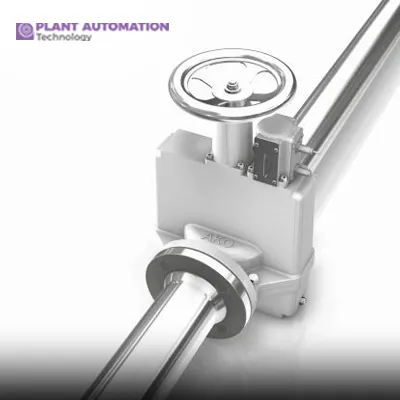
Pinch valves are used in maintaining and control of several fluid systems in industries today. Apparently, these valves are intended to control or seal the flow of fluids, slurries, or powders in such areas as water treatment, mining, and food industries. Among them, the most usual types contain manual pinch valve and the control pinch valve. This article focuses on describing how pinch valves work, its types including the hose pinch valve and the pneumatic as well as electric actuated pinch valve.
What is a Pinch Valve?
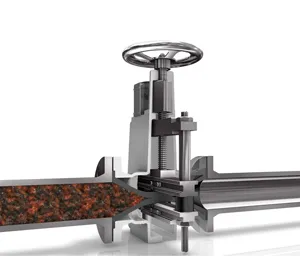
Basically, a pinch valve acts through squeezing or clamping a portion of the flexible tubing, the hose or sleeve, to shut off or regulate flow in the system. The feature that there are no mechanical parts which come into direct contact with the media passing through the valve is the reason why this solution is used in industries dealing with abrasive, corrosive or viscous materials.
With reference to the modes of operations, pinch valves of different types include the manual type and the control type commonly referred to as the control pinch valve systems.
Types of Pinch Valves
1. Hose Pinch Valve
Hose pinch valve is mainly designed uniquely to accommodate flexible hoses or sleeves that run through the body of the valve. The first is accomplished by using a pinching bar to pinch down on the hose and throttling the flow of media if needed. Hose pinch valves are often applied in the processes which involve slurries, powders, and solids since its functioning is not based on the complex mechanisms that may wear out due to mentioned kinds of loads.
2. Manual Pinch Valve
A manual pinch valve is one of the pinch valve variants that is operated manually; via a hand wheel pinch valve or a hand lever pinch valve. These valves are especially suitable for operating situations in which continuous flow does not require automation, and therefore, represents an inexpensive solution for use.
The operator rotates the hand wheel or pulls the lever to tight the loose or to loosen up the pinch mechanism adjusting the media flow through the flexible sleeve. Manual pinch valves are typically employed by businesses that transport abrasive or corrosive substances since its sleeve is the only part in contact with the flow and carry little wear and tear to other components.
3. Control Pinch Valve
A control pinch valve provides on/off flow control with automated or semi-automated control of the valve. It is meant for applications where slight variation in pressure or flow of the fluids or gaseous medium has to be controlled. The most common type of pinch valve is the control pinch valve and is used more commonly in the chemical and pharmaceutical industries because of the valve’s capabilities to manage sterile and corrosive media which does not get contaminated.
4. Pneumatic actuated Pinch Valve
The type of pneumatically operated valve which will be expounded in this article is the pneumatic actuated pinch valve which uses air compression in pinching operation of the valve. This kind of valve is widely used in automated processes because it needs frequent and prompt operation. Pneumatic actuation for operation remotely and it can be interfaced with large process control systems. They can be single acting pinch valve or double acting pinch valve depending to how the compressed air control the valve. In a single acting pinch valve, the opening or closure of a valve depends on the air pressure and in double acting pinch valve, both the air pressure is being used for opening the valve as well as closing the valve thus enhancing the fluid control.
5. Electric actuated Pinch Valve
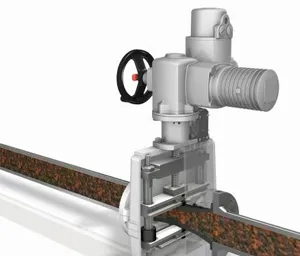
In the situation where the valve is used mechanically, an electric actuated pinch valve will use an electric motor to open or close the valve. These valves offer the necessary characteristics of accuracy in delivering fluid flows as is needed in applications that must involve high level of flow control. Electric actuated pinch valves are found in processes such as pharmaceuticals, food industries, and water treatment where electric signals can regulate the degrees of openness and closure, often with low human interference.
Another advantage of using electric actuators is that they do not draw power from a compressed air supply which is a requirement that most facilities may not have.
| Also Read: Air Operated Pinch Valves: A Comprehensive Guide to Reliable Fluid Control Solutions |
6. Hand wheel Pinch Valve
The hand wheel pinch valve is a type of the manual pinch valve. For that purpose, the machine employed a hand wheel to adjust the pinch mechanism. When fully charged, the operator turns the hand wheel to increase or reduce pressure on the hose and thus the flow rate. This design is suitable in industries where the nature of valve operation does not call for frequent actuation and where there is a need for fine control of the flow. This makes the hand wheel pinch valve to be cheaper, and because of its simple design it is very difficult for it to get damaged or decomposed.
7. Hand Lever Pinch Valve
A hand lever pinch valve works in a similar manner to the hand wheel one but has a lever. This design is fast to operate because the lever is shifted to open or close the valve with ease. An application which involves frequent valve adjustments is perfectly suitable for hand lever pinch valves. They are usually employed in low pressure systems requiring simplicity of use and straightforward access.
8. Single acting Pinch Valve
Single acting pinch valve means that a pneumatic system in a particular valve is open by use of compressed air and closed or opened by a spring force in the reverse manner. For instance, there is application of air pressure in opening the valve, but a spring to close it after the release of air. Single acting pinch valves are operatively efficient because they need air pressure in one direction only; as such, they are ideal for applications requiring simple, fail-safe closure systems.
9. Double acting Pinch Valve
A double acting pinch valve, however, needs air pressure to open the valve as well as to close the valve. This type has more control in the media flow because the valve can be placed in any position between the fully open and fully closed position.
Double acting pinch valves are ideal for use in applications where there is considerable need for controlling the flow rate for instance in use in the chemical or a pharmaceutical system.
Applications and Benefits of Pinch Valves
Pinch valves, whether manual pinch valves or control pinch valves, provide various benefits:
• Reduced Wear: Parts of an air hose or sleeve are more protected since the only component that comes into direct contact with the media is the hose/sleeve; therefore, there is reduced wear, and the parts can be used in abrasive as well as corrosive conditions.
• Minimal Maintenance: The most used pinch valve types are hose pinch valves, pneumatic actuated pinch valves, and electric actuated pinch valves, and as seen, these valves are ease constructions, hence would require little maintenance as compared to the other valves.
• Versatility: Slurry, powder and viscous fluids can all be threaded through pinch valves so its usage spans across numerous industries.
Conclusion
Today pinch valves are used on almost all the fluid control systems and there is no reason that one should not have the type of pinch valves as hose pinch valve, manual pinch valve, control pinch valve, pneumatic actuated pinch valve and electric actuated pinch valve. These pinch valves could be controlled either manually through hand wheel pinch valve or through automatic control single acting pinch valves and double acting pinch valves, wherever difficult wearing media has to be controlled. Enabling the assessment of particular requirements of the system where this type of valve is to be installed enhances its appropriateness.
 Our Services
 Media Pack Download
 Newsletters
 Industrial Events