The Pros and Cons of Popular Industrial Robot Types
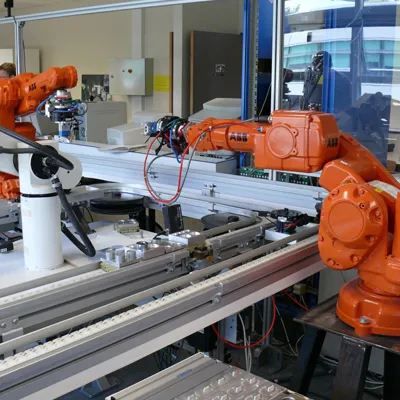
Modern manufacturing depends heavily on industrial robots because they lead to exceptional efficiency together with precision and vast scalability. Each type of industrial robot has specific disadvantages along with its many advantages. Businesses must identify factory robot categorizations to determine how these classifications affect automated manufacturing benefits when deciding on automation implementation.
The article investigates standard robotic systems through strength and weakness evaluation while focusing on robotics energy consumption and heavy-duty operation capabilities and industrial automation solutions.
1. Articulated Robots
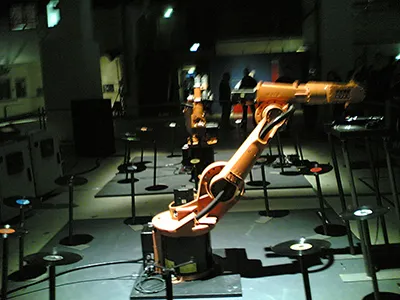
Manufacturers primarily select articulated robots for their manufacturing applications because of the six-axis robot flexibility they offer. The robots duplicate natural arm gestures which makes them appropriate tools for welding tasks together with painting works and material handling requirements.
Pros:
- High dexterity and extensive motion range occur through robotic arm functionalities.
- The system displays exceptional performance capabilities in intricate assembly line automation impact work and ensures high-quality outcomes.
- The design of CNC robotic systems matches up perfectly with these robots to result in smooth integration with machining operations.
- Factory robots of different categories can easily adapt to the robotic arm system which contributes to their versatility.
- The metal fabrication sector and auto manufacturing along with electronic production implement their use.
Cons:
- The main drawbacks of articulated robots involve their expensive nature and intricate maintenance procedures.
- Higher energy consumption in robotics due to multiple moving joints.
- The system demands knowledgeable operators who need training for both command design and equipment fault resolution.
- Small factory operations need to overcome the space requirements challenge.
2. SCARA Robots
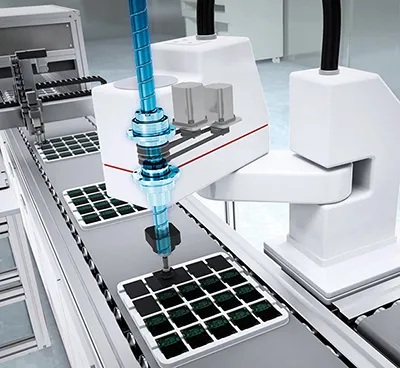
This Selective Compliance Articulated Robot Arm (SCARA) performs consistently in robotic pick-and-place operations for assembly work together with small part manipulation tasks.
Pros:
- SCARA robots show specific excellence in time-sensitive operations that require very precise assembly procedures.
- Articulated robots need more maintenance work but SCARA robots require less compared to them.
- The system operates efficiently when used between stationary and mobile robotic automation systems.
- This type of robotics system provides optimal benefits during automated manufacturing processes within pharmaceutical industry alongside electronics manufacturing and consumer goods production.
Cons:
- The robots exhibit limited horizontal movements which limit their application range.
- The robotic platform shows limitations in demanding robotic operations including welding or removal of materials.
- Less flexible than articulated robots.
3. Delta Robots
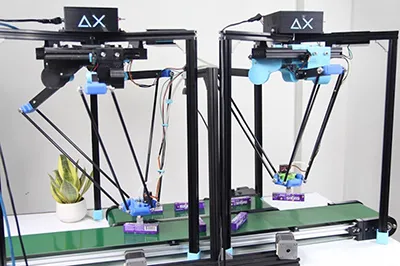
The main characteristics of Delta robots include exceptional speed performance alongside precise delta robot operation. These machines find their primary use throughout the food industry as well as pharmaceutical and electronics sectors.
Pros:
- High-speed operations with exceptional accuracy.
- Ideal for lightweight and delicate item handling.
- This design protects products from damage because of automated assembly line activities.
- Their design supports high-speed operations that work efficiently when processing significant quantities of packages during sorting operations.
Cons:
- The design does not support heavy-duty robotic functions.
- High initial investment and maintenance.
- The system demands complicated programming for achieving accurate mechanical movements.
4. Cartesian Robots
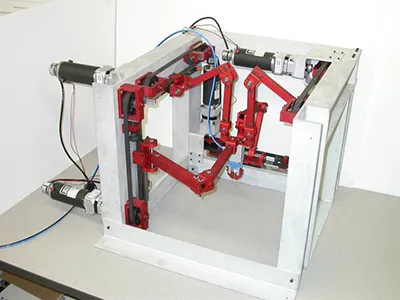
The three-directional movements of Cartesian robots create linear robots that achieve superior performance in material handling and gantry robot implementation.
Pros:
- Cartesian robots deliver outstanding precision capabilities as well as accuracy during operation.
- The robot's basic design minimizes maintenance expenses as well as operational costs.
- These robots offer perfect integration capabilities with CNC robotic systems when applied to precision machining operations.
- These robots appear in applications that need extreme precision points like semiconductor and 3D printing operations.
Cons:
- This robot type shows less flexibility compared to those made with articulated and SCARA designs.
- The implementation of large gantry robots requires extensive space for proper installation.
- The movement execution speed of gantry robots falls behind other widely used robotic system designs that require complex actions.
5. Gantry Robots
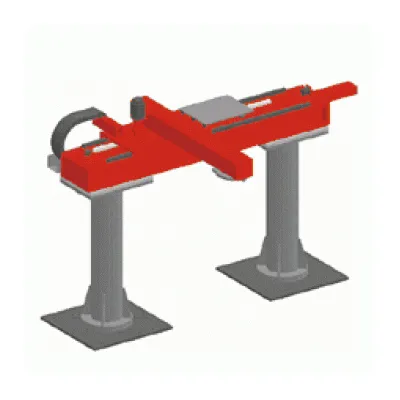
Warehouse automation together with material transportation represents major applications for which manufacturers develop gantry robots as fixed robots.
Pros:
- The robotics system performs demanding robotic tasks successfully.
- High accuracy and stability for large workspaces.
- Robotics systems using low energy draw more efficiently than articulated robots do.
- Well-suited for industries like aerospace, construction, and automotive.
Cons:
- Requires significant space for installation.
- The devices have restricted mobility limits since they fall short of articulated robots and six-axis robot capabilities.
- High cost of setup and implementation.
6. Cobots (Collaborative Robots) vs. Traditional Robots
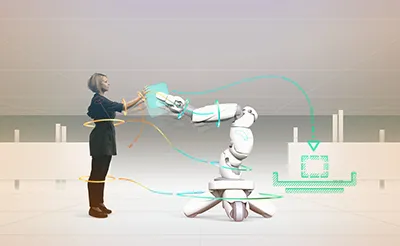
The dispute between automated cobots and conventional robots continues as one of the main discussions within the automation field. Both cobots and traditional robots have different operational spaces because cobots enable joint human-machine collaboration but traditional robots operate independently from humans.
| Feature | Cobots | Traditional Robots |
| Safety | High | Requires Safety Barriers |
| Industrial robot advantages | Human-friendly | High Speed & Strength |
| Drawbacks of automation robots | Limited Power | Potentially Dangerous |
| Cost | Medium | High |
| Flexibility | High | Medium |
Pros of Cobots:
- The robotic system enhances worker safety during operations by minimizing occupational hazards.
- The system allows quick changes to programming for different robotic system types found across use cases.
- Lower energy consumption in robotics due to smaller motors.
- The system raises staff production rates without eliminating current human employees.
Cons of Cobots:
- Their restricted power output together with reduced speed limits them from working in heavy-duty robotic applications.
- The cost of purchasing industrial robots exceeds what some common factory robot groups require.
Pros of Traditional Robots:
- Faster and stronger than cobots, suitable for assembly line automation impact.
- These robots demonstrate ability to carry out precise CNC robotic systems integration.
- More effective for continuous high-speed production lines.
Cons of Traditional Robots:
- Requires significant safety measures.
- The systems face major technical difficulties when programming and maintaining industrial robotic systems.
- The application of these robots results in potential employee layoffs within certain sectors.
Future Trends in Industrial Robotics
The technological advancements in robotic system design now include artificial intelligence robots and autonomous mobile systems as well as enhanced mobility options for six-axis devices. Valid predictive maintenance systems together with IoT integration enable industries to overcome their industrial automation problems.
Robotics energy efficiency is emerging as an important focus point and companies now build energy-efficient motors together with regenerative braking systems to decrease operational costs.
Conclusion
Industrial applications require careful examination of specific needs before selecting any one of the common robotic system types because each type presents different benefits together with limitations. The essential advantages of improved efficiency and precision by industrial robots coexist with the necessary evaluation of automation robot drawbacks. End-users should make their decisions by analyzing three key parameters which are robotics energy use along with operational constraints and system complexity.
Manufacturing will continue evolving through robotics because manufacturers can select between SCARA robots, gantry robots as well as six-axis robots to suit their specific needs. A successful implementation system requires companies to achieve equilibrium between automated production advantages and operational limitations and provides appropriate technology solutions for each manufacturing process.
 Our Services
 Media Pack Download
 Newsletters
 Industrial Events