Buying Guide: How to Choose the Right Voltmeter for Your Need
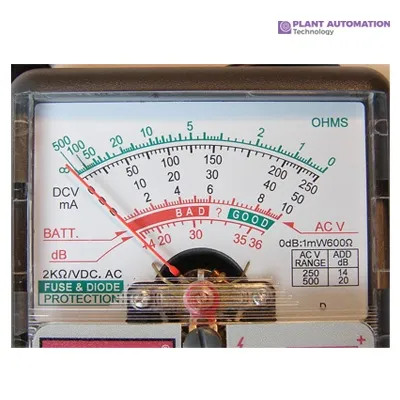
To make a good decision of the right voltmeter to buy there are some things to put into consideration. For every beginner, it is essential to know the main aspects and characteristics that will allow you to select a digital voltmeter, analog meter which can be useful for you if you’re a technician, or a hobbyist. These aspects will therefore include probes, clips, rechargeable batteries among others, and by the end of this guide you will have adequate knowledge to enable you make right decision.
1. Understanding Voltmeter Types
There are different volt meters that one can get, with the main ones being digital voltmeters, and analog meters. Digital voltmeters give a more accurate and clear reading of voltage on the voltmeter while giving a visual display through a pointer movement as in the case of the analog meters. Both types have their benefits and depending on the scale being used and what is preferred, accuracy or easy read, the choice will vary.
2. Key Features to Consider
Voltmeter Display
Voltmeter display is another important factor of a digital voltmeter since it is the main indicator of the magnitude of the voltage measured. In searching for a model that would be ideal for use, the following factors should be considered; large clear display: It is good to have a model with big clear display in such a way that it would be easier measuring from the display without straining.
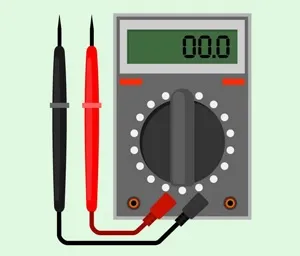
Some models of digital voltmeters have back lighting feature that is advantageous in dark environments. Analog meters, on the hand, use a needle and scale and such type of meters can be preferred due to their simplicity and effectiveness.
Input Impedance
Input impedance is very useful for increasing the accuracy of the measurements mostly in case of sensitive circuitry. Low input impedance in a digital voltmeter loads the circuit being tested and therefore it is better to have a high input. It is advisable to consult the input impedance specifications for your equipment so that you can effectively carry out your tests.
3. Probes and Clips
Probes and clips are among such parts that are most directly involved with meter usability and flexibility in usage. High-quality probes make measurements on voltmeter accurate and more enhanced in their use. Most digital voltmeters have standard clips with them; however, there may be a necessity to buy probes or special clips according to the type of the work. Make sure that the probes and clips which you use are receptive for the voltmeter you are sampling.
4. Power Supply and Rechargeable Batteries
There is particular need for a reliable source of power supply so that there is no disruption of business. A few digital voltmeters contain rechargeable batteries that are friendly when it comes to the long-run expenses. When choosing a voltmeter, one must decide if the device works with disposable batteries or with rechargeable ones. The voltmeters that come with rechargeable batteries attached have extra convenience and lower cost in the long haul.
5. Quality Assurance and Customer Reviews
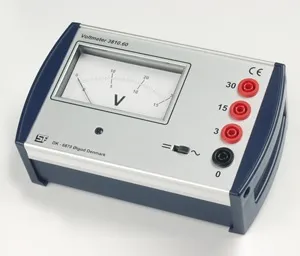
It is important that one should be very careful when selecting a voltmeter through purchasing since the quality is very essential. Select models that come with warranty buttons, they should have been tested to achieve high accuracy. Some critical information, particularly on the performance of the digital voltmeter or analog meter, can be obtained from customer feedbacks. Customer reviews should be scrutinized since they enable the assessment of the effectiveness of the product in the real world and the detection of problems.
6. Additional Features
Tilt Sensors and Torque Sensors
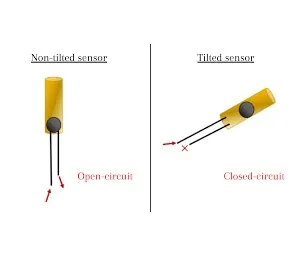
Even though not practiced by all voltmeters, tilting sensor and torque sensor are some of the additional features found in modern voltmeters. These features can improve the flexibility and accuracy of your voltmeter by all means. The above list outlines the kinds of sensors that some advanced voltmeters have, so if these are the sensors that you need for your measurements, then make sure that the voltmeter you choose has them.
Ohm Meter Functionality
Additional features that are commonly found with digital voltmeters include an ohm meter function, which enables one to measure resistance in addition to voltage.
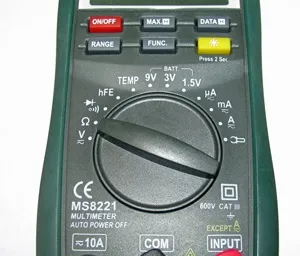
It is very useful for troubleshooting and diagnostics and if you require extensive testing then it can prove to be very useful addition.
Conclusion
One has to decide on several criteria when selecting a voltmeter: the type of meter - the digital voltmeter or the analog one; the type of voltmeter display; input impedance; the quality of the probes and clips. Evaluate the option between using rechargeable batteries or other sorts of power supplies, and include factors such as quality control and clients’ opinions. If extra additions such as tilt sensors, torque sensors, or ohm meter inclusion are crucial to you, then the voltmeter you use must have this aspects.
In this way, reflecting on the above aspects, it is possible to choose the appropriate voltmeter and guarantee yourself accurate readings at work.
 Our Services
 Media Pack Download
 Newsletters
 Industrial Events