The Digital Twin of the Workforce: Automating HR for the Modern Smart Factory

You see how artificial intelligence and automation are changing the roles on your factory floor. So how do you stay ahead of these changes? In 2026 digital copies of the workforce also known as twins will turn uncertainty into a strategic advantage. This means you can simulate decisions before they affect operations.
From talent shortages to artificial intelligence adoption smart factories are moving faster than ever. Are you ready to discover how leading manufacturers prepare for what could happen?
A production manager at an automotive plant opens her dashboard at the start of the shift. She sees how a planned increase in collaborative robots will affect 42 technician roles across two assembly lines. This includes required training timelines and projected retention risks. There are no pilot runs or costly surprises.
This scenario is now the standard in smart manufacturing. Digital twins have moved beyond modeling machines and processes to create living replicas of workforces. As factories become more complex the ability to test machine interactions in advance has become a decisive competitive advantage. Manufacturers that master workforce twins gain the power to automate human resources processes intelligently while building true operational resilience.
Precision modeling is taking stage in workforce planning
Manufacturing executives face mounting pressure. A survey by Deloitte finds that 92% of leaders view manufacturing as the primary driver of competitiveness. Yet than one-third identify equipping workers with future-ready skills as their top challenge.
Digital twins solve this challenge by pulling human resources information system data, performance records and external labor market trends into a dynamic model of the entire organization. Leaders can adjust variables such as automation intensity, shift structures or outsourcing levels. Immediately observe impacts on productivity, costs and employee retention. This capability moves resources from a reactive support function to a proactive strategic driver within smart factory operations.
Tools like Factorial already support factories with streamlined leave management, attendance tracking and time off tracking software. The real leap forward occurs when these core human resources processes feed into simulation layers that transform static data into predictive intelligence. Of waiting months to understand the effects of a new automation initiative, plant leaders can see potential outcomes in hours and adjust plans accordingly.
Research by McKinsey shows that 86% of executives see digital twins as directly applicable to their operations especially for addressing persistent talent gaps and labor constraints. This high applicability rate signals an industry shift toward treating the workforce as a simulatable asset rather than a fixed cost center.
The benefits extend across dimensions. Organizations can model improvements for operator safety, optimize staffing during peak production periods forecast the effects of new technology introductions and evaluate different team structures. In an era where labor shortages continue to constrain output in regions this modeling capability has become essential for maintaining production targets and meeting customer demands without excessive overtime or quality issues.
Smart factories are accelerating human resources automation to match production speed
The scale of workforce transformation continues to expand. The World Economic Forum projects that by 2030 artificial intelligence will eliminate 92 million jobs globally while creating 170 million positions. Industry experts now strongly recommend " twins of work" to simulate and optimize workflows while maintaining the right balance between human oversight and automation.
Early adopters are already seeing improvements. Edge-AI-enhanced digital twin systems have delivered gains in operational efficiency helping organizations better align human capabilities with automated processes across multiple shifts and production cells. These systems create a feedback loop where real-time human resources data informs the digital model and simulation results guide better day-to-day human resources decisions.
You can find information about these new ways of working in the article on Industry 4.0 and factory integration. This article talks about how digital copies help with testing and also with teaching people skills. These skills are important because they help people stay useful in workplaces where machines are doing more and more of the work. The article on Industry 4.0 and factory integration has details, on this.
This integration of twins with human resources automation creates a powerful closed-loop system. Real-time. Leave data flow into the twin while simulation outputs inform better scheduling, talent development and succession planning. Manufacturers can respond fast to changes in demand. They can also handle supply chain problems and unexpected employee absences. This helps minimize disruptions, to their production output. Manufacturers gain agility in this way.
Artificial intelligence advances are making manufacturers think about their talent architecture, in a new way. The thing is, artificial intelligence advances are really changing things so manufacturers have to rethink what they are doing with their talent architecture. This is because artificial intelligence advances are happening fast and manufacturers need to keep up with these artificial intelligence advances. Automation maturity brings complexities. Gartners 2026 Future of Work Trends identify "AI Workslop”. Productivity losses caused by integrated automation. And position workforce digital twins as a practical solution for replicating high-performing employees and reducing daily operational friction.
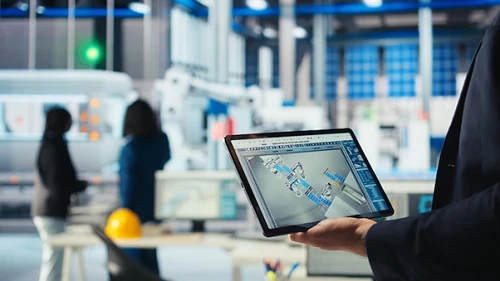
The broader market reflects this momentum. The global digital twin sector is projected to grow from around $13 billion in 2023 to $259 billion by 2032 with manufacturers applying the technology to human capital planning alongside physical assets. This massive projected expansion underscores the strategic importance leaders now place on workforce simulation as a core component of factory strategy.
As artificial intelligence continues to transform job requirements digital twins allow chief human resources officers and plant managers to test scenarios safely. What happens if aggressive artificial intelligence investment is pursued versus a conservative approach? How will changes in management spans or outsourcing strategies affect workforce composition and skill requirements? These questions, once answered through trial and error can now be explored virtually with high levels of confidence.
Human digital mapping is becoming essential to counterbalance automation
Heavy investment in technology without focus on people creates unexpected vulnerabilities. Recent industry analysis reveals technician turnover reaching high as 48% in facilities that prioritized automation while neglecting digital mapping of human roles and capabilities. Sustainable progress requires transformation in training, deployment and retention strategies.
Research frameworks published in Green Technologies and Sustainability demonstrate how digital twins can continuously mirror employee profiles, performance trajectories, engagement patterns and attrition risks. These models support quality human resources decisions under uncertain conditions delivering superior outcomes compared to traditional rule-based approaches.
You can tell when burnout is going to happen before it actually does. You can see what skills are missing in parts of the company. You can also figure out if a program to teach skills will actually work. This is a change from how human resources used to work. Usually they would look at what happened in the past of trying to predict what will happen next. In factories where things need to be made easily finding problems, with the workforce early on can save a lot of money and prevent problems with the quality of the work.
Scenario simulation strengthens resilience in markets
Leading organizations have moved beyond workforce planning toward continuous simulation cycles. This way of doing things makes it possible for manufacturing companies to adapt to changes easily and that is an advantage that will last for a long time. It helps them stay strong, in a world where things are always changing. It is hard to know what will happen next. Manufacturing is getting more and more unpredictable all the time.
Deloittes Organization Digital Twin concept captures the opportunity effectively. Their experts emphasize that winning in the age of intelligence requires preparing for what could happen rather than simply reacting to events. The model consolidates human resources information with market insights to enable truly interconnected decisions across the enterprise.
In practice this means factory leaders can evaluate dozens of futures in minutes. They can test the impact of introducing automation technologies changing shift patterns to match demand forecasts or adjusting compensation structures to improve retention of critical technical talent. The insights generated help reduce risk while maximizing return on both technology and human investments creating stable and efficient operations overall.
You can watch a video about this topic https://www.youtube.com/watch?v=osJ0eF2s9ns

Overcoming implementation challenges in smart factory environments is crucial
Despite the advantages adopting workforce digital twins comes with real hurdles that manufacturers must address thoughtfully. When we talk about integration with existing human resources systems and manufacturing execution systems and IoT platforms we need to do some planning and make sure we have data governance and strong collaboration between different teams.A lot of companies start by doing a test project on one production line or, in one department before they decide to use the digital twin for the whole facility. They use the twin in this small test to see how it works before they use it for the whole facility.
Success depends a lot on people working together in operations, human resources, IT and data science teams. It is really important to set up rules for data and make sure everything is private especially when we are talking about information, on how employees are doing and how engaged they are. Companies that work on helping employees adjust to changes and communicate with them at the time they are bringing in new technology tend to have people using the new systems much faster and they get better results in the long run.
Technical considerations also play a role. Real-time data feeds from sensors, wearables and human resources platforms must maintain accuracy and security. Edge computing approaches help reduce latency and support responsive modeling even in large-scale multi-site factory environments. Manufacturers that solve these issues position themselves to fully capture the value of workforce digital twins.
The path forward for manufacturing leaders is clear
The companies that will be in charge for the few years are going to use the same planning methods for their employees that they use for machines and factories. They will make copies of their workforce and use automation for human resources. This will help them figure out what to do when there are not skilled workers, when artificial intelligence changes things and when technology advances quickly. The digital copies of the workforce and the automation will give these companies the ability to make decisions about their employees, the workforce and deal with the changes in the workforce the artificial intelligence and the technology, with confidence.
This combination is really good because it gives us benefits. We get productivity our employees are happier and stay with us longer we have fewer problems we can react faster to new opportunities and we make better decisions, about our human resources. As factories become more advanced and able to work on their own the companies that treat their workers with the importance as their machines will be ahead of the others and stay that way for a long time.
While successful implementation demands integration, cultural alignment and ongoing investment the potential rewards in productivity, resilience and employee outcomes make workforce digital twins a strategic priority rather than a distant future consideration for serious players in the automation sector.
Plant leaders who start modeling their workforce today will hold an edge tomorrow. Explore simulation. Workforce intelligence solutions that align with your specific automation journey. The smart factory advantage in 2026 and, beyond belongs to those who plan with precision and act with foresight.
Author Bio:

Shireen Singh
Media Relations and Alignment Manager at Bazoom Group
Shireen Singh, based in Aarhus, DK, is currently a Media Relations and Alignment Manager at Bazoom Group. Shireen Singh brings experience from previous roles at Bazoom Group, WakeupData and FGT Business Research A/S. So far, I’ve worked with outbound sales and customer success, both in the public and private sector. Now, as a Media Relations & Alignment Manager at Bazoom, I work with the supplier related end of our link building campaigns. My day consists of admin work that requires anticipating the needs of multiple stakeholders and solving problems as they pop up.
 Our Services
 Media Pack Download
 Newsletters
 Industrial Events