How to Choose the Right Sensor for Your Industrial Automation System
Introduction:
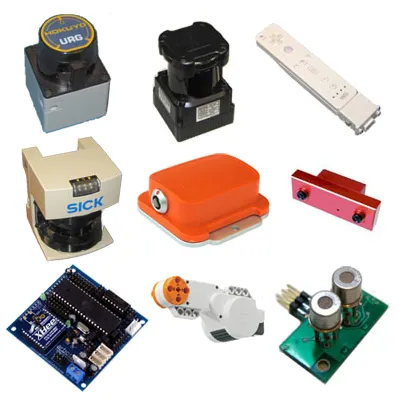
Industrial automation development relies heavily on sensors because they help improve production efficiency as well as enhance accuracy and build safety systems. Your application requires a specific sensor type from an overwhelming selection. The correct choice of sensor differs dramatically between achieving fluid automation systems and creating unnecessary costs.
The following guide introduces crucial aspects together with classification and uses of sensors in industrial automation systems. The guide will assist you in your decision process when selecting between motion detection sensors together with proximity sensor types alongside the new industrial IoT sensors.
Understanding the Role of Sensors in Industrial Automation
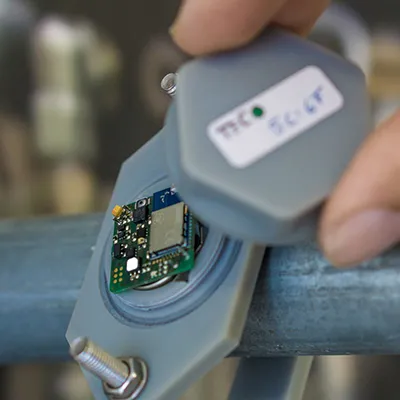
An industrial automation system uses sensors as its sensory perception system to convert physical parameters into electrical signals that lead to processing. Such devices enable machines to act intelligently when conditions in their environment change and this results in better productivity alongside enhanced safety measures.
Key Benefits of Using Sensors in Industrial Automation
- Enhanced Efficiency – The system provides efficiency increases by replacing manual work which in turn decreases operational expenses.
- Improved Accuracy – Ensures precise measurements for better quality control.
- Predictive Maintenance – The system uses predictive maintenance techniques to track equipment conditions for the purpose of stopping equipment breakdowns.
- Safety Compliance – The system includes safety features which safeguard employees during operation.
- Data-Driven Decisions – Supports real-time analytics and Industrial IoT integrations.
Factors to Consider When Choosing an Industrial Sensor
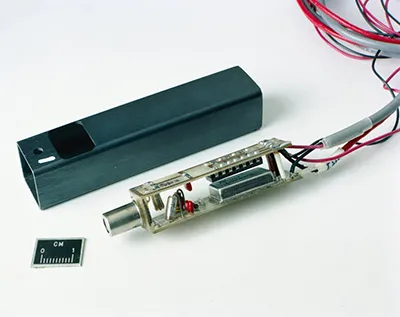
The process of selecting an appropriate sensor requires assessment of operational settings alongside precision requirements along with connectivity standards. This list includes all the necessary elements for evaluation.
1. Environmental Conditions
- Temperature Extremes – When working with equipment under extreme temperatures the selection should be temperature monitoring sensors.
- Humidity & Moisture – Opt for sealed or waterproof sensors for harsh environments.
- Dust & Chemicals – You should put rugged sensors that have protective coverings into operation when dealing with dust and chemical compounds.
2. Measurement Type
- Positioning & Motion Detection – You should put rugged sensors that have protective coverings into operation when dealing with dust and chemical compounds.
- Level & Flow Detection – Ultrasonic sensors function effectively for monitoring liquid level through level and flow detection.
- Force & Pressure Monitoring – Force measurement sensors find vital applications in robotics and assembly lines operations.
3. Connectivity and Communication
- Wireless Industrial Sensors – Ideal for Industrial IoT (IIoT) applications.
- Wired Solutions – The wired communication system delivers stable data transmission with no interference during noisy environmental conditions.
4. Accuracy and Response Time
- Detecting high-speed applications demands quick-response sensors including optical ones together with ultrasonic ones.
- Accurate measurement processes should employ laser-based together with capacitive sensors.
5. Integration with Existing Systems
- The system needs to match with controls run by PLCs and SCADA and other control systems.
- Wireless automation devices include smart sensors that do data analytics and enable automatic maintenance identification.
Types of Industrial Automation Sensors and Their Applications
| Sensor Type | Description | Application |
| Proximity Sensors | Detects presence of objects without contact. | Assembly lines, packaging machines |
| Motion Detection Sensors | Detects movement using infrared, ultrasonic, or microwave signals. | Security, conveyor systems |
| Optical Sensors | Uses light to detect objects, distances, or barcodes. | Quality control, product inspection |
| Ultrasonic Sensors | Uses sound waves to detect objects or measure liquid levels. | Tank level monitoring, presence detection |
| Temperature Monitoring Sensors | Measures temperature variations in industrial settings. | HVAC systems, furnace monitoring |
| Force Measurement Sensors | Determines the exact position of an object. | Robotics, material testing |
| Positioning Sensor Solutions | Determines the exact position of an object. | CNC machines, robotic arms |
| Level Detection Sensors | Monitors fluid or granular material levels in tanks. | Chemical processing, food & beverage industries |
| Safety Sensors for Machinery | Stops machines if a safety hazard is detected. | Press machines, automated doors |
Real-World Examples: How Industries Use Sensors
1. Manufacturing & Assembly Lines
Manufacturing plants depend on proximity sensors for component identification and optical sensors for barcode inspection during quality control operations.
2. Warehouse & Logistics
The movement of forklifts gets monitored through motion detection sensors whereas positioning sensors maintain automated guided vehicles (AGVs) on their predefined paths.
3. Oil & Gas Industry
Level detection sensors sit at fuel storage tank openings to detect tank levels thus preventing both dangerous overflows and regulatory violations.
4. Healthcare & Pharmaceuticals
Temperature-sensitive medications need temperature monitoring sensors as part of proper storage condition programs.
Future Trends in Industrial Automation Sensors
The development of industrial automation witnesses complementary advancement of sensor technology. The following trends point at the developments for the upcoming days:
1. Smart Sensors & Industrial IoT Integration
- The Internet of Things helps sensors analyze real-time data to deliver predictions about equipment health through distance-based system supervision.
- The implementation of wireless industrial sensors removes the need for complicated network wiring which reduces financial installation expenses.
2. AI-Powered Sensors
- Artificial Intelligence algorithms drive sensors to operate in fluctuating environmental settings that enhances their precision together with operational speed.
- The technology aids robotics to automatically learn and enhance their automation functions.
3. Advanced Optical Sensor Technology
- The combination of 3D imaging technology along with laser-based optical sensors enables very accurate object detection.
- These sensors find their primary applications for quality inspection functions and automated assembly operations.
Conclusion: Making the Right Choice
Every industrial automation system requires the correct sensor selection because this decision enables maximum performance with enhanced safety alongside improved operational understanding. Your sensor search will find success once you evaluate environmental conditions alongside accuracy requirements and connectivity possibilities and integration requirements.
The correct sensor selection will boost your automation quality through its use in assembly line proximity sensors and HVAC temperature monitoring and level detection applications with ultrasonic sensors.
Industrial automation experiences better performance and safety through modern developments in smart sensors together with Industrial IoT technology.
Final Checklist for Choosing the Right Sensor
Analyzing environmental conditions that affect the sensor is your first step followed by deciding required measurement types along with selecting connectivity options and performing accuracy and response time assessments and checking system compatibility.
Using this sensor selection guide you will have all the necessary information to choose a suitable sensor which guarantees your industrial automation system runs optimally.
 Our Services
 Media Pack Download
 Newsletters
 Industrial Events