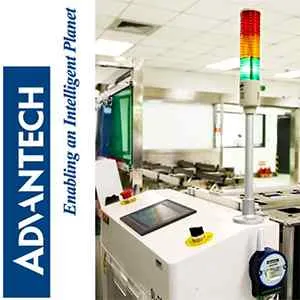
Unlocking New Potentials: Nanotechnology in Smart Industrial Automation

Smart nanotechnology is revolutionizing the industrial automation, the new age technology is setting foot in the industrial world. The advancement in the fourth Industrial Revolution, the nanotechnology holds the key to future industrial growth specifically into robotics and smart industrial technology. This article attempts to analyze the purpose and the significance of nanotechnology for constructing smart industries and discuss its prospects in combination with AI and IoT.
The Intersection of Nanotechnology and Robotics
The application of nanotechnology in robotics is enabling pioneer reforms in industrial automation. From the use of nanoengineering we are creating new generations of robots which are more accurate, faster and have greater flexibility. This leads to improvement of performance of the various components of the robots through the use of nanotechnology in that the robots become small, light and powerful.
This development is essential for the further development of industrial applications of robotics and automation for the more complex tasks, with fewer operational errors, and lower costs.
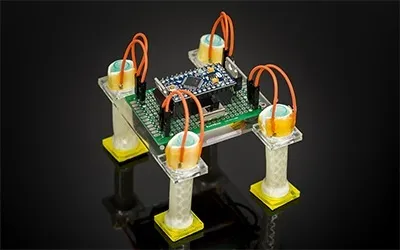
The Role of Nanotechnology in Smart Industrial Technology
Smart industrial technology heavily relies on nanotechnology. Nanoengineering has the potential to bring about powerful sensors, actuators and materials to optimize the performance of industrial processes. All these are under process automation and digitalization help make manufacturing smarter and efficient.
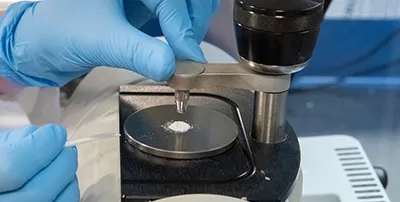
Thus, by incorporating nanotechnology in these systems, many industries are in a position to operate at higher efficiencies, reliability, and less energy consumptions.
AI-Powered Automation and Nanotechnology
The deployment of artificial intelligence and automation and technology at the nanoscale level shall be the new focus of industrial disruption. Smart electronics improve by nanotechnology, offering the required means for effective AI algorithms and data operations.

The combination of nanotechnology with automation by artificial intelligence leads to increased intelligence, as well as improved system sensitivity to changes in the environment.
Integrating Nanotechnology into the Internet of Things (IoT)
Another major event in smart industrial automation is the embracing of nanotechnology in the Internet of Things (IoT). Nanoengineering gives an occasion to develop efficient sensors and communication apparatus that are fundamentally important for the IoT systems.

Incorporating these devices for smart industrial purposes is that they are thus accorded better sensitivity, accuracy and battery durability; making the technology more effective. Thus, all the industries can obtain increased connectivity, data accuracy, and monitoring in real-time.
Application of Nanotechnology in Smart Electronics
The revolution of performance and function in smart electronics is attributable to smart industrial technology, nanotechnology in particular. Because of nanoengineering, it is now possible to fabricate electronic components with outstanding performance and energy efficiency.
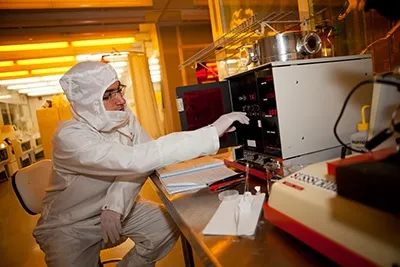
These breakthroughs are for the advancement of enhanced AI written robot control, and various other state-of-the-art technologies. The further advancements in nanotechnology in smart electronics are continuing to enable changes in many sectors of industry.
The Future of Manufacturing with Nanotechnology
Presently, the manufacturing industry cannot be discussed separately from the usage and development of nanotechnology. While studying the application of nanotechnology in the industry the world over we discover the potentialities that are latent in extending production rates, quality and cutting down the pollution impact. In smart industrial technology this is just the beginning of nanotechnology and it brings the capacity of new level of efficiency and innovation in manufacturing.
Potential of Data in Smart Manufacturing
This is even the case when several claims have been made on the applicability of data in smart manufacturing, the integration of nanotechnology serves to further enhance this possibility. Technical solutions at the nanoscale improve the gathering of more efficient and accurate data which are critical in improving production processes. When industries utilize data, they can make right decision, anticipate when a maintenance is due, and enhance the performance of operations.
Conclusion
Nanotechnology is a revolution in the area of smart and industrial automation. Its connection to robotics, smart industrial technology and the AI automation is driving the evolution of manufacturing. This discovery of the impact of nanotechnology when it comes to the development of converting industries into smart industries only signifies the ever-growing possibility of smart ideas and ways. Thus, nanotechnology as well as its applications should be accepted by the industries in order to realize their hidden possibilities and become the basis of the further industrial development.
 Our Services
 Media Pack Download
 Newsletters
 Industrial Events