Instrumentation and Electronics in Process Control: Driving Precision at Scale
Introduction: Precision as a Competitive Advantage in Modern Industry
In the modern industrial landscape, precision becomes not a luxury anymore: on the contrary, it is a strategic requirement. In chemical processing and pharmaceuticals, food production, power generation, and manufacturing, businesses are necessary in an environment where any slight deviation may lead to downtime with significant costs, quality wastage, or non-regulatory compliance. The core of this accuracy-based ecosystem is the instrumentation and electronics in process control that allow industries to measure and control and optimize processes at large.
Instrumentation Process control and industrial electronics have long since developed beyond simple measuring instruments. They have become smart, networked constructs that can self-diagnose, predictively control and be able to integrate smoothly with enterprise platforms. With smart manufacturing growing faster, scalable process control solutions are proving to be the key to remaining agile, efficient and competitive by organizations.
Understanding Process Control Instrumentation in Industrial Environments
Process control instrumentation is defined as that which measures, monitors and controls physical and chemical variables of an industrial process. Such variables usually involve pressure, temperature, flow, level, pH, conductivity and composition. These parameters are important in ensuring the stability of operations and quality products, and their correct measurement is essential.
The field of industrial instrumentation has a part in the fundamentals of the process of transforming the real-life conditions of the processes into actionable information. Raw signals are captured by sensors and transmitters and changed into standardized electrical outputs and sent to process control systems to be analyzed and acted on. The accuracy of this instrumentation has a direct effect on the safety of operations, efficiency of production and the life of the assets.
Definition: Process Control Instrumentation
Process control instrumentation is a set of sensors, transmitters, analyzers and actuators, which gauge and control the variables of industrial processes to maintain stable, safe and optimized processes.
The Role of Industrial Electronics in Process Control Systems
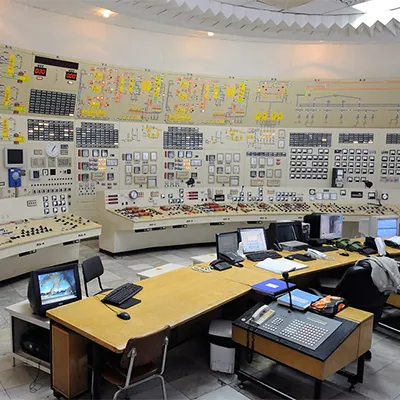
The third layer in the modern process control system is industrial electronics, which is the intelligence of the system. These electronics receive signals caused by instrumentation, implement control algorithms and trigger corrective measures in real time. The industrial electronics of automation are based upon programmable logic controllers (PLCs), distributed control systems (DCS), industrial personal computers, and embedded controllers.
Electronic instrumentation used in industrial automation is engineered to survive in severe environments; high temperatures, vibration, humidity, and electromagnetic interference. This strength provides stability of operations to both continuous and batch processing systems.
Another application of industrial electronics is the support of sophisticated communication protocols, which makes the exchange of data between field equipment, levels of control, and supervisory systems flowing smoothly. This connectivity is essential to scalable process control solutions in smart manufacturing where real-time visibility and remote control are the rule of the day.
Architecture of Modern Process Control Systems
The modern process control systems are layered structures that combine instrumentation, electronics, software and analytics into a unified functional system. Process data are measured by instrumentation of process control at the field level. Industrial electronics at the control level process this data and implement control approaches. The data is also visualized at the supervisory and enterprise levels and analyzed and aligned to the business objectives.
Table: Typical Layers in a Process Control System
| Layer | Function | Key Technologies |
| Field Layer | Measurement and actuation | Sensors, transmitters, control valves |
| Control Layer | Real-time control logic | PLCs, DCS, industrial controllers |
| Supervisory Layer | Monitoring and optimization | SCADA, HMIs |
| Enterprise Layer | Data-driven decision-making | MES, ERP, analytics platforms |
This multi-level design is that it will be scalable and organizations will be able to add capacity or add new equipment or more advanced process control systems without redesigning current infrastructure.
Advanced Instrumentation for Precision Process Control
With the new levels of precision and throughput required by industries, new instrumentation has become a necessity in order to control processes precisely. Embedded diagnostics Smart sensors, self-calibration, and digital communication interfaces greatly decrease the measurement uncertainty and maintenance charges.
Complex instrumentation is also conducive to multivariable measurement where a single device is used to monitor many parameters at a given time. This measure of accuracy in the pharmaceuticals, specialty chemicals industries, and others gives a stable consistency between batches and adherence to regulation with minimal waste.
Digital instrumentation will also increase the level of data integrity, traceability, and cybersecurity, which form international standards of industrial automation and quality management.
Advanced Process Control Systems and Their Business Impact
Complex industrial processes can be optimized by advanced process control systems that rely on highly complicated algorithms, including model predictive control (MPC), adaptive control, and artificial intelligence. Advanced process control is unlike the traditional control methods which correct deviations once they have occurred but in fact predicts the occurrence of a disturbance and corrects the operations.
These systems provide quantifiable value, as far as business is concerned. Better production, less energy use, less loss of time and increased product uniformity directly affect the bottom line. Even efficiency gains in the marginal order would be huge amounts of saved money in large scale operations.
The control systems used for the advanced process control also help to achieve sustainability objectives through the optimisation of resource usage and emissions to ensure that operational performance is matched to their environmental obligations.
Scalable Process Control Solutions for Smart Manufacturing
Smart manufacturing demands process control systems, which can be extended easily along production lines, plants, and globally. An intelligent manufacturing system is scalable and is able to accommodate a growing operation, product diversification and changing regulatory requirements without interference to the main operations.
Automation with industrial electronics allows the design of systems that are modular and new instrumentation and control modules can be added with little configuration. Cloud connectivity and edge computing are also used to augment scalability with centralized analytics and decentralized control.
Scalability is also applicable to the efficiency of the workforce. Standardised architectures, user friendly interfaces, as well as remote diagnostics minimise the learning curve of operators and maintenance teams enhancing operational resilience.
Integration of Industrial Electronics with Digital Transformation Initiatives
Process control instrumentation and industrial electronics are the primary sources of data involved in digital transformation initiatives. Digital twins, predictive maintenance and performance analytics tools are fed by real-time operational data.
Industrial automation efficiency through electronic instrumentation will guarantee high data accuracy and availability that is essential to the machine learning models and decision-support systems. Enterprise integration gives companies an opportunity to match operational KPIs with financial and strategic KPIs.
It is this convergence of process control systems with digital technologies that allows the transition of reactive operations in manufacturing to insight-driven manufacturing.
Industry-Specific Applications of Process Control Instrumentation
Process control instrumentation and industrial electronics are used differently in different industries. In oil and gas, flow and pressure control are very specific and provide safety and protection of the assets. Hygienic instrumentation is used in food and beverage to ensure the quality and compliance of the products. In drugs, the regulation standards are high and have to be justified by a validated instrumentation.
Irrespective of these variations, there are principles behind them, which are as follows: without proper measurement, good control, and scalable automation, there can be no operational excellence in any industry.
Key Considerations for Selecting Instrumentation and Electronics
The performance of the selected instrumentation, its reliability, and overall cost of ownership must be balanced to select the appropriate instrumentation in controlling the process. The compatibility with the current process control systems, environmental and long-term support through the vendors are key evaluation criteria.
Automation industrial electronics must be able to implement open communication standards, cybersecurity best practices, and future growth. Organisations with interoperability and scalability have an advantage of adapting to both technological and market change.
FAQ: Instrumentation and Electronics in Process Control
How do process control systems improve operational efficiency?
Process control system will provide optimum operating environment, reduced variability and minimized control interventions leading to increased throughput and uniformity of quality.
What role does industrial electronics play in automation?
The industrial electronics forms the core of industrial automation since it decodes the measurement data in the field, executes control logic and mediates communication between the field apparatus and the upper level systems.
Why is advanced instrumentation important for precision control?
High-end instrumentation enhances accuracy of the measurements, minimizes training time by virtue of diagnostics and more complex control strategies, which are essential in the modern manufacturing environment.
How do scalable solutions support smart manufacturing?
Scalable solutions enable gradual growth, addition of digital capabilities, and a centralized control without interfering with the current operations.
Future Outlook: Precision at Scale as the New Standard
With the shift in the industry towards increased automation and digitalization, instrumentation and electronics in process control are going to be in a state of transformation. More precision, reliability, and scalability will be achieved by using artificial intelligence, edge analytics, and cybersecurity.
Organizations investing in sophisticated process control systems, strong and well-developed industrial electronics and quality instrumentation are not merely streamlining existing operations, they are creating strong, resilient manufacturing ecosystems that are capable of surviving in the future.
Conclusion
The forces behind precision in the scale of modern industry are instrumentation and electronics in process control. These technologies can help organizations to excel in operations in increasingly complex settings, whether it is facilitated by accurate measurement and reliable control, more advanced analytics and smart manufacturing integration.
Through embracing the use of sophisticated instrumentation to control processes precisely and scalable process control solutions to smart manufacturing will enable businesses to achieve high efficiency, compliance, and have a competitive advantage in a fast-paced industrial environment.
 Our Services
 Media Pack Download
 Newsletters
 Industrial Events