Top 9 Latest Innovations in Food Processing Equipment

The food processing industry experiences a technological revolution by introducing advanced processing machinery which improves production lines and ensures enhanced food quality and better efficiency. Modern technology brings together high speed with precise and environmentally friendly and risk-minimizing capabilities to the manufacturing process. Increasing consumer expectations for healthy and secure food that remains fresh drive the industry to use automated production machines coupled with artificial intelligence technology for leading competitive market positions. The food processing sector experiences transformation through which recent breakthroughs create its shape.
1. Smart Food Packaging and Inspection Technology
Modern smart food packaging technology stands out as one of the most remarkable advances since it enables perishable items to sustain longer shelf lives with maintained food safety standards. Food safety smart sensors operate as part of this technology to deliver real-time monitoring of food qualities along with temperature levels and humidity measurements and contamination risks detection.
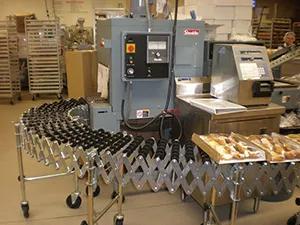
The combination of food inspection tools equipped with artificial intelligence together with sensors helps detect threats that make their way to consumers which enables illness reduction and superior packaging quality verification.
2. High-Speed and AI-Driven Food Processing
Big food manufacturing operations need maximal operational speed and production efficiency as top priorities. Food processing speed increases with the implementation of high-speed production solutions. The technological breakthroughs enable producers to generate several types of food products efficiently at a faster pace throughout their manufacturing processes.
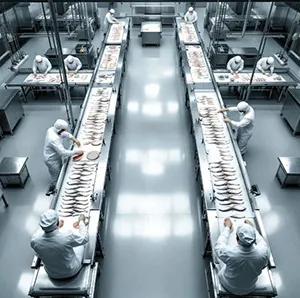
The combination of artificial intelligence food sorting technology together with its machine learning and computer vision algorithms allows manufacturers to optimize their production operations and decrease operational waste.
3. Robotic Automation in Food Handling
In robotic food handling, automation has become a major industry changer by transforming how food operators move their products during handling and sorting and packaging operations. The robotic systems execute complex procedures with great precision thus minimizing both human contact and potential contaminations.
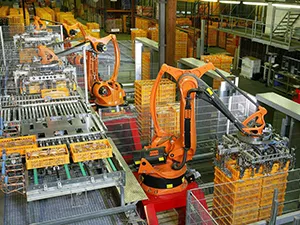
Through precision-controlled food slicing machines manufacturers can now produce uniform cuts which improve product visual aesthetics as well as develop product consistency. The precision demanded in the meat dairy and bakery industries is essential because it affects how satisfied customers become with their products.
4. Advanced Sterilization and Pasteurization Techniques
Food safety and sterilization within the industry has achieved major improvements through advanced food sterilization methods. High-Pressure Processing (HPP) and Ultraviolet (UV) treatment simultaneously remove harmful bacteria from food products and maintain food flavor together with nutritional profile.
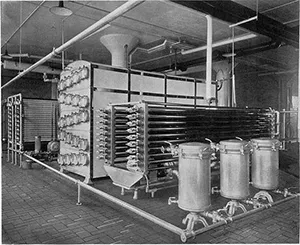
Modern food pasteurization techniques develop heat treatment methods that increase product shelf life by extending its duration yet maintain excellent taste and texture quality.
5. Next-Generation Freezing and Preservation Systems
Rapid growth of the frozen food industry demands advanced food freezing systems to fulfill consumer needs. Food texture suffers degradation through ice crystals that develop during traditional freezing processes. Modern freezing techniques which include cryogenic processes and IQF (Individually Quick Frozen) methods enable food preservation along with preservation of freshness and quality and extended storage duration.
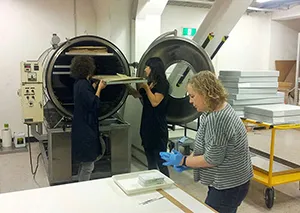
New generation preservation systems focus on creating methods which keep food products fresh through maintaining their original taste quality and aromas and nutritional values.
6. Innovative Food Dehydration and Mixing Technologies
Innovative food dehydration machines assist food preservation by removing the need for any additives or preservatives. Modern drying equipment implements vacuum drying in combination with freeze-drying technology to eliminate moisture content while sustaining required nutrients intact. Baked foods benefit strongly from these machines because dried snacks made from fruits, vegetables and meats continue to increase in market demand.
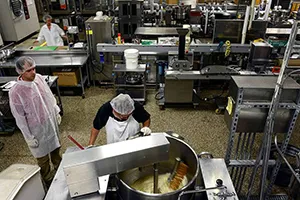
Modern technical innovations in food blending produced high-efficiency mixing systems that deliver uniform ingredient combination for food product development.
These machines provide optimal texture and quality outcomes and shorten production times by performing emulsifying sauces as well as dough mixing procedures. Modern food emulsification methods enable food producers to develop stable and smooth oil-in-water or water-in-oil emulsions suitable for dairy items and beverage solutions.
7. 3D Food Printing and Customization
The future of food processing technology becomes increasingly advanced through the development of 3D food printing innovation. The innovative technology enables the production of sophisticated food structures along with dietary customization and decorative appearance creation elements.
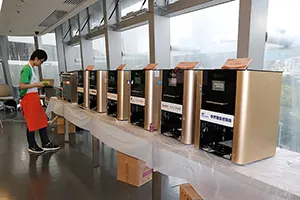
Three-dimensional printing technology has transformed the way we design elaborate chocolate art and create substitution products for animal meats while bringing better control over food sustainability.
8. Automated Ingredient Dosing and Waste Reduction
Large-scale food production needs precise and uniform measurement of ingredients as a fundamental requirement. The emerging automated ingredient dosing systems work as essential industrial solutions which correctly measure all ingredients at precise times. The automated system decreases human mistakes while guaranteeing uniform items and raising food production efficiency levels in manufacturing facilities.

The growing global food waste issue has caused the industry to implement hardware technologies for waste reduction to prevent waste losses. Waste reduction in production, in collaboration with AI, utilizes waste tracking systems and surplus redistribution platforms. Additionally, material renewal technologies have helped manufacturers reduce emissions and improve the food supply system. Food producers who adopt AI analytics for demand forecasting reduce their need to overproduce since they achieve better accuracy in market predictions.
9. The Role of Extrusion in Food Processing
Food production obtains significant benefits from ultra-modern extrusion machines that create diverse food products across different sections from breakfast cereals to plant-based proteins.
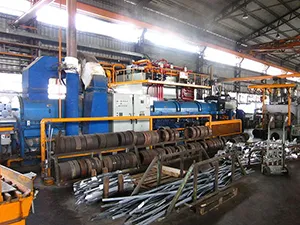
Food industry innovation became possible because extrusion technology allows manipulation of both composition and texture parameters. The developments enhance efficiency and provide manufacturers better abilities to adjust ingredient responses as well as maintain product standards.
Conclusion
The future food industry standards in efficiency and quality and sustainability emerge from advanced food processing equipment combined with latest technologies. The tools of AI and automation first provide manufacturing facilities with enhanced safety measures before moving to production streamlining features that fulfill consumer demands in their constantly transforming world. Food processing technology needs to move beyond mere speed and convenience for the global population since its future demands healthier while creating safer sustainable food items for everybody. Space exploration in food manufacturing has reached its first phase of development yet it marks the beginning of an intelligent sustainable efficient revolution in the industry.
 Our Services
 Media Pack Download
 Newsletters
 Industrial Events