Innovations in Construction Machinery for Sustainable Industrial Growth

The construction industry is a progressive field and new developments in the construction equipment are revolutionizing the field that is lying in par with sustainable development goals and innovation. Sustainable construction machinery innovations: This article analyses the great advancement in sustainable construction machinery technology advances and how these improvements encourage sustainable industrial development.
Cutting-Edge Technology in Construction Machinery
The integration of advanced technology in the construction equipment’s has greatly transformed the working systems and delivery. Here, advanced sensors or IoT implemented systems are helping in enabling the smarter construction practices. Recent trends in smart construction machines involve the use of real-time data analysis to justify operations and costs and minimize loss.
However, it can be also noticed that in the planning and control phases here digital twins and virtual simulations play powerful ways. These technologies help the project manager to see how construction activities are planned, identify where and when possible delays may occur, and to take decisions. Through the adoption of such technologies, the industry is adding productivity to its benefits while at the same time guaranteeing costs and quality.
Automation and Robotics: Transforming the Industry
Self-Operation in the construction equipment has come out as a new revolution, which can increase the traditional precision and decrease the manual efforts. Automation is also being introduced into construction equipment and keeps on simplifying activities like brick laying and concreting. These technologies do not only enhance efficiency but also reduce the rate of hazards hence cutting on-site dangers.
For instance, AI incorporated robotic arms can place the brick perfectly and a hundred times faster than a human being would do. Like the concrete mixers, automatic ones can also alter the mixes being made at a given period in real time, hence ensure the common end product to be uniform. If these machines improve in functionality and technological complexity they are likely to undertake more complex constructional tasks which in turn redefine traditional working patterns.
Eco-Friendly Developments and Low-Emission Solutions
Environmental issues have boosted the deployment of sustainable construction machines innovations. They are now devising processes and constructing low emission construction equipment and green construction equipment advancement that meet or even surpass legal strictures. These machines are efficient in the sense they consume less fuel, produce minimum emissions and align with the global decarbonization process.
The most prominent of the improvements is the shift to electric powered construction equipment. All these machines rely on technology and not fossil fuels hence they minimize the effects of climate change. Further, electric construction machinery includes; reduced operation costs and less noise making them suitable for usage in crowded places like cities.
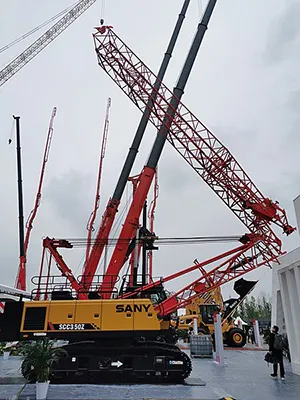
Biodegradable lubricants and energy-efficient hydraulic systems are other additional attributes to modern construction machinery’s friendly environmental features. They eliminate wastage and guarantee optimal utilization of machines and equipment with least effects on the environment.
AI and Smart Solutions in Construction Equipment
AI integration in construction equipment has opened up a whole new avenue in usage in the arena of predictive maintenance on job sites. Self-operated construction machinery employs artificial intelligence to predict breakdowns of the machinery in order not to be disrupted. In addition to this, smart construction equipment solutions foster smooth interaction of equipment with users and therefore improves efficiency.
Another major advancement is the use of Al driven drones, which brings an unprecedented efficiency to site surveys as well as monitoring project progress. These drones offer clear images, and with detailed analysis, a project manager can notice problems early enough. Moreover, the use of AI in software can assist with the scheduling of particular tasks, the identification of resources for the completion of work, as well as planning and coordination of the general project, so that work is not only done efficiently but is also on time and within the set budget.
Hybrid Models and Renewable Energy
It is also illustrating increased adoption of dual-mode construction machinery models that incorporate both electric and conventional power. These models can provide flexibility, lighter body compared to standard designs, and increased fuel efficiency, which embody the transition from previous to more advanced models. In addition, the use of renewable energy sources such as solar power, and wind on construction machinery is a milestone in attaining energy autonomy.
A case of hybrid excavators and loaders is that they adopt regenerative braking systems to restore and recover energy. The energy stored can then be readily utilized to support other non-propulsive operations thus minimizing total fuel usage. Since most of these energy sources are renewable, these machines not only cost efficient but also sustainable.
Autonomous and 3D Printing Technologies
Self-driving construction equipment technology is revolutionizing how projects are going to be achieved.
Beginning from the use of automated bulldozer, to self-operated excavator, all these are avoiding human interference but increasing accuracy. This technology enhances the rates used in the execution of projects, and implementation of projects is also efficient in economic terms.
One new finding is the use of 3D printing in the construction equipment manufacturing industry. This technique helps to manufacture special parts of the machine which suit customers’ needs best with a little amount of wastage leading to efficiency and effectivness in production. On-demand printing of complex components also helps the industry promote innovation.
In addition, the field of architecture, the construction of entire buildings and structures of civil infrastructure, including bridges and homes, is actively using 3D printing. These effects help to minimize the wastage of material, cut down on the expenses of human labor and working on the time duration of construction. This is already seen as a strong vanguard that with future developments in material science, 3D printing will be key in modern construction practices.
The Future of Sustainable Construction Machinery
The emergence and development of sustainable construction machinery innovations suggest the possibility of continuing to work path to make future living environment green. The industry is also solving humanities sociopolitical problems such as scarcity of resources by incorporating technology in construction machinery. Therefore, automation of construction equipment and AI operated construction machinery are not only trending issues but prevailing needs for constructing sustainable industrial developments.
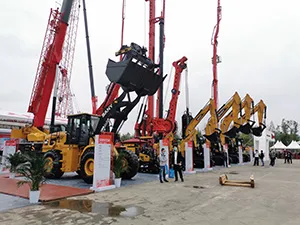
Moreover, favorable actions are seen in the shift from fossil fuel dependent construction equipment and machinery to electrically operated ones as well as environmentally friendly construction vehicles. The incorporation of renewable energy into constructing construction machinery, the creating of hybrid construction machinery models also explain the effort that has been put in by the industry to change significantly.
Engaging the Audience: Why It Matters
Smart construction machinery trend and the advantages of the electric construction machinery are important areas of knowledge for professionals and enthusiasts in construction business. This knowledge helps promote an organization culture that meets the challenges to ensure competitiveness and protect the environment.
The combination of integrating advanced technologies such as AI in construction equipment and advancement in construction machinery with environmental friendly perspectives also provides the best example where technology and sustainability can go hand in hand.
Thus, two major trends remain in sight for the further evolution of the industry: innovations in the construction of environmentally friendly equipment for construction and the development of intelligent solutions to improve work in construction.
Conclusion
The search for sustainable industrial development is based on continuous improvement of construction equipment. The focus on the recent industry trends such as latest construction equipment, autonomous construction equipment technology and 3D printing in construction Equipment manufacturing speaks volumes about the industry. Through adopting sustainable construction machinery innovations, the construction industry is not only improving productivity but also, promoting construction of sustainable constructions.
The industry is a very important player and trendsetter in the global economy providing products such as construction, automotive, aerospace, and manufacturing. So as the world awaits the year 2025 the steel industry is experiencing a lot of technological changes that will affect how companies and industries get their steel supplies and how those who supply the steel products will interact with them. All in all, B2B buyers themselves require such information to make better procurement decisions, sustain competitive advantage, and respond to the innovations. In this article, we will analyze the major steel technologies that will be crucial for the market in 2025 and what B2B buyers should expect to get from the shift.
 Our Services
 Media Pack Download
 Newsletters
 Industrial Events