Industrial Service Elevators Supporting Safe and Efficient Material Handling
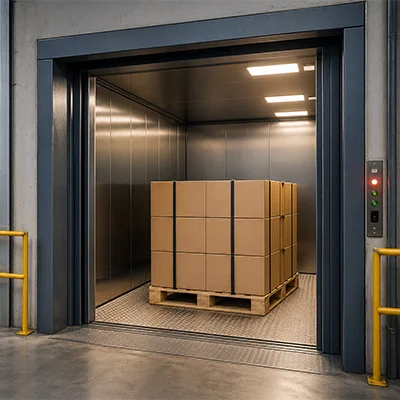
Walk into any busy factory during peak hours and you’ll notice something interesting—it’s not the machines that slow things down. It’s the movement of materials.
Raw materials waiting to go up. Finished goods waiting to come down. Workers figuring out how to move things without wasting time or risking injury.
That gap—between where materials are and where they need to be—is exactly where Industrial Service Elevators for Material Handling come into play. And in many facilities, they quietly make the difference between a smooth operation and a frustrating one.
The Problem Nobody Plans For
Most factories are designed around production capacity. Machines are placed carefully. Processes are optimized.
But material movement? That often gets figured out later.
At first, teams manage. People carry loads. Trolleys are used. Sometimes forklifts are pushed beyond their intended use. It works… until volume increases.
That’s when the cracks show:
- Delays between stages
- Workers spending more time transporting than producing
- Safety concerns creeping in
At this point, adding proper Vertical transport systems for factories isn’t an upgrade—it’s damage control.
Why Elevators, Not Alternatives?
You might ask—why not just use ramps or forklifts everywhere?
Because vertical movement is different.
Ramps take up space. Forklifts aren’t always safe or efficient across levels. And manual handling simply doesn’t scale.
This is where Freight Elevators and Service Elevators step in. They do one job, but they do it reliably—move materials up and down without drama.
And that reliability matters more than most people realize.
Not All Elevators Are Built the Same
One mistake companies make is assuming any lift will do the job.
It won’t.
Industrial Lifting Equipment is built for a completely different environment compared to commercial systems. These elevators deal with dust, heat, long working hours, and uneven loads.
Freight Elevators are the heavy lifters—literally. They handle pallets, drums, machine parts, and bulk materials.
Service Elevators are smaller but often busier. They’re used for tools, components, and frequent transfers that keep daily operations moving.
And then there are custom Industrial service elevator systems, which are designed around very specific needs—awkward spaces, unusual load types, or harsh environments.
What Actually Improves After Installation
Here’s where things get interesting.
Companies often install Material handling elevator solutions expecting faster movement. They get that—but they also get a few unexpected benefits.
Work Stops Waiting
Before elevators, teams often pause because materials haven’t arrived yet. After installation, that waiting reduces significantly.
Fewer Workarounds
No more “let’s just carry this for now” situations. Processes become cleaner and more predictable.
Fewer People on the Floor
People, forklifts and carts all move around. Lifts make vertical movement easier, which has a positive effect on horizontal movement too.
Safer Work Environment
This one is obvious but important. Heavy-duty service elevators for factory operations take over the risky part—lifting and transporting heavy loads.
Real-World Scenarios
In Manufacturing Units
Components rarely stay in one place. They move between stages constantly. Without structured movement, even a well-planned production line feels disorganized.
That’s where efficient elevator systems for industrial material transport quietly stabilize operations.
In Warehouses
Space is expensive, so storage goes vertical. But storing goods on multiple levels only works if you can move them easily. This is where Freight Elevators become essential.
In Food and Pharma
Here, it’s not just about movement—it’s about controlled movement. Clean, contained Service Elevators help maintain standards without slowing things down.
In Heavy Industries
Large parts don’t forgive mistakes. Moving them manually isn’t just inefficient—it’s risky. That’s why Industrial Service Elevators for Material Handling are often non-negotiable in such environments.
Safety Isn’t Just a Feature
Let’s be practical—most safety incidents in factories don’t come from machines. They come from handling.
Lifting. Carrying. Improvised transport.
By introducing proper Industrial service elevator systems, a big portion of that risk disappears. Loads are handled in a controlled way. Workers aren’t forced into unsafe practices.
And from a management perspective, that matters—not just for compliance, but for continuity.
The Integration Angle (Often Overlooked)
One recent development is the integration of these systems.
In the past, elevators were stand-alone. Now, they’re part of a connected setup.
Modern Material handling elevator solutions can align with conveyors, production schedules, or even automated systems. It's on time, not on memory.
The Right Configuration (Where It All Goes Wrong)
This is where decisions can either pay off—or cause long-term frustration.
Some companies go for oversized systems they don’t fully use. Others choose basic setups that struggle under real conditions.
The better approach is simple:
- Understand what you’re moving
- Know how often you’re moving it
- Be realistic about your environment
From there, the right Industrial service elevator systems usually become obvious.
Cost Conversations (Let’s Be Honest)
Yes, these systems cost money. And yes, that can slow down decisions.
But here’s the flip side—what’s the cost of not having them?
- Ongoing delays
- Higher labor dependency
- Increased risk of damage or injury
- Constant operational adjustments
Over time, most facilities realize that Efficient elevator systems for industrial material transport are less of an expense and more of a correction.
Where Things Are Heading
Industrial setups are changing, and elevators are evolving with them.
We’re seeing:
- Smarter controls
- Better energy use
- More customized designs
- Stronger focus on durability
Nothing flashy—but very practical improvements.
And honestly, that’s what industries need. Systems that work, last, and don’t need constant attention.
Final Thought
Material handling rarely gets the spotlight. But when it doesn't work, it's obvious.
That's why Industrial Service Elevators for Material Handling are now commonplace in today's buildings - not for their novelty, but for their practicality.
Be it Freight Elevators for heavy loads or Service Elevators for more routine work, to the point of both is this: now you have consistency.
And in industrial environments, consistency is everything.
 Our Services
 Media Pack Download
 Newsletters
 Industrial Events