Industrial Elevators in Plant Automation: Technologies, Systems and Smart Material Handling Solutions
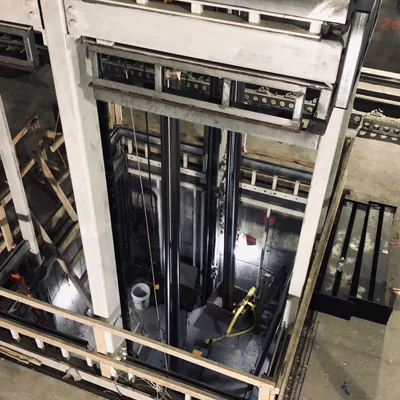
Why Industrial Elevators Are No Longer Just “Lifts”
Walk into any modern manufacturing plant today and one thing becomes obvious very quickly—everything is moving, constantly. Raw materials, semi-finished goods, packed products… nothing stays still for long. And while horizontal movement gets most of the attention (conveyors, AGVs, robotics), vertical movement is where many facilities still struggle.
This is exactly where industrial elevators come into play—but not in the way most people think.
We’re not talking about basic lifting platforms anymore. Today’s systems are deeply integrated industrial lifting systems that sit right at the intersection of automation, efficiency, and safety. In fact, in high-throughput plants, elevators are no longer support equipment—they are part of the core material handling systems.
The Replacement of Manual Handling by Smart Vertical Movement
And only a short time back, most of the factories were still using forklifts or hand labor to transfer goods between levels. It was successful. Though with delays, safety concerns, and inconsistencies. It worked… but it came with delays, safety risks, and inconsistency.
Now, with the push toward automation, businesses are rethinking vertical logistics. Modern industrial lifting equipment is designed to:
- Handle continuous movement without fatigue
- Integrate with digital systems
- Reduce dependency on manual labor
- Improve overall process timing
This shift is especially visible in facilities where space is limited. Companies are not expanding outwards, but rather upward, and this automatically boosts the need to have efficient vertical lifting system in factories.
What is Different about Modern Industrial Elevator Systems?
Even an elevator may appear to be merely an up-down-machine. However, it is different behind the scenes.
Today’s industrial elevator systems are:
- Digitally connected
- Sensor-driven
- Often part of a fully automated workflow
- Built for specific industry use cases
Types of Industrial Elevators You’ll Actually See in Plants
Instead of listing textbook definitions, let’s look at how these systems are actually used in real environments.
Freight Elevators – The Workhorses
These are still the most common. If a facility deals with heavy loads, freight elevators do the heavy lifting—literally.
They’re built tough, often oversized, and designed to handle constant use. In many plants, they operate almost non-stop as part of daily production flow.
Hydraulic Systems – Working and Dependable
Industrial lifting systems that are hydraulic in nature continue to be in high demand particularly in mid-rise applications.
They are not the quickest, but reliable. These systems are still very sensible to facilities where stability is more important than speed.
Traction Elevators – For High-Demand Environments
When speed and efficiency become critical, traction systems step in.
They are commonly used in multi-floor manufacturing setups where delays can disrupt entire production schedules. Compared to older systems, they also tend to be more energy-efficient.
Fully Automated Vertical Lifts – The Game Changer
This is where things get interesting.
These systems are part of broader automated material handling solutions. They don’t operate independently—they work alongside conveyors, robotics, and warehouse software.
In some advanced facilities, there’s barely any human involvement. There are virtually no human interactions throughout the process of materials moving through storage, processing, and packaging.
Industrial Elevators and the Enlargement of the Automation picture
A common error that most businesses commit is considering elevators as a single-purpose machinery. That approach doesn’t work anymore.
Modern plants rely on connected material handling systems, and elevators are just one piece of that puzzle.
Here’s how they typically integrate:
- Conveyors feed materials into elevators
- Elevators transfer them between levels
- Robotics or AGVs take over from there
- Software systems track everything in real time
When properly followed, the whole process seems smooth. Elevators are bottlenecks when they are used improperly. That’s why integration is just as important as the equipment itself.
The Rise of Smart Industrial Lifting Systems
“Smart” gets overused a lot—but in this case, it actually means something.
Today’s smart industrial lifting systems are equipped with sensors and connected to monitoring platforms. They can:
- Track usage patterns
- Detect overload conditions
- Predict maintenance needs
Monitor energy consumption
Instead of reacting to breakdowns, teams can act before problems happen. That alone can save significant downtime costs.
Smart Elevator Systems in Automated Industrial Facilities
In highly automated plants, elevators are no longer reactive—they’re predictive.
These smart elevator systems for automated industrial facilities often work based on system logic rather than manual commands.
For example:
- If production output increases, elevator cycles automatically adjust
- If a system detects congestion, movement patterns are optimized
- If maintenance is due, alerts are triggered before failure occurs
This level of coordination is what defines modern automation.
Real Business Benefits (Not Just Technical Advantages)
Let’s move away from features for a moment. What do businesses actually gain?
1. Faster Throughput
Delays in vertical transport can slow down entire production lines. Efficient elevators eliminate that risk.
2. Reduced Labor Dependency
As the cost of labor increases and the supply becomes problematic, automation is not a strategic decision, but a reasonable requirement.
3. Improved Workplace Safety
Manual lifting and forklift usage come with risks. Replacing them with controlled industrial lifting equipment significantly improves safety.
4. Better Space Utilization
Factories are expensive to expand. Using vertical space effectively can delay or even eliminate the need for expansion.
5. Long-Term Cost Savings
Yes, it can be expensive to invest in the beginning. However, it usually pays in the long-term through labor, downtime, and efficiency savings.
Where These Systems Are Making the Biggest Impact
Industrial elevators are not limited to one sector—they’re everywhere.
- In manufacturing, they connect different production stages
- In warehouses, they support high-density storage systems
- In pharmaceuticals, they enable controlled and clean material movement
- In automotive plants, they handle large and heavy components
Each industry has its own requirements, which is why customization is often necessary.
Challenges Companies Still Face
It’s not all smooth implementation. There are real challenges.
Integration Issues
Connecting elevators with existing material handling systems can get complicated, especially in older facilities.
Cost Concerns
Advanced industrial elevator systems require capital investment, which can slow down decision-making.
Maintenance Planning
Even smart systems need maintenance. Ignoring that can lead to expensive downtime.
Overengineering
Sometimes companies invest in overly complex systems that don’t match their actual needs. Simpler solutions can often work better.
The Future of Industrial Lifting Solutions?
In the future, some tendencies are emerging.
- Systems will be more energy-efficient
- Data will drive more decisions
- Automation will become more autonomous
- Modular designs will make upgrades easier
The biggest shift, however, is this: elevators will no longer be seen as infrastructure—they will be seen as active contributors to productivity.
That’s already happening with advanced industrial lifting solutions for factory automation.
Final Thoughts
Without efficient vertical movement, even the most advanced automation setup can fall apart.
The real value of modern industrial lifting systems lies in how well they connect with the rest of the operation. When integrated properly, they don’t just move materials—they keep the entire system running smoothly.
For B2B decision-makers, the takeaway is simple: don’t treat elevators as an afterthought. In a fully automated environment, they can either be a bottleneck—or a competitive advantage.
And increasingly, that choice is becoming a strategic one.
 Our Services
 Media Pack Download
 Newsletters
 Industrial Events