Human-Machine Interaction: Improving Safety and Productivity in Manufacturing

With the concerns that arisen in the context of Industry 4. 0, the efficiency between the human and the machine is altering the features of manufacturing. Indeed, a key-role in safety and manufacturing performance improvement is played by Industry 4.0. This article looks into how application of technology and strategic practice can enhance safety in manufacture plants as well as enhance the productivity of the employees in relation to safety challenges and possible solutions.
Enhancing Safety in Process Manufacturing
Safety management in process manufacturing has always been a significant challenge especially due to the increasing adoption of smart technologies and automation in Industry 4. It is therefore with 0 offers new ideas to improve health and safety within the manufacturing sector. Real time control system, smart sensors and automated safety measure, all these factors can enhance safety in manufacturing plants than ever before.
For example, industrial safety equipment manufacturers are coming up with much enhanced safety gear and systems that include alarms and possibly self-closing systems when certain dangerous conditions are detected at the production lines. In the aspect of safety issues in the manufacturing industry, this is effective in preventing safety hazards and coming up with better ways to reduce their occurrence in the working places.
Increasing Employee Productivity through Effective Human-Machine Interaction
Human-Machine Interaction and its potential in Industry 4. 0 not only look at safety but is vital in enhancing productivity of the employees in an organization.
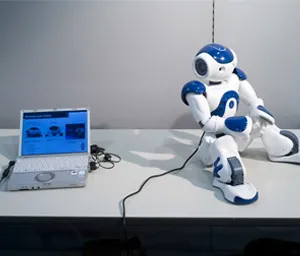
Hence, it is pointed out that manufacturers are in a position to enable employees to do their job better through support of right tools and fine tuning workplace. There are various ways of increasing employee productivity such as incorporating ergonomic workstation, human-like machines such as intuitive interfaces, and the collaborative robots known as cobots. These innovations assist in cutting down on the use of extra manpower than is required, thereby decreasing on the number of monotonous operations, and thus enabling the workers to undertake more of those valued-added processes.
Optimizing Supply Chain and Reducing Costs
A well-optimized supply chain is very critical if cost and productivity are to be maintained. Adopt new technologies for smart logistics and inventory with the facilities of demand forecasts and shorter lead times. These systems act as a great way of reducing costs of production and productivity of the resources being used. Further, implementation of measures that are able to decrease the manufacturing waste is essential in the reduction of production costs. Applying lean manufacturing techniques like just-in-time inventory and continuous improvement processes assist in determining which operations are a waste of time and eradicating the nonproductive processes, therefore improving the organization’s operations.
Establishing Maintenance Schedules and Optimizing the Workplace Environment
Safety and productivity requirements are other conditions that make it necessary to develop a maintenance of machinery and equipment schedule. Ad hoc maintenance not only helps the prevention of failures but also checks if machines are working to the optimal.
This practice mean that there are few repair and downtimes hence cutting down on the cost of production.
Further, designing the workplace environment is also an important aspect considered in safety as well as in productivity at workplace. Promote the right illumination, air flow, and work positioning at the work place in order to enhance productivity. Proper arrangement of workplace enhances the health of the employees and also enhances the productivity level of the employees more hence enhancing increased productivity of the employees.
Spending Time Wisely and Providing the Right Tools
In manufacturing environment, time management is important in order that the forth coming events will be well managed properly. Maximize time usage in order to concentrate on issues that create value or ways to enhance the organizational performance. Minimizing the amount of time spent on complimentary activities could be achieved by integration of more efficient work flows and the efficient use of technology.
Ensure that employees have the adequate working tools like the sophisticated equipment and software as well as necessary protective gear. This also has the advantage of increasing production and at the same time being safe from some causes of accidents. These tools make sure that work is well done and timely, hence availing positive impacts to the safety of manufacturing plants.
Conclusion
Human-Machine Interaction in Industry 4. 0 can be said to be revolutionizing the manufacturing industry through the improvement of safety as well as the increase in productivity. With regard to safety concern in the manufacturing industry, supply chain, cost reduction and improving the environment in the workplace, manufacturers stand to receive commendable progress. Adopting of these strategies and technologies will result in the improvement of safety, efficiency and productivity of the manufacturing process.
 Our Services
 Media Pack Download
 Newsletters
 Industrial Events