Heavy-Duty Conveyor Systems for High-Volume Industrial Material Handling Operations
Introduction
Modern industrial operations depend on efficient, reliable, and scalable material movement to maintain productivity and meet increasing production demands. Whether transporting raw materials in mining, moving packaged goods in manufacturing facilities, or handling bulk commodities in ports and warehouses, Industrial Conveyor Systems have become an indispensable component of industrial infrastructure.
As industries continue to automate production and optimize operational efficiency, organizations are investing in advanced Material Handling Conveyors capable of supporting continuous operations under demanding conditions. Today's Heavy-duty conveyor systems are engineered to transport thousands of tons of material every hour while minimizing downtime, reducing labor dependency, and improving workplace safety.
From mining operations and cement plants to food processing facilities, power generation plants, and automotive manufacturing, conveyor technologies have evolved beyond simple transportation equipment. Modern systems integrate intelligent controls, predictive maintenance, Industrial Internet of Things (IIoT) sensors, robotics, and automation software to deliver consistent performance in high-volume production environments.
This article explores the technologies, components, applications, design considerations, and future innovations shaping industrial conveyor systems designed for continuous heavy-duty material handling.
The Growing Importance of Industrial Conveyor Systems
Global manufacturers face several operational challenges:
- Rising production volumes
- Labor shortages
- Increasing safety regulations
- Higher customer expectations
- Demand for faster throughput
- Pressure to reduce operational
To overcome these challenges, industries require conveyor solutions capable of operating continuously with minimal interruption.
Unlike manual transportation methods or forklift-dependent movement, conveyor systems offer:
- Continuous material flow
- Reduced handling damage
- Lower labor requirements
- Improved workplace safety
- Better production synchronization
- Predictable operational performance
These advantages make conveyor technology one of the most valuable investments for industrial production facilities.
Understanding Heavy-Duty Conveyor Systems
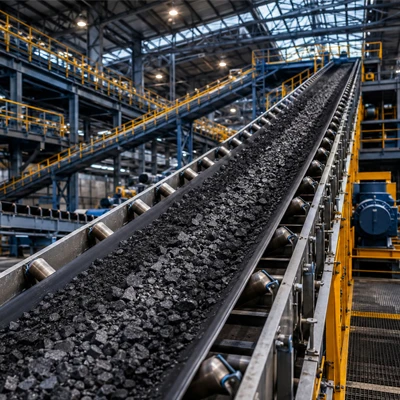
Heavy-duty conveyor systems are engineered specifically for demanding industrial environments where materials are transported continuously over long distances or throughout complex production lines.
Unlike light-duty conveyors used in packaging or distribution centers, heavy-duty systems handle:
- Iron ore
- Coal
- Cement
- Steel products
- Timber
- Aggregates
- Chemicals
- Fertilizers
- Automotive components
- Heavy industrial equipment
These systems are designed using reinforced frames, industrial-grade motors, heavy-load bearings, abrasion-resistant belts, and intelligent control systems to ensure long service life under extreme operating conditions.
Core Components of Material Handling Conveyors
Successful conveyor performance depends on the integration of multiple engineered components.
Conveyor Belt
The belt serves as the primary carrying surface.
Material selection depends on:
- Load capacity
- Abrasion resistance
- Heat resistance
- Chemical exposure
- Moisture conditions
- Product type
Industries commonly use:
- Rubber belts
- PVC belts
- Steel cord belts
- Fabric belts
- Modular plastic belts
Drive System
The drive system supplies the power needed to move materials.
It typically includes:
- Electric motors
- Gearboxes
- Variable Frequency Drives (VFDs)
- Couplings
- Drive pulleys
Modern drive systems optimize energy consumption while maintaining consistent conveyor
speed.
Rollers and Idlers
Rollers support the conveyor belt while reducing friction.
Different roller configurations include:
- Carrying rollers
- Return rollers
- Impact rollers
- Self-aligning rollers
- Troughing idlers
Proper roller selection significantly extends conveyor life.
Frame Structure
Heavy-duty conveyor frames provide structural stability.
Common construction materials include:
- Structural steel
- Stainless steel
- Galvanized steel
- Aluminum (for specialized applications)
Frame design must withstand vibration, shock loading, and environmental exposure.
Control System
Modern conveyors rely on intelligent automation through:
- PLC controllers
- HMI interfaces
- SCADA integration
- Remote monitoring
- Emergency stop systems
- Load sensors
- Speed monitoring
Smart controls maximize efficiency while improving operational safety.
Types of Industrial Conveyor Systems
Different industries require different conveyor technologies.
Belt Conveyors
The most widely used conveyor type for continuous transportation.
Ideal for:
- Bulk materials
- Packaged products
- Long-distance transport
- Mining operations
- Manufacturing facilities
Roller Conveyors
Designed primarily for:
- Pallets
- Boxes
- Containers
- Heavy assemblies
Available in powered and gravity-operated configurations.
Chain Conveyors
Chain conveyors transport extremely heavy products including:
- Steel coils
- Engine blocks
- Automotive frames
- Industrial machinery
These systems are highly durable and suitable for rugged environments.
Screw Conveyors
Widely used for powders and granular materials.
Applications include:
- Cement
- Grain
- Chemicals
- Food ingredients
- Biomass
They provide enclosed transportation that minimizes contamination.
Overhead Conveyors
Frequently used in:
- Automotive assembly
- Paint shops
- Powder coating
- Manufacturing plants
They maximize floor space utilization while supporting automated production.
Industrial Conveyor Solutions for Bulk Handling
Bulk material transportation presents unique engineering challenges.
Materials may vary in:
- Density
- Moisture
- Abrasiveness
- Particle size
- Flow characteristics
- Temperature
Modern Industrial conveyor solutions for bulk handling incorporate specialized features such as:
- Dust suppression systems
- Belt cleaners
- Impact beds
- Skirt sealing
- Automatic belt tracking
- High-strength steel cord belts
- Enclosed conveyor galleries
These technologies reduce material loss while improving environmental compliance.
High-Capacity Material Handling Conveyors in Modern Industries
Large industrial facilities require High-capacity material handling conveyors capable of operating around the clock.
Typical industries include:
Mining
Transporting ore from extraction points to crushers and processing plants.
Cement Manufacturing
Moving limestone, clinker, gypsum, and finished cement.
Steel Plants
Handling iron ore, coke, scrap metal, and finished steel products.
Power Generation
Conveying coal, biomass, and ash.
Ports and Terminals
Loading and unloading ships efficiently.
Aggregate Production
Transporting crushed stone, sand, and gravel.
Continuous operation significantly improves plant productivity while lowering transportation costs.
Automated Conveyor Systems for Manufacturing
Automation has transformed conveyor technology.
Today's automated conveyor systems for manufacturing integrate seamlessly with:
- Industrial robots
- Automated storage systems
- Vision inspection systems
- Barcode scanners
- RFID tracking
- Warehouse Management Systems (WMS)
- Manufacturing Execution Systems (MES)
Automated conveyors enable synchronized production where materials arrive precisely when needed.
Benefits include:
- Reduced manual intervention
- Improved product traceability
- Faster production cycles
- Consistent quality
- Lower operating costs
Designing High-Capacity Conveyor Systems for Bulk Material Handling
Developing High-capacity conveyor systems for bulk material handling requires detailed engineering analysis.
Key design considerations include:
Material Characteristics
Engineers evaluate:
- Bulk density
- Lump size
- Moisture content
- Temperature
- Flow behavior
These factors determine belt width, speed, and structural requirements.
Capacity Requirements
Future production growth should be considered during design.
Systems should accommodate:
- Peak production
- Seasonal demand
- Capacity expansion
- Process upgrades
Oversizing critical components often reduces future capital expenditures.
Conveyor Length
Long-distance conveyors require:
- Intermediate drives
- Belt tension analysis
- Expansion compensation
- Advanced tracking systems
Proper engineering minimizes maintenance costs.
Environmental Conditions
Outdoor installations must withstand:
- Rain
- Snow
- Dust
- Corrosion
- UV exposure
- Temperature fluctuations
Protective coatings and enclosed conveyor systems improve reliability.
Heavy-Duty Conveyor Solutions for Automated Manufacturing Facilities
Large manufacturing plants increasingly deploy Heavy-duty conveyor solutions for automated manufacturing facilities to improve production flow.
Applications include:
- Automotive assembly
- Heavy equipment manufacturing
- Metal fabrication
- Appliance production
- Aerospace manufacturing
Integrated conveyors support:
- Robotic welding
- Automated painting
- Assembly sequencing
- Quality inspection
- Packaging
- Shipping
These solutions reduce bottlenecks while improving production flexibility.
Industrial Conveyor Systems Designed for Continuous High-Volume Production
Manufacturers operating 24/7 require Industrial conveyor systems designed for continuous high-volume production.
Key reliability features include:
Predictive Maintenance
IIoT sensors monitor:
- Bearing temperature
- Motor current
- Belt alignment
- Vibration
- Gearbox health
Maintenance teams receive early warnings before failures occur.
Redundant Drives
Critical production facilities often install backup drive systems to reduce downtime.
Energy-Efficient Motors
Modern IE4 and IE5 motors lower electricity consumption while maintaining consistent performance.
Automatic Lubrication
Automated lubrication systems reduce wear and extend equipment life.
Condition Monitoring
Cloud-based analytics continuously evaluate equipment health using real-time operational data.
Safety Considerations
Industrial conveyor safety remains a top priority.
Modern systems incorporate:
- Emergency pull cords
- Belt drift detection
- Speed monitoring
- Fire detection
- Dust control
- Lockout/Tagout integration
- Guarding systems
- Overload protection
Compliance with international safety standards minimizes workplace incidents while protecting equipment.
Sustainability and Energy Efficiency
Manufacturers are increasingly prioritizing sustainability.
Modern conveyor systems contribute through:
- Energy-efficient motors
- Regenerative braking
- Lightweight belt materials
- Variable speed operation
- Reduced material waste
- Lower maintenance requirements
Efficient conveyor design also decreases carbon emissions associated with internal transportation.
Emerging Technologies Transforming Conveyor Systems
Several innovations are shaping the future of industrial material handling.
Artificial Intelligence
AI algorithms optimize:
- Conveyor speed
- Maintenance scheduling
- Load balancing
- Energy usage
Digital Twins
Virtual conveyor models simulate operations before installation, reducing commissioning risks.
Advanced Belt Materials
Next-generation belts offer:
- Longer service life
- Higher strength
- Reduced rolling resistance
- Lower energy consumption
Autonomous Material Flow
Conveyors increasingly coordinate with:
- Autonomous Mobile Robots (AMRs)
- Automated Guided Vehicles (AGVs)
- Robotic palletizers
- Smart warehouse systems
Integrated automation creates highly efficient production ecosystems.
Best Practices for Conveyor Selection
Selecting the appropriate conveyor system requires evaluating several operational factors.
Organizations should assess:
- Production capacity
- Material characteristics
- Facility layout
- Expansion plans
- Maintenance accessibility
- Environmental conditions
- Automation requirements
- Energy consumption
- Lifecycle costs
- Safety compliance
Working with experienced engineering partners ensures systems are designed for long-term operational performance rather than simply meeting immediate production requirements.
Conclusion
Industrial material handling continues to evolve alongside advances in automation, digitalization, and smart manufacturing. Modern Industrial Conveyor Systems are no longer limited to transporting products from one location to another—they function as intelligent production assets that improve throughput, enhance safety, and optimize operational efficiency.
Whether deployed as Material Handling Conveyors in manufacturing plants or configured as Heavy-duty conveyor systems for mining, bulk processing, and logistics operations, these solutions play a vital role in supporting continuous industrial production. Investments in Industrial conveyor solutions for bulk handling, High-capacity material handling conveyors, and Automated conveyor systems for manufacturing enable organizations to reduce operational costs while increasing production reliability.
As Industry 4.0 technologies become increasingly integrated into industrial operations, demand for High-capacity conveyor systems for bulk material handling and Heavy-duty conveyor solutions for automated manufacturing facilities will continue to grow. Businesses adopting Industrial conveyor systems designed for continuous high-volume production will be better positioned to improve operational resilience, meet evolving customer expectations, and maintain a competitive advantage in an increasingly automated industrial landscape.
 Our Services
 Media Pack Download
 Newsletters
 Industrial Events