Elevators and Escalator Systems: Enhancing Vertical Mobility in Industrial Infrastructure
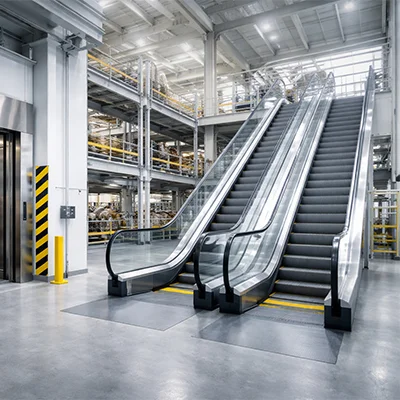
You will find something interesting, should you spend a day in a large factory or warehouse. The largest delays are not necessarily on the production line. They happen in between—when materials are waiting to move, when teams are waiting on lifts, or when goods simply don’t reach the next level on time.
That “in-between” is where Vertical Transport Systems quietly decide how efficient an operation really is.
Over the years, industries have focused heavily on automation, robotics, and digitization. But movement—especially vertical movement—has often been treated as a support function. That thinking is changing now. And rightly so.
The Shift toward Vertical Infrastructure
Land is expensive. Expansion is complicated. And in many industrial zones, going horizontal is no longer practical.
So companies are building upwards.
Multi-level factories, stacked warehouses, vertical distribution hubs—these are no longer rare. But once you start operating across floors, movement becomes a daily challenge. Not occasionally. Constantly.
This is where Vertical transport solutions for factories stop being optional. They become part of the core workflow.
And not just for materials. People, tools, components—everything needs to move, and it needs to move without delay.
It’s Not Just “A Lift” Anymore
There’s still a tendency to think of industrial elevators as basic freight lifts. A box that goes up and down. That’s it.
But that is now way off the reality.
The contemporary Industrial elevator and escalator systems are planned to operate under certain operational pressures. They are supposed to be operating all the time, have uneven loads, rough usage and still continue working without hindrances.
In many facilities, these systems are used hundreds of times a day. That kind of usage changes how they need to be designed.
This is exactly why Industrial Lifting Systems today look very different from what they did a decade ago.
They are stronger, yes. But more to the point, they are smarter and more flexible.
What Actually Matters on the Ground
When you talk to plant managers or operations teams, their expectations are quite practical.
They don’t ask for “advanced technology” in abstract terms. They ask simple questions:
- Will it handle the load without slowing down?
- Will it keep working during peak hours?
- What happens if it stops suddenly?
That’s the real test of any system.
Most Advanced vertical transport systems today are built around these concerns. Load stability, consistent speed, and minimal downtime are far more important than flashy features.
Durability also matters more than people assume. Industrial environments are tough. Dust settles everywhere. Heat builds up. Moisture seeps in. In some sectors, even chemical exposure is common.
Systems that work perfectly in controlled environments often fail here. That’s why industrial-grade design is non-negotiable.
Automation—but Only Where It Helps
Automation is everywhere now, but in industrial vertical mobility, it has a very specific role.
Automated elevator systems for industrial facilities are not about replacing people completely. They are about removing friction.
To illustrate, in a warehouse, an elevator does not have to wait to be issued with instructions every time.
It can align itself with incoming loads. It can prioritize certain movements. It can reduce idle time between trips.
These are small changes. However, in a day of operations, they can be seen to make a difference.
Meanwhile, excessive automation may come back to bite. Too complex systems tend to be more difficult to maintain. So the focus is shifting toward practical automation—just enough to improve efficiency without creating new problems.
The Rise of Smarter Systems
One noticeable change in recent years is the growing use of Smart elevator and escalator systems.
Now, “smart” can mean many things. But in industrial terms, it usually comes down to visibility and control.
Operators want to know what’s happening in real time. Is the system slowing down? Is it consuming more power than usual? Does it need maintenance?
Earlier, these issues were discovered only after something went wrong.
Now, systems can flag them in advance.
This shift—from reactive to proactive—is probably one of the biggest advantages of modern Advanced vertical transport systems.
Another sector where energy efficiency is being felt is energy efficiency. Even minor savings are important since industrial units already work with high power consumption.
Smart systems eventually allow to decrease downtime and operational costs. And that combination is hard to ignore.
Where the Impact Is Most Visible
Different industries use Industrial escalator and lifting solutions in different ways, but the importance remains consistent.
Time is of the essence in production. Failure to deliver components to the next stage on time slows down the whole process. It can be prevented through reliable vertical movement.
Warehousing is a slightly different story. Here, speed and volume matter more. Multi-level storage only works when goods can move quickly between levels. Otherwise, the system collapses under its own complexity.
Food processing and pharmaceuticals have an additional dimension-cleanliness. Equipment must be easy to clean and not easily contaminated.
And then again heavy industries, where sheer load is the difficulty.
Systems are pushed to their limits every day, and failure is simply not an option.
The Benefits That Don’t Get Enough Attention
When companies invest in vertical systems, they usually look at movement speed. But that’s just one part of the story.
There are other benefits that become visible only over time.
Manual effort reduces significantly. Workers don’t have to handle heavy loads as often, which improves safety.
Operations become more predictable. Once a system is optimized, it performs consistently.
Space utilization improves. Instead of expanding outward, facilities make better use of vertical space.
All of this contributes to Enhancing industrial operations with vertical mobility systems—not in one big change, but through multiple small improvements.
The Reality of Implementation
Of course, none of this comes without challenges.
Cost is usually the first concern. High-quality Advanced vertical transport systems require a significant investment. For many businesses, that decision takes time.
Another consideration is maintenance. These machines are laborious and they require frequent maintenance. Maintenance cannot be disregarded.
Integration can also be complicated, especially in older facilities where layouts were not designed for vertical movement.
And then there are safety regulations. Industrial systems must meet strict standards, which adds another layer of complexity.
But despite all this, most companies that invest in the right systems don’t regret it. The benefits in the long run are more likely to surpass the first challenges.
Looking Ahead
Vertical mobility in industrial settings is still evolving.
We’re likely to see more intelligent systems—ones that can learn from usage patterns and adjust automatically. Not future-oriented, but in real-life situations that enhance day-to-day work.
The energy efficiency will be increasingly important. Systems that consume less power without compromising performance will become the standard.
The other area to observe is flexibility. The systems that will be used in the future can be modified or expanded more easily, and that is vital when expanding businesses.
A Practical Way to Look at It
At the end of the day, vertical transport is not about technology alone. It’s about flow.
If materials move smoothly, operations improve. If they don’t, delays start piling up.
That’s why Industrial elevator and escalator systems should be looked at as part of the process—not separate from it.
The best systems are the ones you don’t notice. They just work, day after day, without slowing anything down.
Final Thought
In industrial operations, small inefficiencies rarely stay small. They spread. They compound. And eventually, they show up in output, timelines, and costs.
Remedying those inefficiencies does not necessarily need significant adjustments. It may begin sometimes with as basic as and as essential as movement.
That’s exactly what Vertical Transport Systems address.
And as more industries recognize this, vertical mobility is slowly moving from the background to the center of operational planning—where it probably should have been all along.
 Our Services
 Media Pack Download
 Newsletters
 Industrial Events