Electric Heavy Vehicles Driving the Shift toward Sustainable Industrial Transport
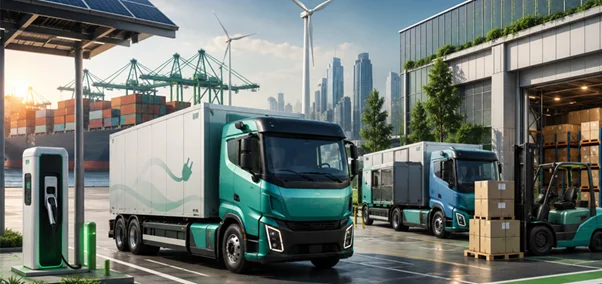
For decades, the sound of a diesel engine roaring to life was simply the sound of industry getting to work. Today, that sound is changing. Across ports, warehouses, construction sites, and manufacturing hubs, a quieter, cleaner alternative is taking over the yard: electric trucks. What started as a niche experiment is now a full-fledged movement, and it's reshaping how goods move, how fleets are managed, and how companies think about their environmental footprint.
This shift isn't just about swapping a diesel tank for a battery pack. It's a complete rethink of industrial transport — one that touches everything from operating costs to supply chain resilience. Let's dig into why electric heavy vehicles are becoming the backbone of sustainable industrial transport, and what it actually means for businesses on the ground.
Why Heavy-Duty Electric Vehicles Are Having Their Moment
If you'd asked a logistics manager five years ago whether heavy-duty electric vehicles could realistically handle industrial workloads, you'd probably have gotten a skeptical shrug. Battery technology wasn't there yet. Charging infrastructure was sparse. Range anxiety was a legitimate concern for anyone hauling freight across long distances.
Fast forward to now, and the picture looks very different. Battery energy density has improved dramatically, charging speeds have caught up with operational needs, and manufacturers have poured billions into purpose-built electric trucks rather than retrofitted diesel chassis. The result? Heavy-duty electric vehicles that can genuinely compete with — and in many cases outperform — their diesel counterparts on total cost of ownership.
Why are heavy-duty electric vehicles gaining traction in industrial settings?
The short answer: economics and regulation are pulling in the same direction. Diesel prices remain volatile, emissions regulations are tightening in nearly every major economy, and electric drivetrains require significantly less maintenance since they have far fewer moving parts. No oil changes, no complex exhaust after-treatment systems, no timing belts. For fleet operators running vehicles thousands of hours a year, that maintenance savings adds up fast.
Fleet Electrification Isn't a Trend — It's a Strategy
There's a difference between buying a few electric vehicles for good PR and actually committing to fleet electrification as a business strategy. The companies seeing real returns are the ones treating electrification as an operational transformation, not a marketing checkbox.
Fleet electrification typically unfolds in stages. Businesses start by identifying routes and duty cycles that are well-suited to current EV range and charging capabilities — think short-haul drayage, regional distribution, or yard operations where vehicles return to a central depot each night. From there, they build out charging infrastructure, train drivers and technicians, and gradually expand the electric portion of the fleet as confidence and infrastructure grow.
How does fleet electrification benefit industrial operations?
It benefits them in several concrete ways:
- Lower fuel costs — electricity is generally cheaper and more price-stable than diesel
- Reduced maintenance overhead — fewer mechanical components mean less downtime
- Regulatory compliance — many regions now have zero-emission zones or upcoming diesel restrictions
- Improved driver experience — quieter cabins and smoother torque delivery reduce fatigue
- Brand and stakeholder value — investors and customers increasingly expect visible sustainability commitments
None of this means the transition is effortless. Upfront vehicle costs are still higher than diesel, and charging infrastructure requires real capital investment. But the trajectory is clear, and companies that electrify early are positioning themselves ahead of both regulation and competition.
Electric Heavy Vehicles for Industrial Transport: Where They're Already Working
It's worth being specific here, because "electric trucks" can mean a lot of different things depending on the application. Electric heavy vehicles for industrial transport are already proving themselves in several key environments:
Ports and intermodal yards — Short, repetitive routes with predictable schedules make ports an ideal testing ground. Electric yard trucks and drayage tractors move containers between ships, rail, and storage without the diesel fumes that have long plagued port communities.
Construction and mining sites — Electric dump trucks and heavy haulers are being deployed in controlled environments where charging infrastructure can be centralized and routes are fixed.
Warehouse and distribution networks — Regional delivery fleets running fixed routes between distribution centers are a natural fit, since vehicles return to base each night for charging.
Manufacturing plant logistics — Moving materials between facilities, loading docks, and storage yards is exactly the kind of high-frequency, shorter-distance work where electric drivetrains shine.
Electric Commercial Vehicles for Manufacturing: A Natural Fit
Manufacturing operations run on tight schedules and predictable internal logistics, which makes electric commercial vehicles for manufacturing one of the clearest use cases for this technology. Moving raw materials from receiving docks to production lines, shuttling finished goods to staging areas, or transporting components between facilities on the same campus — these are all high-repetition tasks with known distances and return-to-base charging opportunities.
What makes electric commercial vehicles suitable for manufacturing environments?
Manufacturing facilities often already have significant electrical infrastructure in place to support production equipment, which lowers the barrier to installing charging stations. Additionally, indoor or semi-enclosed manufacturing environments benefit enormously from the absence of exhaust emissions, improving air quality for workers on the floor. Combine that with predictable duty cycles, and manufacturers get a use case where electric vehicles deliver value almost immediately, without the range concerns that complicate long-haul freight.
Sustainable Fleet Management Solutions: The Software behind the Shift
Buying electric trucks is only half the equation. The other half is managing them intelligently, and that's where sustainable fleet management solutions come into play. Modern fleet management platforms now integrate battery health monitoring, route optimization tailored to charging needs, energy cost forecasting, and predictive maintenance — all designed specifically around the realities of electric operation.
Why do fleets need specialized management solutions for electric vehicles?
Traditional fleet management software was built around fuel consumption, oil change intervals, and diesel-specific maintenance schedules. Electric vehicles operate on a fundamentally different logic: charging windows, battery degradation curves, and energy costs that fluctuate by time of day. Sustainable fleet management solutions bridge that gap by giving operators real-time visibility into charge status, optimal charging schedules that avoid peak electricity rates, and route planning that accounts for range limitations and charging infrastructure along the way.
This kind of software isn't a luxury add-on — it's essential infrastructure for any serious electrification effort. Without it, fleet managers are essentially flying blind, guessing at charging needs and risking costly downtime.
Smart Industrial Transport Systems: Connecting the Dots
Zoom out even further, and you start to see smart industrial transport systems emerging — networks where electric vehicles, charging infrastructure, warehouse management systems, and logistics software all talk to each other. This is where the real efficiency gains happen.
Imagine a distribution center where the fleet management system knows exactly which trucks will be needed for tomorrow's deliveries, schedules their charging overnight during off-peak electricity hours, and coordinates with warehouse loading schedules so vehicles are charged and ready precisely when needed. That's not science fiction — it's already being deployed by forward-thinking logistics operators.
How do smart industrial transport systems improve efficiency?
By connecting previously siloed systems, businesses eliminate guesswork. Charging happens when electricity is cheapest. Routes are optimized not just for distance but for energy consumption. Maintenance is scheduled proactively based on real usage data rather than fixed calendar intervals. The result is a transport operation that's not just electrified, but genuinely intelligent.
Electric Commercial Trucks for Sustainable Material Handling and Logistics
Material handling and logistics operations depend on constant, reliable movement — pallets, containers, raw materials, and finished products all need to get from point A to point B without delay. Electric commercial trucks for sustainable material handling and logistics are proving especially valuable here because these operations are typically confined to well-defined areas: warehouses, distribution hubs, and short-range delivery corridors.
The sustainability angle matters too. Companies across industries are under growing pressure from customers, investors, and regulators to demonstrate real progress on emissions. Logistics and material handling, being such a visible and quantifiable part of a company's carbon footprint, are often among the first areas targeted for decarbonization. Electric trucks offer a direct, measurable way to cut emissions in this space without redesigning entire supply chains.
The Road Ahead
There's no pretending the transition to electric heavy vehicles is finished. Charging infrastructure still needs to expand, battery costs need to keep falling, and long-haul trucking remains a harder problem to solve than regional and yard operations. But the direction of travel is unmistakable.
Electric heavy vehicles driving sustainable industrial transport solutions aren't a future possibility anymore — they're a present-day reality for a growing share of industrial operators. Combined with smart fleet electrification for industrial transportation operations, businesses now have a genuine path toward lower operating costs, reduced emissions, and more resilient supply chains.
The companies that move early — piloting electric fleets on the right routes, investing in proper fleet management software, and building charging infrastructure strategically — will be the ones best positioned as regulations tighten and diesel becomes increasingly costly to operate. The shift toward sustainable industrial transport isn't coming. It's already here, and it's picking up speed.
Frequently Asked Questions
Are electric heavy vehicles cost-effective for industrial transport?
Yes, particularly for short and mid-range routes. While upfront purchase costs are higher than diesel equivalents, lower fuel and maintenance expenses typically deliver a lower total cost of ownership over the vehicle's lifespan.
What industries benefit most from fleet electrification?
Manufacturing, ports, warehousing, distribution, and material handling operations benefit the most, since they typically involve predictable, shorter routes with return-to-base charging opportunities.
Do electric trucks require special fleet management software?
Yes. Sustainable fleet management solutions built specifically for electric vehicles handle battery health tracking, charge scheduling, and energy-aware route planning — tasks traditional fuel-based fleet software isn't designed to manage.
Is charging infrastructure a major barrier to fleet electrification?
It's one of the biggest upfront investments, but it's increasingly manageable, especially for facilities that already have substantial electrical infrastructure, such as manufacturing plants and distribution centers.
 Our Services
 Media Pack Download
 Newsletters
 Industrial Events