Autonomous Mobile Robots: Transforming Logistics and Warehousing in Factories
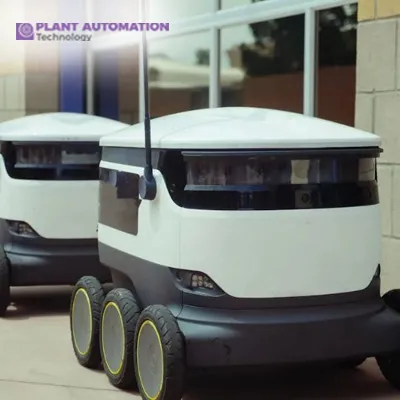
Looking at the horizon of smart warehousing Autonomous Mobile Robots (AMR) is proving to be significant in defining how the logistic and warehousing procedures work. As previously mentioned, with the technology advances in logistics, factories have adopted the latest ways to make adjustments and enable better methods in their processes so as to minimize costs. Of these, autonomous mobile robotics sit right at the peak of this revolution, transforming both logistics and warehouse management like we have never seen before.
Technology Trends Transforming Logistics
One of the most radical technologies that have been implemented in logistics in recent years is associated with the use of autonomous mobile robotics. These robots are expected to navigate the warehouse environments independently, make decisions at runtime and avoid obstacles. Warehouse mobile robots for automating logistic operations have now shifted to the core infrastructure of contemporary production facilities across manufacturing companies. They are assisting numerous business ventures to eliminate human intervention, optimize supply chain management systems and enhance efficiency; this is what leading to the advancement in the executing field of logistics.
This is why more significance is attached to innovations in warehousing as the future of it undergoes changes. Not only are AMR changing the face of productivity in the warehouses but are also working to provide safe environments. Logistics and Warehousing have never prerequired such tech support as they do today, and these robots are delivering just this backbone which is needed to support and sustain most operations.
Autonomous Mobile Robots in Warehouse Management
AMRs have therefore been widely adopted in warehouses since they are able to pick, sort, transport and do inventory. The benefits that these robots provide include; flexibility in their operations, scalability and high accuracy that is crucial for appropriate warehouse management in factories. The development of multi-mobile robot autonomous navigation systems especially for intelligent logistics has also improved the functionality of these robots where they can also work as a team as well as coordinate their tasks. This mobile robotics for use in logistical or warehouse application is revolutionizing how products are shuttled and stocked.
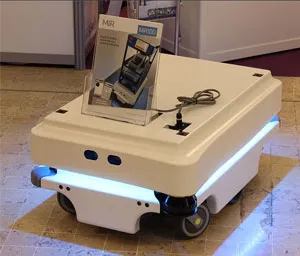
In a conventional warehouse environment, AMRs for logistics replace attached conveyors or manned forklifts with automated navigation. Arrangement of narrow aisles also creates congestion which may hinder the movement of trolleys and personnel, whereas, self-navigating robots with sensors and AI driven technology can navigate through the warehouse freely avoiding obstacles or other traffic. The dynamic operations performed in this type of management approach to logistics and warehousing creates capacity for flexibility and effectively dealing with a range of tasks in busy factories.
The Future of Warehousing and Logistics
Automated mobile robots used in Warehousing - they are also believed to be even more potentially important when the future of the logistics business is contemplated. Besides, these robots help save labour expenses; they do not feel tired and can work round-the-clock, which means that warehouses and factories can work without interruption as well. The advantage of using the autonomous mobile robotics is that they do not take long to integrate itself with change in demands of products or supply chain interruptions.
Furthermore, significant developments have been made in multi-mobile robot autonomous navigation systems for intelligent logistics which has the potential to enable multiple robots to operate simultaneously. This optimizes the circulation of material within the warehouse and increase disposition of work within the building. As the globalization advances to Industry 4.0 to overcome these challenges, these robots are destined to become the key component of the future distribution centers in the manufacturing companies.
Safety Standards for Warehouse Autonomous Mobile Robots
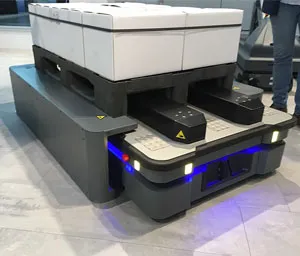
On the positive side, AMR has been discussed to bring immense benefits to warehouses and on the negative side, safety is an issue. Safety requirements for working areas for warehouse autonomous mobile robots must be satisfied before these robots can be used in factories and warehouses to eliminate risks of accidents and safeguard human workers in the factories. Such precautions normally include the enhanced sensor technology that helps the robot identify obstacles on its path and bring the movement to a halt if a collision seems imminent. Moreover, some measures should be observed in order to be able to get a permission for the use of robots as assistants together with ordinary workers.
Pros and Cons of Autonomous Mobile Robots in Warehouses
That is to say, AMRs have advantages and drawbacks in warehouses. On the positive side, these robots increase efficiency that cannot be matched by human beings, they cut on cost and are accurate all along and they work all through. This kind of robotic solution can be applicable at large for logistics or warehouse automation which makes them cost worthy for organizations who want to improve their supply chain.
But of course there are certain difficulties experienced with the use of these systems as well.
These are some of the basic disadvantages which include high initial costs, constant maintenance and the interruptions during the integration process. Besides, it is also important to take measures that guarantee that the robots which are being used in the factories are safe for human operators.
Conclusion
The use of autonomous mobile robotics in providing solutions in logistics and in warehouse specifically for factories is revolutionary. As the technology trends advance and redefine logistics and digital solutions emerging as the key drivers of the future warehousing, decision makers and leaders depend on the autonomous mobile robots for managing the warehousing automation. Indeed, as the prospects of logistics development step by step are considered, these robots will remain significant to increase performance, decrease risks, and optimize expenses as well. Despite this there is potential for ambitious future development in the use of AMRs in factories and warehouses providing a lot of potential growth and extensions to manufacturing markets.
Here, AMR are logical next steps in logistics where manufacturers can improve and optimize their operating models for faster and safer warehouse processes to envisage the future of smart warehousing as a part of Industry 4. 0.
 Our Services
 Media Pack Download
 Newsletters
 Industrial Events