Autonomous Mining Trucks: Revolutionizing Safety and Productivity in Harsh Terrains
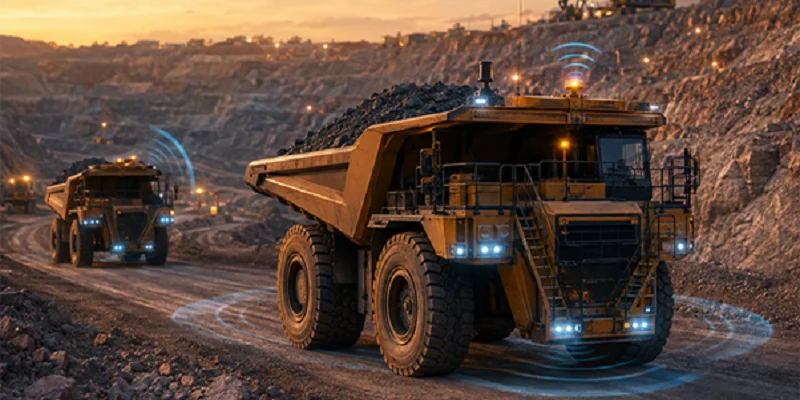
Mining has always been one of the toughest industries on the planet. Workers face extreme heat, freezing cold, unstable ground, and machinery the size of small buildings — often in locations far from the nearest hospital. For decades, the industry accepted this risk as the cost of doing business. That's changing fast. Autonomous mining technology is now reshaping how ore, waste rock, and minerals move from pit to plant, and it's doing so with a level of safety and efficiency that human-operated fleets simply can't match.
If you've been researching mining automation, you've probably noticed the same names popping up again and again: Caterpillar, Komatsu, Hitachi, and a handful of specialized tech firms building the brains behind these machines. But beyond the brand names, there's a bigger story here — one about how remote, hazardous environments are becoming safer and more productive through smart engineering.
What Exactly Is Autonomous Mining?
At its core, autonomous mining refers to the use of self-operating vehicles, sensors, and control systems to perform tasks traditionally done by human drivers and operators. This isn't science fiction anymore. It's happening right now in iron ore mines in Western Australia, copper operations in Chile, and coal sites across North America.
The technology relies on a combination of GPS positioning, LiDAR, radar, machine vision, and centralized fleet management software. Together, these components allow a truck to navigate a pit, avoid obstacles, load itself at the correct point, and haul material to the dump site — all without a driver in the cab.
People often ask: "Is autonomous mining actually safer than traditional mining?" Yes. Data from major operators consistently shows a drop in vehicle-related incidents once autonomous haulage systems are introduced, largely because fatigue, distraction, and human error — the leading causes of mining accidents — are removed from the equation.
The Rise of Autonomous Mining Truck Technology
Autonomous mining truck technology has matured significantly over the past decade. Early systems were essentially remote-controlled vehicles requiring a human operator stationed elsewhere. Today's trucks are far more independent, using onboard computers that process sensor data in real time and make split-second decisions.
These trucks can:
- Detect and avoid unexpected obstacles, including other vehicles, wildlife, or fallen debris
- Adjust speed and routing based on terrain conditions
- Communicate continuously with a central control room
- Operate around the clock without breaks, shift changes, or fatigue-related slowdowns
This shift toward fully automated mining vehicle systems means fewer people need to be physically present in the most dangerous parts of a mine site — the haul roads, blast zones, and pit edges where accidents historically occurred most often.
Why Harsh Terrain Makes Automation Even More Valuable
Mining sites aren't built on flat, forgiving ground. Many operations sit in deserts, mountains, arctic regions, or areas prone to sudden weather shifts. Steep grades, loose rock, dust storms, and extreme temperatures all increase the risk of human error and mechanical strain.
This is exactly where autonomous haulage systems for harsh mining environments prove their worth. Unlike a human driver who might misjudge a slope in low visibility or grow fatigued during a 12-hour shift in 45-degree heat, an autonomous truck relies on consistent sensor input and pre-mapped terrain data. It doesn't get tired. It doesn't get distracted. It reacts to hazards in milliseconds.
Mining companies operating in the Pilbara region of Australia, for example, have used autonomous trucks extensively because of the region's isolation, heat, and difficult driving conditions. The result has been fewer near-miss incidents and more predictable production schedules, even during extreme weather events that would otherwise halt operations.
Boosting Productivity through Smart Mining Systems
Safety is only part of the equation. The other major driver behind this shift is productivity — and this is where smart mining systems really shine.
Autonomous trucks don't need meal breaks, shift handovers, or rest periods mandated by fatigue-management regulations. They can run nearly continuously, which translates directly into more tonnes moved per day. Because the routing and speed are optimized by software rather than individual driving styles, fuel consumption and tire wear also tend to drop, since the trucks avoid the harsh acceleration and braking patterns common with human drivers.
A common question: "Do autonomous trucks actually increase mine output?" In most documented deployments, yes. Mining companies using autonomous haulage have reported meaningful gains in overall fleet utilization, largely because trucks spend less time idle and more time actively hauling material. Downtime caused by shift changes, driver fatigue breaks, and human scheduling gaps is significantly reduced.
Beyond raw output, these systems also improve consistency. A human-driven fleet will always have variation between operators — some drive faster, some brake harder, some take longer routes. Autonomous systems standardize this, which makes planning and forecasting far more accurate for mine managers.
Inside Automated Mining Vehicle Systems: How the Technology Works
It's worth breaking down what's actually happening under the hood of these machines, because the sophistication involved is genuinely impressive.
1. Sensing and Perception Trucks are equipped with LiDAR, radar, and cameras that continuously scan the surrounding environment. This lets the vehicle "see" obstacles, terrain changes, and other equipment in real time.
2. Positioning and Mapping High-precision GPS, often combined with inertial measurement units, keeps the truck aware of its exact location on a pre-loaded digital map of the mine site.
3. Central Fleet Management A control room — sometimes located hundreds or even thousands of kilometers from the actual mine — monitors every vehicle in the fleet simultaneously. Operators here can intervene, reroute trucks, or pause operations if something unexpected occurs.
4. Communication Networks Reliable wireless networks connect each truck to the central system, allowing constant data exchange about location, speed, load status, and hazards.
This layered approach is what makes modern automated mining vehicle systems so much more capable than earlier remote-control experiments. Redundancy is built into every layer, so if one sensor fails, others compensate.
Autonomous Haulage Systems: The Backbone of Modern Fleets
When people talk about autonomous haulage systems, they're referring to the entire ecosystem — not just the trucks, but the software, infrastructure, and processes that keep them running safely. This includes:
- Traffic management systems that coordinate multiple autonomous vehicles sharing the same haul roads
- Automated loading tools that sync with excavators and shovels
- Predictive maintenance software that flags mechanical issues before they cause breakdowns
- Weather and terrain monitoring that adjusts vehicle behavior in real time
Together, these elements form what's often called a smart mining fleet solution — an integrated system where every piece of equipment communicates and adapts based on live conditions. This is a far cry from the old model of dispatching trucks based on radio calls and paper schedules.
Real-World Impact: Autonomous Mining Trucks for Improved Safety and Productivity
The evidence backing autonomous mining trucks for improved safety and productivity isn't theoretical anymore — it's operational history at this point. Several major mining regions have run these systems long enough to generate meaningful data.
Key outcomes reported across the industry include:
- Fewer vehicle collisions and near-miss incidents in high-traffic haul zones
- Reduced exposure of personnel to high-risk areas like blast zones and unstable slopes
- More consistent haul cycle times, improving overall mine scheduling
- Lower long-term maintenance costs due to smoother, standardized driving behavior
- Continued operation during conditions — extreme heat, low visibility, remote night shifts — that would normally require human drivers to slow down or stop
It's also worth noting the workforce impact. Rather than eliminating jobs outright, many operations have shifted personnel from dangerous, hands-on driving roles into control room positions, technical maintenance, and systems monitoring — work that's both safer and often more skilled.
Challenges Still Worth Mentioning
No technology shift is without friction, and it's worth being honest about the hurdles. Upfront capital costs for autonomous fleets remain high, and retrofitting existing mine infrastructure to support autonomous operation takes time and investment. Connectivity can also be a challenge in extremely remote locations where reliable, low-latency networks aren't yet in place. Regulatory frameworks in some countries are still catching up to the technology, which can slow adoption even when a mining company is ready to invest.
That said, these are largely logistical and financial challenges rather than technical dead ends — and most are shrinking year over year as the technology matures and costs come down.
What's Next for Mining Automation?
Looking ahead, the trend line is clear. As sensor technology improves and becomes cheaper, and as AI-driven decision-making gets more refined, autonomous fleets will likely expand beyond haul trucks into drilling, blasting support, and even underground operations, where conditions are even more hazardous for human workers.
Frequently asked: "Will autonomous trucks fully replace human mine workers?" Not entirely, at least not in the foreseeable future. Most operations still require skilled technicians, control room operators, and site engineers. The role of human workers is shifting rather than disappearing — moving away from direct physical risk and toward oversight, maintenance, and system optimization.
Final Thoughts
The shift toward autonomous mining trucks isn't just a trend — it's a fundamental rethinking of how one of the world's most dangerous industries operates. By combining mining automation, smart mining systems, and increasingly sophisticated autonomous haulage systems, companies are proving that it's possible to move massive volumes of material through some of the harshest terrains on Earth while keeping people out of harm's way.
For an industry that has long measured progress in tonnes per hour, it's worth pausing to appreciate a different kind of progress: fewer workers exposed to danger, fewer accidents on haul roads, and a future where the toughest jobs in mining are handled by machines built specifically to survive — and thrive — in conditions humans were never meant to endure for hours on end.
 Our Services
 Media Pack Download
 Newsletters
 Industrial Events