AI and Automation: The Synergy That Will Transform Manufacturing Forever
The Rise of Smart Thinking Machines
What if machines could think? Modern technology allows machines to process orders as well as uncover new knowledge about improving process operation. Industrial productivity regulations get rewritten through the union of AI with automation technology. AI streamlining processes continues to grow in popularity thus manufacturers experience faster operational speed while improving their competitive position and lowering operational expenses and increasing their business agility.
The revolution exceeds mechanical functions because it introduces genuine intelligence. The newest phase of AI-driven manufacturing allows equipment to autonomously correct itself while extracting learning from mistakes for continuous improvement of operational efficiency. The ripple effect? An extensive and permanent industrial manufacturing transformation has begun to redefine upcoming business operations.
AI Process Automation: A Silent Revolution in Motion
The time for basic automated task replacement passed into history. The modern use of AI process automation entails providing intelligent capabilities to various organizational tasks. AI enables manufacturers to conduct rapid accurate manufacturing operations which do not demand human operators.
The main advantage of AI driven automation emerges through its ability to operate undercover. This automation method functions without detection as it operates invisibly yet changes the way decisions are processed. Manufacturing process optimization spreads throughout production stages through an advanced level of integration from raw materials to final delivery.
Predictive Maintenance AI: From Reactive to Proactive
Predictive maintenance AI represents a transformational application that stands out among all other uses of AI. The modern technology combination of sensors with AI algorithms in machines enables equipment to identify upcoming problems. AI monitors usage data alongside temperature variations and detects vibration patterns as it reports facility operators about potential machine breakdowns in early stages.
Proactive planning through this shift away from remedial work brings dual benefits of cost savings and operational safety together with enhanced operational efficiency. More companies embracing manufacturing automation lead to the increasing necessity of predictive tools in their operations.
The Age of Intelligent Manufacturing Systems

There exists a current industrial shift which establishes intelligent manufacturing systems that use AI and IoT devices to share information and perform autonomous operations. The production systems operate unlike standard linear manufacturing assembly lines. The systems modify their production levels based on market needs while they navigate operational changes after detecting problems and they consistently optimize their methods to achieve better results.
The implementation represents more than automated smart factories; it presents a design system where factories operate cognitively. The modern factory operates as an intelligent organism that detects its environment without human intervention and continues to develop without halt. Digital manufacturing innovation reveals vast and extensive implications due to its effects on manufacturing practice.
Robotics in Manufacturing: Smarter, Safer, and Stronger

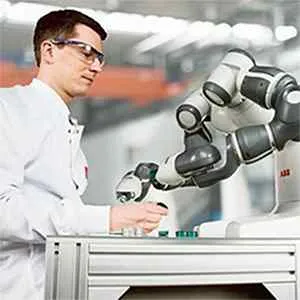
Robotics in manufacturing now does more than carry out repetitive work. Modern robots use artificial intelligence to develop sight perception and sensory capabilities with automated response functions. The systems operate in conjunction with people while acquiring knowledge through experience while handling new situations without administrative intervention. The new production line automation techniques allow unstaffed manufacturing systems to optimize their output performance.
At its fundamental level the incorporation of AI expertise into robotics systems produced enhanced safety together with adaptability which manufacture needs for exact and customized work processes. Such robots are essential for delivering immediate manufacturing data that results in improved choices throughout the entire production process.
AI Enhanced Productivity: More than Just Output
Manufacturing efficiency now surpasses production volume in terms of importance. AI enhanced productivity consists of three main elements: minimizing waste and optimizing resources and adding value to every step. The combination of AI technologies makes manufacturers reach improved throughput capabilities which maintain excellent product quality at reasonable prices.
The improvement enables businesses to manufacture products with shorter delivery cycles alongside enhanced stability while providing greater capacity for growth. The aim goes beyond volume increase because it centers on better execution.
Plant Automation Solutions: Bridging the Digital Divide

Manufacturers that embrace Industry 4.0 demands need plant automation solutions as their fundamental foundation of digital transformation. Production systems use connected mechanisms between hardware elements and software solutions along with human input to develop smart interconnected manufacturing spaces.
The implementation of AI process automation in these solutions grants production facilities greater independence and quicker market adaptation as well as infrastructure-independent scalability. AI technology becomes available to all manufacturing companies regardless of their size thanks to this democracy-making transformation.
Digital Manufacturing Innovation: Endless Possibilities

The speed of digital manufacturing advancement creates an impressive visual effect. Machine learning technology reveals access to nowadays unattainable opportunities. Modern production systems will emerge as a result of these developments since new methods of production are the fundamental goal rather than enhancements to current approaches.
The tracking of every product throughout its entire lifecycle through real-time performance feedback loops leads to optimal results throughout production and delivery. The amalgamation of performance data enables AI to create new component parts which adapt their prototypes through automatic optimization. The emerging potential of automation which receives power from AI represents these breakthroughs.
Real-Time Manufacturing Insights: The New Gold
The manufacturing sector contains vast amounts of data but ineffective use of these data streams generates meaningless background noise. AI uses data to generate valuable information which would otherwise have remained information. The real-time monitoring of business metrics facilitates continuous monitoring of energy consumption together with machine efficiency along with output rates.
Organizations that implement transparent data access gain faster decision-making capabilities while their managers gain the power to resolve emerging problems before major crises develop. Manufacturing automation is currently moving toward the development of more intelligent data-based systems which constitutes the whole trend.
Curiosity, Caution, and the Road Ahead
This astonishing shift in manufacturing brings essential issues for companies to address. Does artificial intelligence automation possess intelligence which surpasses what human beings possess? We must implement methods to verify that artificial intelligence makes choices which comply with business guidelines along with moral standards. The most important concern today is the fate of positions available for work.
The proper strategy should focus on directing this change process instead of fighting against it. Human beings need adequate training to transform their job duties from routine work into top-level supervisory functions while solving complex problems creatively. Current artificial intelligence systems serve to increase human capabilities instead of substituting humans from tasks.
The Inevitable Future of Manufacturing
There’s no turning back. The connections between artificial intelligence technology and automation systems have started reshaping the current business environment.
From smart factory automation to predictive maintenance AI, from robotics in manufacturing to intelligent manufacturing systems, every innovation is propelling us toward a more connected, efficient, and intelligent world.
This is more than a trend. It’s a revolution. A chance to rebuild the manufacturing sector on pillars of intelligence, adaptability, and speed. As industrial automation trends continue to evolve, one thing is certain: those who embrace this wave of change will shape the future of industry.
Are you ready to be one of them?
 Our Services
 Media Pack Download
 Newsletters
 Industrial Events