

What Is a Digital Twin? A Practical Guide
Introduction
Factories, power grids and industrial facilities generate enormous streams of data, yet many organizations still struggle to turn that information into better decisions. Digital twins offer a practical solution. By mirroring physical assets and processes in software, they allow teams to test ideas, predict failures and optimize performance without risking real-world operations.
What Is a Digital Twin?
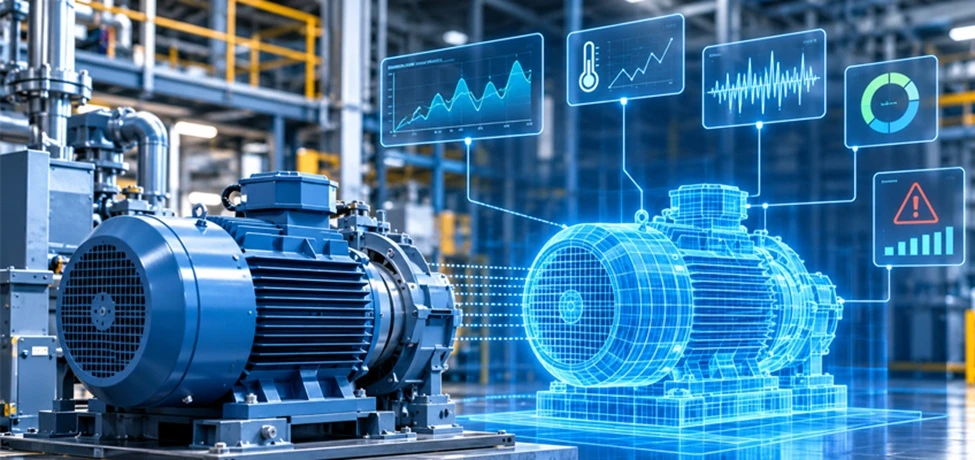
A digital twin is a dynamic virtual representation of a physical object, process or system. Unlike a static 3D model or simulation, it stays connected to its real-world counterpart through operational and sensor data. As conditions change on the factory floor or inside a turbine, the virtual model updates to reflect actual performance. This connection allows engineers to monitor current behaviour, analyze past events and forecast potential outcomes. The concept has roots in aerospace engineering, where virtual representations have been used to support spacecraft monitoring and remote diagnostics.
How Does It Work?
A digital twin works through a continuous cycle of sensing, modelling, analyzing and acting. First, sensors attached to physical assets capture data such as temperature, vibration, pressure and operating speed. This information travels through industrial networks to cloud or edge computing platforms, where it updates the virtual model. Artificial intelligence (AI), analytics and machine learning compare actual performance against expected operating conditions, identifying anomalies and predicting potential failures. Engineers can also run what-if scenarios, such as increasing machine speed or changing maintenance schedules, to understand possible outcomes. Insights are then used by operators or automated control systems to make informed adjustments.
Key Components / Technologies
Several technologies combine to make digital twins possible. Internet of Things (IoT) sensors collect real-time operational data, while connectivity technologies such as 5G and industrial gateways transfer information between physical assets and digital platforms. Cloud and edge computing provide the processing power required for data storage and analysis. Simulation and 3D modelling tools create virtual representations, while AI and machine learning identify patterns and generate predictions. Data integration platforms connect digital twins with enterprise systems such as Enterprise Resource Planning (ERP) and maintenance management software. Visualization dashboards, augmented reality (AR) and virtual reality (VR) help engineers interpret operational insights.
Industrial Applications
Digital twins are transforming operations across several industrial sectors. Manufacturers use them to simulate production lines, identify bottlenecks, improve product quality and reduce equipment downtime. In the energy sector, utilities model wind turbines, pipelines and power generation assets to predict failures and improve operational efficiency. Automotive and aerospace manufacturers use virtual models to test vehicle components, engines and designs before physical production, helping shorten development cycles. In logistics, digital twins of warehouses and supply chains reveal bottlenecks and help optimize inventory movement, material handling and delivery routes. They also support smart infrastructure by helping monitor building performance and energy consumption.
Benefits and Considerations
Digital twins can reduce unplanned downtime, lower maintenance costs, improve asset utilization and accelerate product development. They also support sustainability goals by helping organizations optimize energy consumption and resource use. However, implementation requires investment in sensors, software, connectivity and skilled personnel. Poor data quality, cybersecurity vulnerabilities and integration complexity can also affect performance. Starting with one high-value asset or process, establishing measurable objectives and expanding gradually can help organizations manage implementation costs and risks.
Key Takeaway
Digital twins turn operational data into actionable insights by connecting physical assets with intelligent virtual representations. They help industries move towards predictive, efficient and data-driven operations. Starting with a focused application and demonstrating measurable value can create a foundation for wider adoption.
 Our Services
 Media Pack Download
 Newsletters
 Industrial Events
Thank you!
Client Success Team (CRM),
