

Emerson Launches Software to Boost Refinery Efficiency and Operating Margins
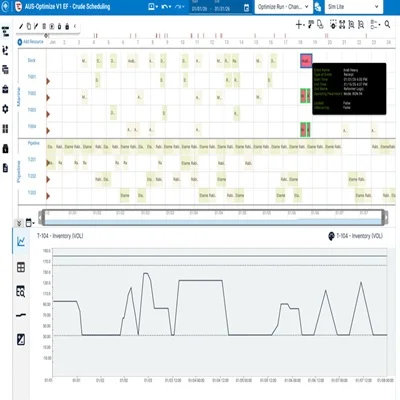
Global automation leader Emerson has introduced new software solutions designed to automate two of the refining industry’s most time-intensive and margin-critical processes: crude scheduling and product blending. The solutions help refineries improve operating margins, enhance efficiency and respond more quickly to changing market conditions.
Customers can use Aspen Unified Scheduling™ (AUS) to replace disconnected tools and manual data-gathering processes that can make refinery scheduling more challenging, particularly during periods of market volatility. AUS now includes two new products — Crude Schedule Optimization and Multi-Blend Optimization — bringing planning, scheduling and blending capabilities together on a unified platform. This enables customers to quickly translate optimized plans into realistic schedules that can adapt to changing market conditions.
“Refinery schedulers are managing more complexity and greater crude market volatility, with the same hours in the day,” said Claudio Fayad, chief technology officer at Emerson’s Aspen Technology business. “By automating the most time-intensive workflows within a unified platform, our solutions free experienced teams to focus on higher-value decisions while enabling newer engineers to contribute faster. The result is stronger margins and better operational decisions across the organization.”
Optimizing Crude Scheduling
Crude Schedule Optimization uses refinery data from Aspen Unified PIMS™ to automatically determine optimal crude receipts, transfers, blends and production schedules to maximize margins. By reducing manual effort and enabling rapid “what-if” scenario analysis, the solution helps refineries improve scheduling accuracy, minimize errors and respond quickly to fluctuations in crude markets and emerging pricing opportunities.
Maximizing Blending Efficiency
Multi-Blend Optimization simultaneously optimizes the recipe for each individual batch of blended product within the scheduling window. The solution continuously optimizes product quality while balancing production requirements with market conditions and operational constraints, while maintaining compliance with quality specifications.
By optimizing the use of available blend components, refineries can reduce quality giveaway, lower blend component costs and improve overall profitability.
Both solutions are available as separately licensed products within Aspen Unified Scheduling. As part of the broader Aspen Unified™ solution, Aspen Unified Scheduling integrates data, optimization and execution to reduce manual intervention, improve operational consistency and accelerate critical business decision-making.
Source: emerson.com
 Our Services
 Media Pack Download
 Newsletters
 Industrial Events

