


“Technology should earn its place through better manufacturing.”
”1
To begin, could you briefly introduce InnoRobix and your role in shaping the company’s vision for industrial automation and smart manufacturing?
InnoRobix is an engineering company focused on industrial automation, electrical and control systems, robotics, and customised inspection and testing equipment. We bring these disciplines together around the requirements of the manufacturing process. As Founder & CEO, I see my responsibility as setting that direction and ensuring that technical decisions lead to equipment customers can operate with confidence.
My background combines mechatronics and business management, and I am currently pursuing doctoral studies in AI and software convergence. That perspective keeps me closely involved in major engineering decisions, while also looking at the investment, operating costs, and long-term usefulness of a system.
For me, a well-engineered solution must perform beyond commissioning. It needs to accommodate real production variation, support maintenance, and remain understandable to the people responsible for it. Our direction is to build on dependable automation and integrate machine vision, industrial data, and AI where they offer a clear advantage. The objective is to help customers improve manufacturing performance in ways they can sustain.
2
Industrial automation is evolving from traditional machine-level automation toward connected, intelligent and increasingly autonomous systems. What do you see as the most significant shifts taking place in the industry today?
The most significant shift is that manufacturers are looking beyond the performance of an individual machine to the performance of the production system as a whole. Cycle time still matters, but so do changeovers, quality variation, material flow, and the time needed to recover from a stoppage.
Connectivity gives us an opportunity to understand those relationships. When operating data is linked with product and process information, we can investigate why output changes or why the same fault returns. Analytics and AI can then support more informed intervention. The important step is connecting information to an operational decision.
I also see flexibility becoming a more important design criterion. A system needs to handle the intended range of products and volumes without making every change an engineering project. That changes how we assess automation: we need to consider consistent output, adaptability, and lifecycle cost together. In my view, greater autonomy will be valuable where these foundations are strong and the operating boundaries are well understood.
3
From your experience working with manufacturers, what are the biggest challenges companies face when modernising their automation infrastructure, particularly when integrating newer technologies with existing systems?
The central challenge is improving capability while protecting the production that the business depends on. Existing factories contain different generations of equipment, and the condition of the mechanics, controls, documentation, and spare-parts support can vary considerably.
My starting point is to decide what to retain, what to upgrade, and what to replace. If the mechanical platform and process remain suitable, a targeted controls or sensing upgrade may be the right investment. If component obsolescence or recurring reliability problems make support difficult, a more substantial change may be justified.
The migration plan deserves as much engineering attention as the new design. We need realistic shutdown windows, clear commissioning criteria, recovery arrangements, and maintenance preparation. There is also the question of data: a signal available in an older controller may lack the timing or process context needed for analysis. Successful modernisation respects what still works, addresses the constraints that matter, and leaves the factory with a system it can support.
4
PLC, HMI and SCADA systems remain fundamental to industrial operations even as AI and advanced digital technologies gain momentum. How do you see these core control technologies evolving over the next five years?
Over the next five years, I expect the evolution of PLC, HMI, and SCADA to be driven by better interoperability, richer diagnostics, and more useful access to operational data. Their core responsibilities will remain important: predictable machine control, effective operator interaction, and supervision of production.
For an engineer, the opportunity is to make the control system easier to understand and support. Clear machine states, structured alarms, and consistent data definitions can improve troubleshooting and make integration with other applications more effective. HMI design also deserves attention: an operator needs to understand the condition and the next appropriate action, especially during an abnormal event.
AI can add diagnostic and optimisation capabilities around that foundation. I would define clearly how recommendations are validated and how any approved adjustment reaches the control system. Real-time execution must remain predictable, and safety functions require appropriately designed and validated safety systems. I see the next stage as closer cooperation between control and intelligence, with clear responsibilities for each.
5
As factories become increasingly connected, how important will the integration of PLC/HMI/SCADA, industrial networks, IIoT platforms and enterprise systems be in creating truly intelligent manufacturing environments?
Integration is what allows a machine event to become useful information for the wider business. A stoppage matters differently depending on the order being produced, the available buffer, and the delivery commitment. Those relationships become visible when equipment data is connected with production and business information.
The engineering task is to establish consistent meaning across systems. Machine identifiers, product references, timestamps, units, and event definitions need to align. Otherwise, a factory can collect a great deal of data and still spend too much time reconciling it.
The architecture should follow the decision being supported. Some analysis belongs close to the equipment; other information needs to be shared with MES, ERP, or a central data platform. Interfaces and access should be defined deliberately, with appropriate network separation.
For me, effective integration means that production, maintenance, quality, and management can work from a consistent view of the facts. That is what makes faster and better-coordinated decisions possible.
6
Robotics is moving beyond repetitive automation toward more adaptive and intelligent applications. Which developments in industrial robotics do you believe will have the greatest impact on manufacturing in the coming years?
I would highlight the combination of perception and controlled adaptability. Industrial robots are highly effective in repeatable, structured tasks. The next opportunity is to handle more of the variation that exists in actual production: changes in part position, orientation, geometry, or contact conditions.
Vision, 3D sensing, and force feedback can help extend that capability. They can also change the balance between mechanical tooling and software. In an appropriate application, better perception may simplify part presentation or reduce the need for dedicated positioning mechanisms. The complete cell still has to meet its cycle-time and reliability requirements.
I also expect easier programming and better recovery from exceptions to have considerable practical value. A robot that performs well in normal conditions but is difficult to restart after a fault creates an operating burden. Collaborative robots and autonomous mobile robots should be assessed with the same discipline: suitability for the task, safe integration, and ease of support. The developments that matter most will make robotic systems more useful across a wider range of production conditions.
7
What factors should manufacturers consider when deciding where robotics or advanced automation can deliver the greatest operational value, particularly in terms of productivity, quality, flexibility and workforce capabilities?
I look first at where the process loses value: a capacity constraint, recurring quality loss, a physically demanding task, or an operation that is difficult to perform consistently. Establishing the current performance is essential because it gives us a basis for judging the result.
Then I assess the application as a complete process. Part variation, handling, changeovers, upstream and downstream capacity, and the skills available on site all influence the appropriate level of automation. Flexibility should be defined against the product range the business actually expects to manufacture.
The economic case needs the same discipline. Additional capacity is valuable when the business can use it; labour redeployment creates value differently from a direct reduction in expenditure. Integration, tooling, maintenance, training, and future changes all belong in the assessment.
My preference is for a solution whose benefits remain credible under realistic operating assumptions. A slightly simpler system that the team can run consistently may contribute more than a sophisticated system that requires frequent specialist intervention.
8
AI is increasingly being integrated into industrial automation for areas such as predictive maintenance, quality inspection, process optimisation and decision support. Where do you see the most immediate and meaningful opportunities for AI in manufacturing?
I see the clearest near-term opportunities in quality inspection, equipment condition assessment, and decision support, where the output can be checked against a defined production result.
In visual inspection, AI can be useful when defect appearance varies and fixed rules become difficult to maintain. The engineering challenge includes lighting, image consistency, representative samples, and the balance between missed defects and false rejects. The model is one part of the inspection system.
For maintenance, analysing equipment signals can help identify developing abnormalities and focus investigation. The level of prediction we can justify depends on the available failure history and operating data. Process optimisation is also promising. In injection moulding, for example, linking process conditions and material information with quality results can help investigate variation and support parameter selection. Proposed changes still need to be tested within an appropriate operating window.
I would initially favour applications that give engineers and operators better evidence for action. That provides a practical route to building confidence before giving the system greater authority.
9
What are the key barriers preventing manufacturers from moving from AI experimentation and pilot projects to successful, scalable AI-driven automation across their operations?
A pilot demonstrates that an approach can work. Scaling requires confidence that it will continue to work as products, materials, equipment, and operating conditions change. That transition brings the wider manufacturing system into the picture.
Data consistency is one barrier, but integration and ownership are just as important. A prediction needs to reach the right person or controller at the right time, and there must be an agreed action attached to it. Someone must also be responsible for data quality, performance monitoring, model updates, and recovery when the output becomes unreliable.
Another challenge is the amount of engineering repeated at each machine or site. Common interfaces, reusable data definitions, and clear deployment procedures can make expansion more manageable. The business case must include the continuing cost of that support.
Before expanding, I would want evidence across representative production conditions, a clear acceptance process, and an operating team ready to take responsibility. Those are the conditions that turn an AI project into a production capability.
10
As AI becomes more deeply embedded in industrial control and decision-making, how should manufacturers approach issues such as data quality, cybersecurity, system reliability and human oversight?
I would treat these as engineering and operating requirements from the beginning. The more influence a system has over production, the more clearly its limits, responsibilities, and failure behaviour need to be defined.
For data, that means understanding the measurement: sensor condition, units, timing, and the process state in which it was collected. It also means deciding how the system handles missing or implausible inputs. For cybersecurity, network separation, controlled remote access, appropriate permissions, and tested recovery arrangements need to be part of the architecture.
For AI-assisted decisions or control, we should define the permitted operating range, the circumstances requiring approval, and the response when confidence or availability is insufficient. Safety protections must remain effective independently of an AI recommendation. Changes to models and settings should be traceable and validated.
Human oversight has to be practical. Operators need clear indications, usable procedures, and the authority to intervene appropriately. My principle is that greater autonomy must come with clear accountability for the system’s behaviour.
11
Smart manufacturing requires more than deploying individual technologies. In your view, what are the critical building blocks needed to create a truly connected and intelligent factory?
A truly intelligent factory needs a dependable relationship between the physical process, the information describing it, and the people responsible for improving it. If those three are disconnected, adding technology produces limited benefit.
The physical foundation is process stability, appropriate sensing, and reliable control. The information foundation is consistent data, traceability, and integration that supports actual production decisions. The organisational foundation is ownership, maintenance capability, and the skills to act on what the data reveals.
I would also establish a small set of measures that reflect the factory’s priorities. OEE can help explain equipment losses, while throughput, first-pass yield, delivery performance, and cost show other aspects of the result. Measures should be interpreted together so that a local improvement supports the wider production objective.
The test is whether the factory can repeatedly identify a loss, establish its cause, implement a change, and confirm the benefit. A smart manufacturing system should make that improvement process more effective and more repeatable.
12
How do you see the convergence of automation, robotics, AI, machine vision, IIoT and advanced analytics changing the role of the human workforce on the factory floor?
I expect the balance of work to move towards supervision, exception handling, maintenance, and process improvement as more repetitive tasks are automated. That makes practical manufacturing knowledge highly valuable: someone still needs to understand whether the system’s response makes sense in the process.
Operators can contribute far more than following a screen. Their understanding of material behaviour, recurring interruptions, and the way work actually flows is important to system design. Maintenance teams will increasingly need to connect mechanical and electrical knowledge with networks and software, while engineers need to interpret data in its physical context.
As a leader, I would make workforce preparation part of the investment itself. That includes involving the people who will use the equipment, providing hands-on training, and defining responsibilities after commissioning. We also need an honest discussion about changing roles and opportunities for redeployment or reskilling.
The long-term value of automation depends partly on whether the organisation develops the capability to operate, diagnose, and improve it. That capability deserves the same attention as the equipment.
13
Looking ahead, what technologies or trends do you believe are currently underestimated but could significantly influence industrial automation and manufacturing over the next five to ten years?
I would highlight edge intelligence, industrial data standardisation, and virtual commissioning. All three address practical barriers that become more important as automation grows in complexity.
Edge intelligence brings analysis and AI inference close to the equipment. For applications such as vision inspection or condition monitoring, local processing can reduce dependence on external communication and support timely decisions. I see value in an architecture where local systems handle the functions that need proximity, while central platforms support broader analysis, model development, and coordination.
Data standardisation is equally significant. Consistent definitions of machine states, process variables, and quality results reduce the amount of interpretation and custom engineering needed to reuse an application.
Virtual commissioning allows teams to test control sequences and interactions before physical commissioning. Digital models are valuable when they represent the behaviour relevant to the engineering question, with physical validation still required. Over the next five to ten years, I expect these capabilities to make sophisticated systems more practical to deploy, maintain, and extend.
14
Finally, what advice would you give manufacturing leaders who are beginning or accelerating their journey toward intelligent, AI-enabled and highly automated production environments?
My advice is to be specific about the manufacturing result you want to change. Establish the current loss, decide what improvement is worth pursuing, and give someone responsibility for delivering it. That makes technology selection much more disciplined.
Choose an initial application with a manageable scope, but design its interfaces, maintenance arrangements, and data structure with future use in mind. Evaluate the complete investment, including the people and support needed after installation. Then verify the result under normal production conditions before extending the approach.
I would also encourage leaders to stay close to the engineering decisions. Choices about flexibility, maintainability, and system complexity have business consequences for years. My background in engineering and management has made that connection central to how I lead InnoRobix.
The principle I return to is simple: technology should earn its place through better manufacturing. Invest where it can make quality more consistent, work safer, production more dependable, and the business more capable of responding to change.
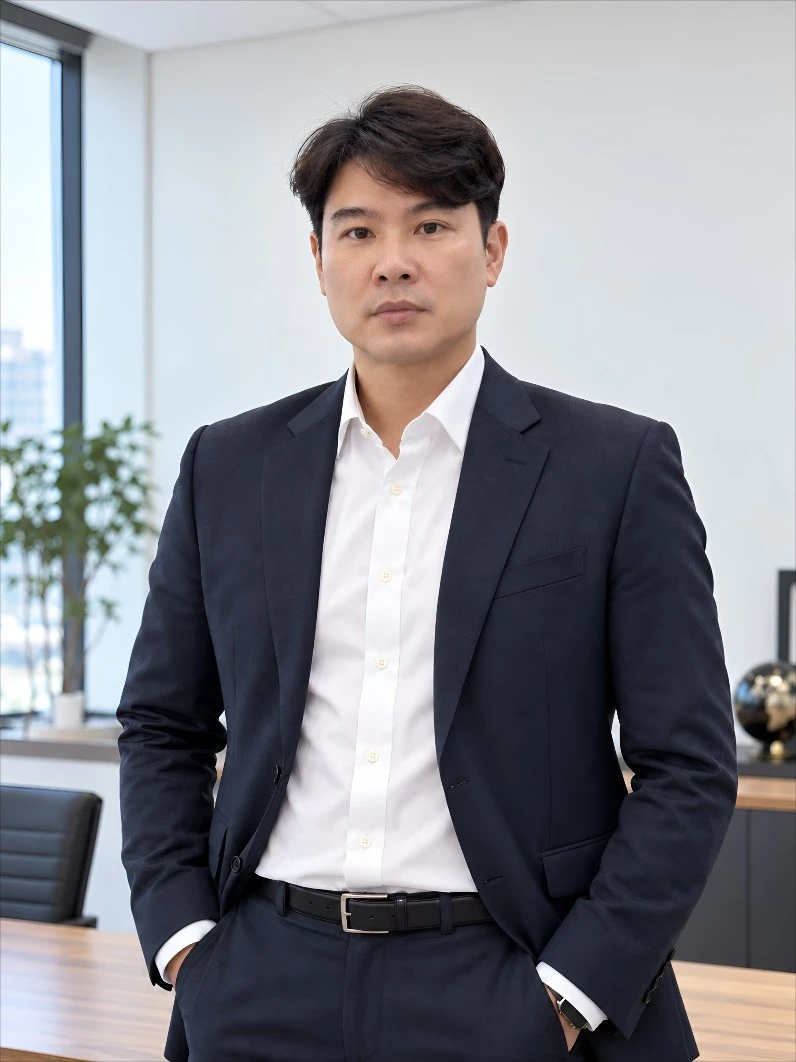
John Kim
InnoRobix is an engineering company focused on industrial automation, electrical and control systems, robotics, and customised inspection and testing equipment.
