Why Do Batteries Over 100 Wh Require Full Hazmat Freight Services?
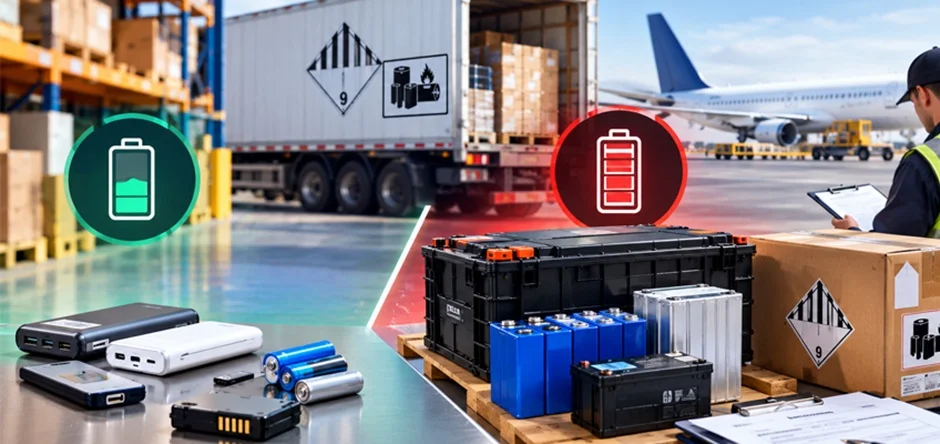
You buy a power bank, and you see that it works fine. You ship a thousand of them on a pallet, and suddenly you are dealing with federal regulations that can stop your load at the dock. An unpredictable and unpleasant situation, right? That is the reality of the 100 watt-hour-rule.
Below that number, batteries move like normal freight. Above it, everything changes: packaging, labeling, who can drive the truck, and what papers need to be in the cab. The whole thing shifts into a different category that most shippers never planned for.
Once a battery passes 100 Wh, it leaves the simplified rules behind and moves into fully regulated hazardous material logistics, with Class 9 labels, shipping papers, and trained handlers.
This single sentence shows why so many packages in hazardous material logistics are rejected. The carrier must have hazmat authority. There may be additional training needed for the driver. The packaging must satisfy certain requirements. The documentation needs to be spotless.
The rules exist because the incidents are real and climbing. A September 2026 analysis from UL Standards & Engagement found that reported lithium battery incidents in air cargo rose 40% between 2021 and 2025, tracking the boom in cheap rechargeable products.
Every one of those incidents started with a battery someone thought was safe to ship. That is why the rules are so strict right now and may change the entire plan for the shipper.
The Failure Consequences
The lithium-ion battery exceeding 100 Wh possesses a lot of energy. The moment there is a short circuit in one of the cells, the heat begins to propagate. The process will not be confined to one battery alone but will jump from one battery to another. The temperatures begin rising up to 1,000 degrees. Gas builds up.
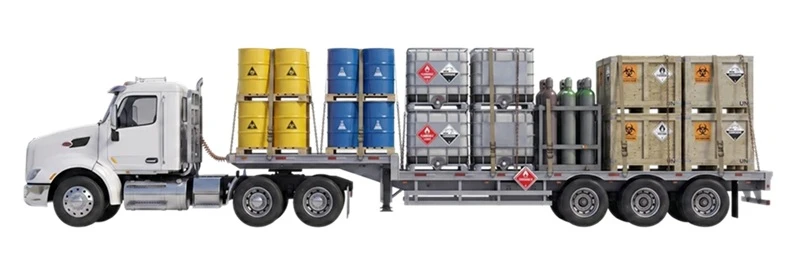
This is why regular LTL networks cannot handle these loads, and why they belong in hazardous material logistics instead. Their terminals are built for speed. Packages fly through sorting systems. Nobody checks whether a pallet of e-bike batteries is sitting next to something flammable. The risk of mixing incompatible freight is too high.
The Cost of Getting It Wrong
Carriers with hazmat authority charge more. That is just how hazardous material logistics works. Training costs money. Insurance costs money. Keeping records costs money. A broker who tries to save a few bucks by booking a regulated battery load on a regular dry van carrier creates liability that falls back on the shipper. Rejected loads. Fines. Lawsuits if something catches fire.
Hazardous Material Logistics: Planning Ahead
It is important for companies that ship out heavy duty batteries to make sure that their hazmat lead time is accounted for in their planning. They have longer routes, increased inventory requirements for buffer, and customer expectations need to be realistic.
The 100 Wh line splits two worlds. One runs on cheap rates and quick pickups. The other runs on paperwork and authorized carriers. Batteries above that line belong to the second world whether shippers like it or not.
Author Bio:

Natalya Vlasova
Natalya Vlasova is a professional content marketer with more than 10 years of experience in the content marketing field. She specializes in working with clients in Europe and the United States. Additionally, she has over four years of experience in logistics research and in the development of content for the tracking industry.
 Our Services
 Media Pack Download
 Newsletters
 Industrial Events