The Future of Plant Automation in 2025: The Major Innovations to Expect.

Plant automation is evolving rapidly - and 2025 is already becoming one of the most active years ever.
There is the emergence of smarter, safer, and more connected ways of working in factories through AI-powered machines, as well as human-friendly robots. However, what does it really mean to the plant managers, engineers and business leaders?
In the present paper, we will discuss the most important trends and technologies in plant automation to observe in 2025 and why it is important to your future business.
1. Smart Automation using Artificial Intelligence and Machine Learning.
Artificial Intelligence (AI) and Machine Learning (ML) are no longer considered as future technology; it has turned into a tool of daily factory.
How it’s being used:
- Real-time defects detection with smart cameras.
- Anticipating the failure of equipment.
- Automated machine optimization.
Why it matters:
The tools assist in minimizing wastage, decreasing downtime and enhancing the quality of products all the time that the decision-making process is carried out with impressive speed in comparison to human operators.
What to watch:
In case your factory gathers much data (sensors, machines etc.), then you are 50 percent on the way. The second step is to utilize that data by using AI tools that will enable your team to make better and faster decisions.
2. More Connected IIoT and Edge Computing.
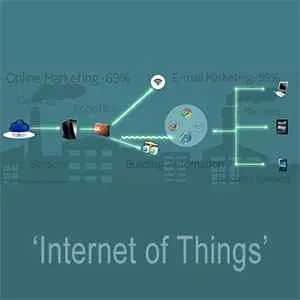
The Industrial Internet of Things (IIoT) is making all the things on your plant floor, machines, robots, systems, etc., talk to each other and work as a team.
New in 2025:
- The processing of data occurs on the machines itself (rather than transmitting it to the cloud) thereby making the decisions immediately.
- The 5G networks are enabling equipment and systems to have faster and real-time connections.
Why it matters:
Minimum lag time = quick reactions. In the event of machine failure or slowing down of the process, the system is capable of responding immediately without having the cloud systems to respond to the process.
What to watch:
Begin examining the internet and network definition of your plant. Question: Are our systems able to communicate fast?
3. Digital Twins: Virtual Walsh, Real Results.
A digital twin is a computer simulated replica of a physical machine, assembly line or even your whole plant. It is a reflection of real time which means that you can make changes and test them on the floor beforehand.
Why it’s useful:
- Test new control without closing the line.
- Determine the effect of altering (such as new materials or machine settings) performance.
- Avoid the problem of catch before it becomes downtime.
What to watch:
Digital twins are increasingly becoming accessible and affordable. This could be a prudent investment in case your team is willing to make changes faster and safer.
4. On the Rise of Collaborative Robots (Cobots) and AMRs.
Human labor will not only be replaced by robots in 2025 but they will be working together with people.
Key types:
- Cobots: Cobots are safe, flexible, human robots.
- AMRs (Autonomous Mobile Robots): Carry tools, parts or products through your factory with no tracks or human operators.
Why they’re trending:
- You can deploy them quickly.
- They make themselves compatible with your current system.
- They occupy vacacies in times of labour shortages and contribute to a better safety.
What to watch:
Find plant activities that are monotonous, dull, and physically stressful. The solution may be the use of cobots or AMRs to enhance productivity and decrease risk.
5. User-Friendly Technology: AR, Voice Recognition and Smart Interfaces.
The ease of automation is not going up: this is because in 2025, more human-friendly technologies will emerge that assist workers to communicate with machines in a natural manner.
What’s coming:
- AR (Augmented Reality) headsets to instruct workers on either repairing or training.
- Voice activated systems that allow operators to operate machines and not touch a screen.
- Less complex interfaces, less training and errors.
Why it matters:
It is not about substituting employees, it is empowering them. Intelligent tools allow the team to work more efficiently, learn more rapidly, and commit fewer errors.
What to watch:
Do you still have your workers bound to manuals, spreadsheets and buttons? In the case of yes, you might be interested in searching the current interfaces that are more efficient and user-friendly.
6. Automation, But Greener.
Sustainability has become a business agenda. Luckily, automation is making factories more efficient in terms of energy and environmentally friendly.
What’s trending:
- Intelligent energy management that turns off or turns down lights, heating or devices in order to conserve power.
- Waste and scrap reduction process optimisation.
- More energy efficient power electronics.
Why it matters:
Businesses are supposed to be greener to their governments, customers, and investors. You can achieve these objectives with the use of automation tools without having to compromise productivity.
What to watch:
Begin to monitor machine-by-machine energy consumption. Automation can be used there to make some small adjustments that can result in significant savings.
7. Powerful, Dumber Supply Chains.
Automation does not only mean what goes on within the factory walls. It is currently involved in the supply chain issues in companies in a larger role in 2025.
New capabilities:
- Adaptive systems that can change in the case of delay of shipments or sudden change of demand.
- Live dashboard to display production, inventory and logistics in a single location.
- Cloud computing systems that network plants together.
Why it matters:
When the world throws curveballs ( imagine: shortages of materials, delays in shipping goods or surges in demand ), intelligent automation can ensure that you can respond quickly - without lagging.
What to watch:
Question: Are you aware of the real time position of our bottlenecks? Otherwise, automation may provide you with insight and control over your entire operation.
8. Avoiding Cyberattacks and Ethical Robots.
As the number of machines connected to networks increases the importance of cybersecurity grows to equal that of physical safety.
What’s important in 2025:
- Incorporated safety of every automation system.
- Encryption of all data including sensors and cloud platforms.
- AI decision-making transparency (particularly in such sectors as pharma or food).
Why it matters:
A cyber attack would possibly cause a shutdown of production, product damage or sensitive information. And as AI gains more and more control, you should know why a machine makes decisions it makes.
What to watch:
Discuss cybersecurity with your automation stack vendors or IT team. And ensure that AI-driven systems can be audited, in particular, quality, safety, or regulatory compliance.
Okay, so what should you be looking at in your factory?
By 2025, automation is changing how factories think.
Here’s a quick checklist:
✅ Can your systems predict problems and fix them before they happen?
✅ Can your machines talk to each other and react fast?
✅ Does tech help your workers, or does it just stress them out?
✅ Is automation helping you meet your sustainability goals?
✅ Can you easily see what's happening across your supply chain?
✅ Is your cybersecurity strong enough?
In case you said no to any of them, it is alright. All you have to do is to look where you are currently and where you can improve with little, but much effect.
Last Reflection: See the Future, But Do Not pursue it.
Automation in 2025 does not involve the new machines but the new ways of working. Smarter decisions. Faster responses. A more productive interaction between humans and technology.
You may be laying your next upgrade, you may be checking out some digital tools, or you may simply be trying to keep pace with the curve — but keep those eyes open and keep them open.
Watch the trends. Watch your team. Watch the small wins add up.
Since the factories which watch and change now... will be at the head tomorrow.
Interested in automation of your plant? I will be able to assist you in drawing a little roadmap or providing some case studies in your industry. Only say the word-- and we will go on.
 Our Services
 Media Pack Download
 Newsletters
 Industrial Events