Smart Data Platforms for Plant Automation: Driving Industrial Insights with Augmented Analytics and Data as a Service
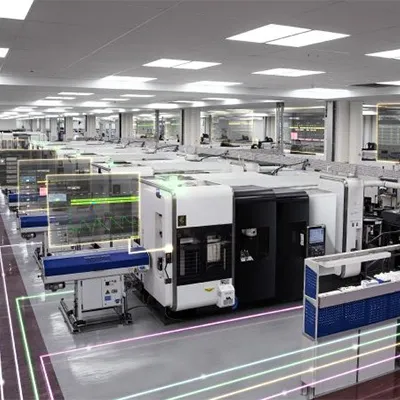
Living in an age of smartening up of the factories and autonomous machines, data has become a new oil which will only be usable in case of effective data refinement. Digital industrial transformation in manufacturing industries across the world is not merely an effort to keep up with the trend but get ahead. AI-powered industrial data platforms for industrial automation are among numerous digital disruptors that are becoming one of the most important instruments resulting in competitive advantages and foster never-before-seen insights. However, how really are these platforms transforming the industrial efficiency? What about technologies such as implementing augmented analytics in industrial operations and data as a service? Where do they fall in the ecosystem?
This article discusses how the AI-powered industrial data platforms are reinventing the very basis of plant automation process in potentially opening up new opportunities in plant management, facilitating data-driven manufacturing solutions for automation, in addition to bringing about a curious interplay between data, machines and decisions.
The Evolution from Data Collection to Intelligence
In the conventional manufacturing systems, data could be gathered, stored and scarcely used besides tracking. However, as the current transformation towards an industrial digital transformation process takes place, that paradigm has shifted radically. The current manufacturing markets are flooded with real-time data provided by machines, sensors and corporate systems. But how much ever the raw information may be, it is of no use unless it carries context.
This is where intelligent data solutions for manufacturing plants enter the game. These resources are not merely data warehouses but ingest, cleanse, analyze and render it in an intuitive, timely and strongly actionable manner. They combine OT (Operational Technology) and IT data layers in a manner that makes them able to transfer decision making effortlessly on the floors of the plant.
The emergence of AI-powered industrial data platforms, then, is not a story about automation; it is a story of combining human and machine intelligence in order to traverse complicated manufacturing problems.
What Are Smart Data Platforms?
Industrial automation platforms – Smart data platforms – are integrated environments that govern and process mountains of industrial data using artificial intelligence, machine learning and augmented analytics. They allow end-to-end visibility of operations that assist manufacturers to bridge the gap between equipment performance, production efficiency and strategic management.
So what about the smartness of these platforms?
They are situation-sensitive, adaptive, and extendable and are expected to be interoperable with the current systems. Most importantly, they are promoters of data as a service in smart manufacturing where users are supplied with real-time curation, reliable, and role-specific data.
How Augmented Analytics Drives Factory Efficiency
Implementing augmented analytics in industrial operations is much more than dashboards and graphs. It automates preparation of data and creation of insights, as well as suggests decisions with the use of ML algorithms and NLP (natural language processing).
The way in which augmented analytics works in enhancing factory efficiency is now no longer a hypothetical question. In the current context, it is adopted by plant managers to forecast when the machines are going to fall into pieces, it is used to schedule the production intensity and also to minimize wastage of energy.
This is achieved by the adoption of augmented analytics in the industrial processes, making the business strategy shift to proactive approach. AI-powered industrial data platforms would also be able to tell one the maintenance days without necessarily waiting until a line has failed. Stakeholders receive real-time performance reports, according to their KPIs, instead of receiving monthly reports on productivity.
Consider a situation when downtime is predictable as well as preventable. That is what predictive analytics for plant operations can guarantee and promise. With the help of AI-powered industrial information platforms, such analytics are able to learn based on historic data, identify anomalies as well as allow a continuous improvement.
Market Snapshot: The Rise of Industrial Intelligence
| Year | Smart Data Platform Adoption (% Plants) | Use of Predictive Analytics | AI Integration Level |
| 2020 | 22% | 19% | Low |
| 2022 | 38% | 33% | Moderate |
| 2024 | 57% | 52% | High |
| 2026 | 72% (projected) | 69% (projected) | Very High (projected) |
As shown in this table, industrial digital transformation is increasingly becoming common with the smart data platforms for industrial automation at the focus of adoption trends.
Scalable Analytics for Smart Factories: Breaking the Boundaries
Since factories are going through a phase of turning into intelligent ecosystems, scalability ceases to be a matter of discussion. Scalable analysis on smart factories will mean that when there is an increase in the production lines, when there is an increase in the data requirements that need to be pulled or when there is an introduction of new technologies, the system still serves without any interruptions.
AI-powered industrial data platforms are modern, cloud-native administrative platforms that are edge-compatible and safe. That is to say, a plant in one geographical location is possible to duplicate experiences of another without an overhaul of the IT. It also implies that various stakeholders - operators and executives - can consume customized information simultaneously.
Scalability does not only apply technically, but also strategically.
It provides business with the dynamism to experiment, acquire knowledge and grow. It enables startups in the opportunities to exploit the data-driven manufacturing solutions for automation to the same degree as conglomerates.
Data as a Service in Smart Manufacturing: Simplifying Access to Complex Insights
Data as a service, or DaaS, is a paradigm shift in the industrial sector, despite its technical terms.
Data as a service in smart manufacturing enables anybody in the company, including engineers, quality managers, and C-suite executives, to access filtered, pertinent, and timely data, in contrast to segregated data where IT intervention could be necessary.
Imagine DaaS to be an inside data membership. There is no need to download, parse and analyze the data of various sources. When you need anything, the system gives it to you in a form that can be used.
Within the model, intelligent data solutions for manufacturing plants become more democratic, do not rely on data scientists as much and give business users an opportunity to make decisions faster and smarter.
Deep Dive: Predictive Analytics and Real-World Results
Predictive analytics for plant operations are a new must-have rather than a nice-to-have. And this is how it can be put into numbers:
| Use Case | Traditional Approach | Predictive Analytics Outcome |
| Machine Maintenance | Fixed Schedule | 30% downtime reduction through early alerts |
| Energy Optimization | Manual Audits | 18% lower energy bills via smart insights |
| Quality Control | Reactive Inspections | 25% fewer product rejections using prediction |
| Supply Chain Management | Monthly Reviews | 40% better inventory forecasting |
What is the secret sauce? All such results are driven by AI-powered industrial data platforms that provide real-time recommendations that become personalized and adjustable.
Curiosity Sparks Innovation: Questions That Keep Us Advancing
When you examine this change, some questions automatically come into your mind:
- How much does an ROI increase with the implementation of smart data platforms through industrial automation instead of using SCADA?
- Is it plausible that implementing augmented analytics in industrial operations is disruptive to them in the short term, and what can be done to mitigate this to minimal?
- Is data as a service in smart manufacturing very safe, more so when it is accessed remotely?
- Are scalable analytics in smart factories going to assist legacy systems or they would need to be overhauled?
These questions are not barriers to entry—they are a rocket launch. Answering them will open up innovation, cooperation, and new paradigms of factory smartness.
The Road Ahead: From Reactive to Autonomous
As augmented, predictive analytics for plant operations, and data-driven manufacturing solutions for automation come together, the industries are gaining gears towards autonomous decision-making.
Self-education, self-checking and self-correction will be conducted by plants themselves.
Most notable influences of industrial digital transformation will not only be experienced numerically but will also be experienced culturally. Teams will move away from fire-fighting to planning. The processes will become flexible. Robots will transform into coworkers.
And the hub of it will be AI-powered industrial data platforms: ever-evolving, ever-improving, and empowering the next phase of growth.
Final Thought: Manufacturing Intelligence Is Not the Future. It’s the Now.
The industrial environment is changing more quickly than it has in the past. The adapters will be the followers and those who stall will be the leaders. It is no secret that intelligence is quickly becoming the primary currency of business, whether we are discussing how augmented analytics is being used in industrial operations to make factory efficiency a reality or how data as a service plays a very delicate role in smart manufacturing.
It is not the data, but the way data is channeled, explained and translated into action that holds such power. And AI-powered industrial data platforms are just that.
Curious? You ought to. Because the actual question is not whether your plant can evolve or not - it is whether it will and when.
 Our Services
 Media Pack Download
 Newsletters
 Industrial Events