Robotics in Manufacturing: Benefits, Challenges, and Future Potential

Step into a factory where intelligent automated systems demonstrate learning abilities as well as adaptive capabilities. A manufacturing facility must mature beyond traditional robotic limbs toward systems which enhance human decision-making, while establishing seamless human-machine cooperation and real-time operation capabilities. Intrigued? You should be. Robotics develop rapidly into a force that transforms product creation for minimum sensors to complete automobiles.
The advancing technological landscape makes robotics in manufacturing industry the fundamental base of Industry 4.0 operations. Industries that use robotics benefit in multiple ways from this technology. Which barriers block the complete implementation of these technologies? The robotic progress continues on what path of development.
Let’s dive deep.
The Rise of Robotics Driven Automation
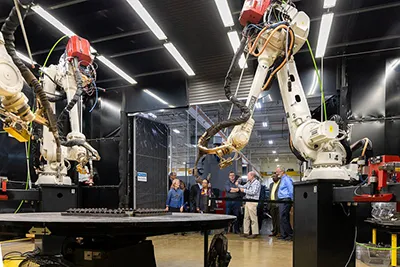
Modern production lines operate without strict mechanical systems. Current robotic automation technologies emphasize the use of intelligent and precise systems. Through the combination of robotic process automation, AI, IoT and machine learning technology production systems can reach optimized performance levels.
Welding robots used to be simple machines yet today they serve as AI-dependent systems that make automated decisions. Production systems operated by robots have built-in capabilities that notice equipment defects and reprioritize workflow and predict upcoming maintenance requirements. A new generation of advanced manufacturing robotics has emerged which relies on flexibility and agility as fundamental components.
Consider this: Robots deployed in conventional automotive manufacturing create new efficiencies that enable daily vehicle assembly levels surpassing 300 units while keeping human operators as minimal on-site workforce. The combination provides cost efficiency and significantly cuts down human errors at the same time.
The Undeniable Benefits of Robotics in Manufacturing

Robotics systems provide multiple benefits which drive manufacturing operations to switch over to automated processes worldwide.
| Benefit | Impact |
| Increased Productivity | Robots work 24/7 with consistent output, improving throughput significantly. |
| Enhanced Precision | Reduced waste and error margins thanks to pinpoint accuracy. |
| Worker Safety | Dangerous tasks are now robot-handled, lowering workplace injuries. |
| Cost Efficiency | Initial investment is offset by lower operational and labor costs. |
| Scalability | Rapid adjustments to production volumes based on market demand. |
The listed advantages stress fundamental characteristics that robotic systems deliver. Beyond efficiency and reduction costs the adoption of robotic manufacturing brings fundamental changes to manufacturing operations. Manufacturing industry progress through robotic solutions enables quick production cycles combined with high-quality output and highly personalized solutions today.
Real-World Robotics Manufacturing Applications
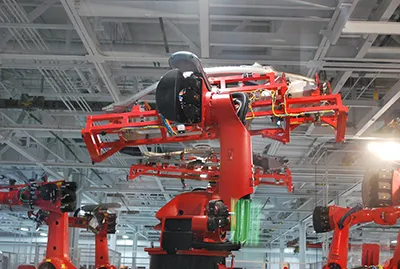
Robotics manufacturing applications demonstrate expanded diversity throughout automotive manufacturing and electronics assembly sectors.
- Automotive: The production tasks landscape includes painting, welding, part assembly and quality inspection which robots handle consistently.
- Electronics: The robot system excelled at soldering and component placement operations which exceeded human capability.
- Pharmaceuticals: Modern robots handle sterile packaging tasks as well as sorting procedures and mixing processes to deliver both operational compliance and enhanced effectiveness.
- Food and Beverage: The complete factory process from packaging and sorting to labeling and even cooking can be performed using robotic technology.
Robotic operational efficiency represents a real-world performance metric across these automation scenarios. The incorporation of robotics automation into a company leads to operational throughput increases ranging between 20% and 30%.
Overcoming Robotics Integration Challenges
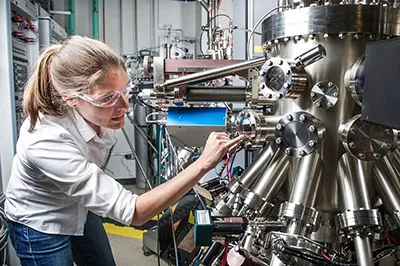
The fact that robots provide many benefits so why aren't factories employing them on a widespread scale?
The real insights about curiosity lie ahead. The robotics in manufacturing industry experiences multiple challenges which hinder its full implementation potential.
| Challenge | Explanation |
| High Initial Costs | Buying and integrating robotic systems demands heavy upfront capital. |
| Workforce Displacement Concerns | Fear of robots replacing human jobs slows adoption. |
| Complexity in Integration | Legacy systems are not always compatible with new robotics powered manufacturing setups. |
| Training Needs | Employees need retraining to work alongside or operate smart manufacturing robotics. |
| Cybersecurity | Interconnected robots are vulnerable to cyber threats if not secured properly. |
Real obstacles exist when companies try to implement robotics systems. Businesses succeeding with their robotics implementation achieve their goals when they prioritize employee training along with gradual deployment and cybersecurity measures.
Most of these challenges can be resolved through robot-driven innovation. Robotics platforms with AI intelligence are able to perform autonomous calibration and learn new tasks independently and adapt to preexisting systems through simplified code instructions. Impressive, right?
Unlocking the Future of Robotics in Manufacturing
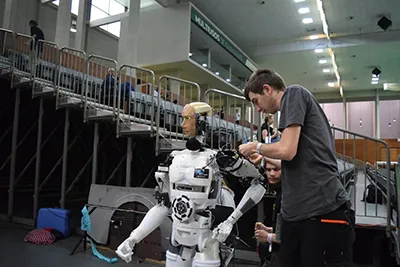
The question on everyone's mind: Where is all this heading?
Robotics technology moves forward past the mere creation of additional robots to focus on building advanced autonomous networks which integrate seamlessly. Within the upcoming decade robotics will establish totally autonomous self-learning factories. A production facility exists which changes operations automatically in response to supply chain conditions and customer input throughout the world.
Here are a few visionary trends:
- Collaborative Robots (Cobots): Human operators stand as the intentional purpose of these robotic systems while they continue to resist human job elimination.
- AI and Machine Learning: Making robots predictive and proactive.
- Edge Computing & 5G: The factory floor achieves instant decision-making capabilities.
- Digital Twins: The technology allows factories to utilize virtual representations of robots alongside system execution simulations for prestaff task testing.
- Sustainable Robotics: Robotics technology that combines energy efficiency with recyclability works to minimize manufacturing sector carbon emissions.
What nations currently dominate the robotic manufacturing sector remains under investigation? These countries represent China as well as Japan and Germany that constantly drive robotic operational boundaries into new territories.
Robotics + Humans: The Future Duo
Are you wondering about the possibility of human obsolescence? Not quite.
Manufacturing robotics enable human labor transformation instead of personnel replacement. The responsibilities of human workers will shift toward creative thinking and strategizing and problem-solving and innovation tasks. Robotics driven automation takes care of repetitive tasks so human workers concentrate on developing new directions.
The necessity of workforce training programs together with skill development initiatives continuously increases. Companies who integrate human capabilities with robotic operations experience exceptional success in robotic innovation.
Final Thoughts
Our near robotic revolution proves beyond doubt that robotic manufacturing applications will continue indefinitely. It’s the future. Through robotics powered manufacturing, companies access multiple opportunities including cost reduction while achieving improved quality performance and workforce transformation.
As we stand on the cusp of a robotic revolution, one thing is clear - robotics in manufacturing industry is not a fleeting trend; it’s the future. Whether it's reducing costs, improving quality, or reshaping the workforce, robotics powered manufacturing is unlocking new doors.
Still curious?
Ask yourself:
- What role will your company play in this evolution?
- How prepared are your systems for robotics manufacturing applications?
- Are you solving or avoiding your robotics integration challenges?
If you’re not exploring the advantages of robotics today, you may be outpaced tomorrow.
The future of robotics is knocking - are you ready to open the door?
 Our Services
 Media Pack Download
 Newsletters
 Industrial Events