Robotics & Innovative Automation Technologies Transforming Industries in 2026
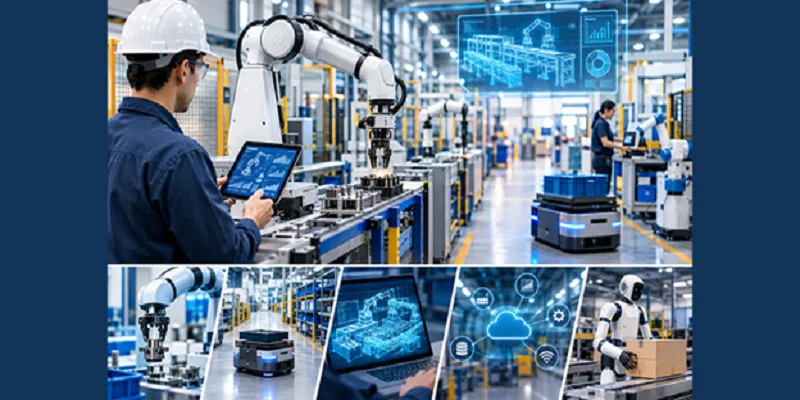
Quick answer: In 2026, industrial robotics and automation are shifting from rigid, single-task machines to AI-powered, flexible systems. Collaborative robots, vision-guided automation, digital twins and robots-as-a-service are making advanced factory automation accessible to companies of every size, not just automotive giants.
Here's a question worth asking: if a competitor could cut downtime, reduce defects and scale output without adding headcount, how long would you wait to respond?
That's the promise driving industrial robotics and automation in 2026. The technology has moved past clunky, single-task machines. Today's systems learn, adapt and work safely beside your team. Here's what's changing and how to make sense of it.
What Is Industrial Robotics and Automation?
Industrial robotics means programmable machines that handle physical tasks in manufacturing, such as welding, assembling, painting, packaging and material handling. Industrial automation is the broader umbrella. It includes robots, sensors, controllers, software and connected systems working together to run processes with minimal human intervention.
Think of it this way: the robot is the muscle, and automation is the whole nervous system.
Over four million industrial robots are now operating in factories worldwide, and installations keep climbing year after year. What's new isn't the number. It's how capable and approachable these machines have become.
Robotics and Automation Trends in 2026
If you're tracking robotics and automation trends in 2026, these are the ones actually moving the needle.
1. AI-Powered Robots That Adapt
Traditional robots do exactly what they're programmed to do, and they fail when something changes. Robotics technology in 2026 is different. With machine learning and better vision systems, robots can recognize parts in a messy bin, adjust their grip and correct mistakes on the fly.
For a manufacturer, that means fewer stoppages when a supplier changes packaging or a part arrives slightly off-position. Flexibility, not just speed, is the new selling point.
2. Collaborative Robots (Cobots) Go Mainstream
Cobots are designed to work safely alongside people, without heavy fencing. They're smaller, cheaper and easier to program, often by simply guiding the arm by hand.
This has changed who can automate. A small workshop with a dozen employees can now deploy a cobot for machine tending or packing without hiring a robotics engineer. That is a big reason industrial robotics solutions are spreading beyond the big players.
3. Autonomous Mobile Robots (AMRs)
Old-style automated guided vehicles followed magnetic tape on the floor. AMRs use sensors and onboard intelligence to map their surroundings and route around obstacles, people and forklifts in real time.
They're now the workhorses of internal logistics, moving components between stations, feeding assembly lines and cutting the walking and waiting that quietly eat up hours every shift.
4. Digital Twins and Simulation
Before a robot ever touches a real part, many companies now build a virtual copy of the production line. Digital twins let engineers test layouts, spot bottlenecks and train systems in simulation.
The payoff is less trial and error on the real floor, faster commissioning and fewer expensive surprises.
5. Robotics-as-a-Service (RaaS)
Not every business wants to buy a six-figure robot outright. RaaS lets companies pay monthly or per use, with maintenance and upgrades included. It lowers the upfront risk and makes automation a budget line rather than a capital gamble.
6. Humanoid and General-Purpose Robots Are Getting Real Attention
Humanoid robots grab the headlines, and pilot programs in warehouses and automotive plants are growing. But it's worth staying grounded. For most factories in 2026, specialized arms, cobots and AMRs still deliver far better returns. Humanoids are worth watching, not yet worth betting the plant on.
How Smart Manufacturing Automation Works
Smart manufacturing automation connects machines, sensors and software so the factory can sense, analyze and respond, often without waiting for a human to notice a problem.
A simple example: a sensor on a motor detects unusual vibration. The system flags it, predicts a bearing failure in about two weeks and schedules maintenance during a planned pause. No emergency shutdown, no lost shift.
The building blocks look like this:
- IIoT sensors collect data on temperature, vibration, output and quality
- Edge computing processes that data right at the machine for instant decisions
- AI and analytics find patterns humans would miss
- Robotics act on those insights physically
- Cloud platforms tie multiple sites together
This is what people mean by Industry 4.0, and in 2026 it's becoming standard practice rather than a pilot project.
Advanced Automation Technologies for the Manufacturing Industry
Beyond robots themselves, several advanced automation technologies for the manufacturing industry are reshaping the floor.
Machine vision and AI inspection. Cameras paired with deep learning check products at speeds and consistency no human eye can match, catching tiny defects in electronics, food packaging or metal parts.
Predictive maintenance. Instead of fixing machines after they break or on a fixed calendar, systems predict failures before they happen. This is one of the fastest ways to see ROI.
Additive manufacturing integration. Robots load, unload and finish 3D-printed parts, connecting prototyping and production more smoothly.
Advanced robot programming. Low-code and no-code interfaces, plus natural-language tools, let technicians set up tasks without deep coding skills.
Together, these form the core of advanced factory automation: systems that don't just repeat tasks, but monitor, learn and improve.
Which Industries Are Being Transformed?
Automotive. Still the largest user of robots, now adding flexible lines that switch between combustion and electric vehicle models.
Electronics and semiconductors. Precision assembly and inspection where microscopic tolerances matter.
Food and beverage. Hygienic robots for sorting, packing and palletizing, especially valuable amid labor shortages.
Logistics and warehousing. Picking robots, AMRs and automated storage systems keep pace with e-commerce demand.
Pharmaceuticals and healthcare. Sterile, traceable automation for production and lab work.
Metals and heavy industry. Welding, cutting and machining cells that improve both safety and consistency.
The Real Benefits (and the Honest Challenges)
Benefits worth knowing:
- Higher productivity and consistent quality
- Safer workplaces, since robots take on dangerous, repetitive or heavy tasks
- Lower waste and fewer defects
- Ability to scale production without proportionally scaling headcount
- Better use of skilled workers on higher-value tasks
Challenges you should plan for:
- Upfront cost and integration complexity. The robot is often the smaller part of the bill.
- Skills gap. Companies need people who can program, maintain and troubleshoot these systems.
- Cybersecurity. More connected machines mean more entry points to protect.
- Change management. Teams need clear communication, or fear of job loss can sink a project.
On jobs specifically: the evidence so far shows roles shifting rather than vanishing. Repetitive tasks decline, while demand grows for technicians, integrators, data-savvy operators and maintenance specialists. Companies that invest in reskilling tend to get far better results.
How to Start with Factory Automation
You don't have to automate everything at once. A sensible path looks like this:
- Find the pain point. Look for tasks that are repetitive, dangerous, error-prone or a bottleneck.
- Start small. Pilot one cell or process and measure the results.
- Calculate ROI honestly. Include integration, training and maintenance, not just the machine price.
- Choose scalable systems. Open, interoperable platforms save headaches later.
- Train your people early. Involve operators from day one.
- Build in data. Even simple data collection sets you up for smarter automation down the road.
Frequently Asked Questions
What is the difference between industrial automation and robotics?
Robotics refers specifically to programmable machines that perform physical tasks. Industrial automation is broader and includes robots, sensors, control systems and software that run processes automatically.
What are the biggest robotics trends in 2026?
AI-enabled adaptive robots, collaborative robots, autonomous mobile robots, digital twins, robotics-as-a-service and early humanoid pilots.
Is factory automation only for large manufacturers?
No. Cobots and RaaS models have made automation affordable and practical for small and mid-sized manufacturers.
Will robots replace human workers in factories?
Robots are taking over repetitive and hazardous tasks, but new roles in programming, maintenance and data analysis are growing. Most experts see a shift in job types rather than a simple replacement.
How long does it take to see ROI from industrial robotics?
It varies by application, but many projects, especially in packaging, machine tending and inspection, pay back within one to three years.
What industries use robotics the most?
Automotive, electronics, metals, food and beverage, logistics and pharmaceuticals lead the way.
Final Thoughts
The robotics automation technologies of 2026 aren't about building a lights-out factory overnight. They're about making manufacturing more flexible, safer and more resilient, one smart decision at a time.
The companies pulling ahead aren't necessarily the ones with the most robots. They're the ones that pick the right problems, start small, bring their people along and let data guide the next step.
Whether you run a global plant or a small workshop, the question in 2026 isn't really "should we automate?" It's "where does automation help us most, and how do we start?"
 Our Services
 Media Pack Download
 Newsletters
 Industrial Events