Research & Innovation Spotlight: Ongoing Industrial Automation Projects with Practical Applications
Abstract:
Recent developments in industrial automation are delivering practical benefits across manufacturing, mining, and agriculture. Focusing on pneumatic, hydraulic, and electrical automation, this article highlights how innovations from the past 1–3 years are boosting productivity, cutting costs, and improving safety. Examples from IMI Group and others illustrate significant business impacts in food & beverage, mining, and agribusiness operations.
Introduction
Industrial automation has rapidly advanced in recent years, delivering tangible business results. Companies across sectors are investing in pneumatic, hydraulic, and electrical automation to solve operational challenges: boosting productivity, reducing costs, improving safety, and enhancing sustainability. In Brazil and globally, industries such as food & beverage, mining, and agribusiness have become key adopters. Analysts note that demand for automation technology is accelerating as organizations seek efficiency and reliability gains (IMI Norgren, 2022), and labor shortages in manufacturing further spur this trend (IMI plc, 2024). This article spotlights current (last 1–3 years) research-driven projects in industrial automation that have realworld applications. Emphasizing business impact over technical detail, it showcases how recent innovations—many developed or implemented by IMI Group companies— translate into higher throughput, lower downtime, improved quality, and safer operations in various industries.
Automation in Food & Beverage
Automation is crucial in the food and beverage industry to meet high demand and strict quality standards efficiently. One trend is the hybrid use of pneumatic and electric actuators in packaging lines to optimize cost and performance. Electric servo motors provide high precision for complex motions, while pneumatic cylinders handle simpler repetitive tasks at a fraction of the cost. For example, a 2024 case packer machine combined servo-driven axes with pneumatic grippers, achieving the required speed and accuracy at roughly 50% lower cost than an all-servo design (Jensen, 2024). By pairing technologies, manufacturers maintain performance while significantly reducing capital expense.
Another innovation has addressed space and energy constraints in beverage processing. IMI Norgren’s Integrated Valve & Actuator Control (IVAC) pneumatic cylinder exemplifies research applied in practice. In 2021, a craft brewery needed to expand its keg filling line despite limited floor space. The solution, a compact rotary filler by KHS, was made possible by using IVAC units instead of traditional cylinders (IMI Norgren, 2021). The IVAC integrates valves and sensors within the actuator, eliminating external tubing and bulky valve manifolds. This design dramatically reduced the machine’s footprint, allowing the new system to fit in the existing space. It also improved efficiency: by cutting lengthy air lines, the brewery reduced compressed air usage by nearly 50%, lowering energy costs (IMI Norgren, 2021). The upgraded line doubled keg output with no facility expansion. Importantly, such innovations enable producers to meet output and quality targets despite labor or space constraints, all while using less energy and resources.
Automation in Mining and Heavy Industry
Mining and heavy industries are leveraging automation to increase productivity and enhance safety. A prominent example is the deployment of autonomous haul trucks in large mining operations. Self-driving trucks equipped with AI and sensors can operate 24/7, hauling ore more efficiently than human-driven vehicles. Brazil’s Vale, for instance, reported that its autonomous haul trucks delivered up to 15% more output and used about 7% less fuel compared to conventional trucks (Staff Writer, 2025). This fuel efficiency also lowers emissions, supporting sustainability targets. Removing drivers from these vehicles also improves safety by keeping people out of hazardous mine pits. Higher productivity, lower fuel costs, and fewer accidents highlight the strong business case for automation in hauling.

Figure 1. An autonomous haul truck in operation at a mine, showcasing automation in heavy industry (Henry, 2019).
Another key development is the use of advanced monitoring and predictive analytics to prevent equipment failures. IMI Critical Engineering introduced IMI InSyt, a data-driven predictive maintenance service, to heavy industrial clients in 2023. By outfitting valves and pipelines with sensors and analyzing performance data with AI, the InSyt system can detect anomalies before they cause breakdowns. In practice, plants using this solution have avoided unplanned downtime by scheduling maintenance on early warnings (IMI plc, 2024). In 29 installations globally, IMI InSyt has helped companies prevent costly outages and accidents by catching issues like leaks or fatigue cracks in advance (IMI plc, 2024). The ability to avert a single major failure often justifies the investment, considering the high cost of disruptions in industries like power generation or oil refining.
Robotics-as-a-Service (RaaS) has emerged as a new model to make automation more accessible in this sector. Instead of purchasing robots or autonomous equipment outright, companies can subscribe to use them and pay based on usage. This lowers the upfront cost barrier and ensures the technology stays up to date (IMI Norgren, 2022). Mid-sized mining or manufacturing firms have started adopting RaaS arrangements for tasks like automated inspections and material handling, improving their operations without heavy capital investment. Whether through autonomous vehicles, smart maintenance systems, or service-based delivery, the mining and heavy industry segment is seeing concrete gains from automation—more tonnage moved, fewer stoppages, and a safer work environment.
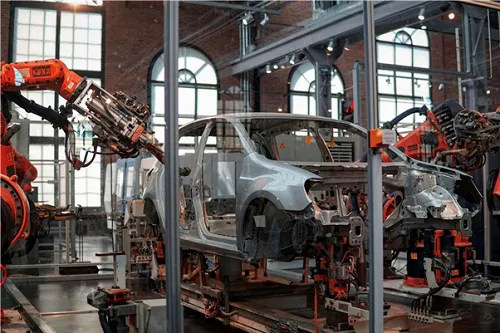
Figure 2. Modern robotic arms on a production line, illustrating industrial automation in manufacturing (Possessed Photography, 2020).
Automation in Agribusiness
Agriculture is undergoing a quiet revolution with automation technologies increasing yields and reducing labor dependence. In dairy farming, the adoption of automated milking systems (robotic milkers) is a prime example. These systems allow cows to be milked automatically whenever they choose, rather than on a fixed schedule set by farmers. The result has been notable improvements in productivity and farm operations. Studies show that farms using robotic milking see roughly a 10% increase in milk production per cow thanks to more frequent and less stressful milking (Goldstein, 2025). Labor costs drop as one robot can handle the work of several farmhands, mitigating workforce shortages in rural areas. Additionally, each milking unit gathers detailed data on cow health and milk quality (e.g., output per cow, fat/protein levels), enabling farmers to detect issues like infections early. This data driven herd management improves animal health and longevity while sustaining higher output.
In crop production, advanced automation is making farming more precise and sustainable. Agricultural drones have seen explosive growth in Brazil’s large farms over the past few years (Gimenez, 2025). These drones are used for aerial crop spraying, monitoring fields, and mapping soil conditions. Their impact is significant: drones can spray fields much faster and more uniformly than ground equipment, reducing agrochemical waste and avoiding crop damage. Some Brazilian growers report that switching to drone spraying eliminated up to 5% of crop losses (from tractor damage) and boosted yields by as much as 40% in one soybean harvest (Gimenez, 2025). Others have cut pesticide expenses by over 70% while also needing fewer workers for field spray operations (Gimenez, 2025). These innovations, once experimental, are now practical tools. They not only boost productivity but also promote more sustainable use of land, water, and inputs. Autonomous tractors and sensor-driven irrigation systems further ensure optimal farm operations, maximizing output with minimal waste. Automation in agribusiness not only improves productivity but also promotes more sustainable use of resources, which is essential as demand for agricultural products rises.
Summary of Key Projects and Impacts

Table: Summary of selected ongoing automation projects, their sector applications, and key business outcomes.
Conclusion
Recent innovations in industrial automation are clearly delivering value across different sectors. The examples discussed – from automated packaging lines and smart actuators to self-driving mine trucks, predictive maintenance platforms, robotic milkers, and farm drones – all show research turning into results. Companies have realized higher efficiency, lower operating costs, improved product quality, and safer working conditions by implementing these solutions. A common thread is the integration of digital intelligence (sensors, data analytics, AI) with traditional mechanical systems, creating smarter equipment that can adapt and optimize in ways previously not possible. Another factor is collaboration: many breakthroughs come from technology providers like IMI working closely with industry customers to address specific needs (such as a space-saving design or a predictive safety system). This ensures that innovation is aligned with practical outcomes.
Going forward, the trend is expected to continue and even accelerate. Advancements in AI, machine learning, and connectivity will likely make automation systems more autonomous and easier to deploy. Meanwhile, models like RaaS and other servicebased offerings will make advanced automation accessible to more organizations, not just the largest players. For businesses in Brazil and around the world, staying competitive will increasingly involve embracing these research-driven innovations. The success stories from the past few years provide a roadmap: when companies invest in smart automation with clear objectives, they tend to see strong returns – whether it’s in the form of higher production, lower energy usage, or safer and more streamlined operations. Industrial automation, once a futuristic concept, is now an indispensable part of modern industry, and its ongoing evolution will continue to drive practical improvements in how we produce goods and manage industrial processes.
References
- Gimenez, I. (2025, May 6). Drone “swarms” transform skies over Brazilian farmland.
- Valor International.
https://valorinternational.globo.com/agribusiness/news/2025/05/06/drone-swarmstransform-skies-over-brazilian-farmland.ghtml - Goldstein, H. (2025, May 1). Bot Milk? Lely’s dairy farming robots make the cows comfy and the workplace safer. IEEE Spectrum. https://spectrum.ieee.org/robotic-milkingsystem-benefits-safety
- IMI Norgren. (2021, September 12). Left Hand Brewing Company Case Study. IMI Precision Engineering (Case Study). Retrieved from IMI Norgren website.
- IMI Norgren. (2022, September 8). Trends driving intelligent automation deployment. IMI Precision Engineering (Blog post). Retrieved from IMI Norgren website.
- IMI plc. (2024). Annual Report 2023 – Accelerating Better World Growth. IMI plc. (See “Industrial Automation” section).
- Jensen, S. (2024, November 20). Pneumatics a Key Piece of the Automation Puzzle in Packaging Applications. Power & Motion. https://www.powermotiontech.com/pneumatics/article/55244441
- Possessed Photography. (2020). Gray robotic arm on production line [Photograph]. Unsplash. https://unsplash.com/pt-br/fotografias/veiculo-cinza-sendo-fixado-dentroda-fabrica-usando-maquinas-roboticas-jHZ70nRk7Ns
- Staff Writer. (2025, December 16). Vale, Caterpillar and Sotreq sign deal to expand fleet of autonomous trucks in Pará, Brazil. Mining.com. https://www.mining.com/valecaterpillar-and-sotreq-sign-deal-to-expand-fleet-of-autonomous-trucks-in-para-brazil/
- Hendry, A. (2019). Large yellow mining truck in desert [Photograph].
- Unsplash, https://unsplash.com/pt-br/fotografias/um-grande-caminhao-estacionadoem-cima-de-um-campo-de-terra-3A3OyXGYkuQ
Author Bio:

Icaro Moreira Peralta
Sales and Marketing Manager – Latin America, IMI Precision Engineering
Icaro Peralta is General Sales & Marketing Manager LATAM at IMI Precision. With 19 years of experience in industrial automation, he has held leadership roles at Sandvik and SMC. He holds MBAs in Commercial Management and Finance, and Master’s degrees in International Business (USA) and Administration (Brazil).
 Our Services
 Media Pack Download
 Newsletters
 Industrial Events