How Electronic Manufacturing Services Are Powering Smart Factory Innovations
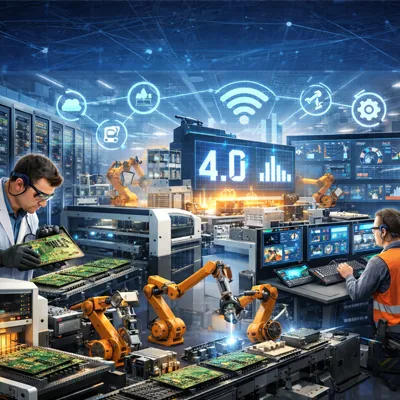
Introduction: EMS as the Backbone of the Smart Factory Era
Smart factories mark the intersection of computer intelligence, automated processes, and networked factories. Electronic Manufacturing Services is the centre of this change, and nowadays it is much more than the conventional organizing of contract manufacturing. Today, the EMS providers are strategic facilitators of intelligent manufacturing solution and can assist the industrial enterprises to embrace automation, connectivity and data-based operations at scale. With the rise in Industry 4.0, Industry 4.0 electronics manufacturing has ceased being a support unit and has evolved into a mission-critical one.
Modern factory relies on smart electronics in sensing, controlling, communicating, and decision making. EMS providers create, produce, assemble, and test the electronics that add smart functionality to factories, both with programmable logic controllers and industrial sensors, edge computing devices, and embedded systems. They are not only involved in assembling parts but to make sure that there is smooth integration, dependability, and scalability in sophisticated industrial settings.
Defining Electronic Manufacturing Services in an Industry 4.0 Context
Electronic Manufacturing Services are the outsourcing of the electronics design, manufacturing, testing and lifecycle management to designated partners. Under the circumstances of industrial automation, EMS service providers offer high-reliability electronics that can be adapted to run in harsh factory environments, long lifecycle, and strict standards of compliance.
Definition: Electronic Manufacturing Services
Industrial EMS is different, where durability, functional safety, electromagnetic compatibility, and long-term availability are the main concerns as opposed to consumer electronics. It is this difference that makes EMS the industrial automation tool one of the building blocks of smart factory electronics integration.
Industrial EMS, as opposed to consumer electronics, is concerned with durability, functional safety, electromagnetic compatibility and long-term availability. It is this difference that places EMS to industrial automation as a keystone to the integration of smart factory electronics.
The Strategic Role of EMS Providers in Industry 4.0 Transformation
The contribution that the EMS providers can make in Industry 4.0 transformation reaches a variety of levels of manufacturing innovation. The smart factories will need electronics capable of communicating between machines, systems and enterprise platforms in real time. EMS partners are the ones who assist manufacturers to fill in the digital strategy and the physical implementation gap.
EMS companies also work hand in hand with OEMs to convert the digital manufacturing specifications into operational hardware. They empower the quick prototype of smart manufacturing solutions, and thus, concepts of automation could be quickly validated before rolling out to the full-scale. By making factories more interconnected, EMS providers also make hardware architecture cybersecurity-ready and traceable throughout the production stages.
Providers can be seen to make the shift between automation islands and connected, intelligent production ecosystems by providing advanced EMS solutions to manufacturers.
Electronics Manufacturing for Industry 4.0 Technologies
Industry 4.0 technologies are based on connected electronic systems that are in unison with one another. Industry 4.0 electronics manufacturing deals with the production of components that facilitate interoperability, exchange of information and smart control.
The industrial sensors produced using EMS receive data about temperature, pressure, vibration, and energy usage. Embedded control boards allow real time control of the machine and adaptive automation. There are modules built to support industrial Ethernet, wireless protocol and edge connectivity. The EMS providers also make sure that these components are industrial grade and able to work at full load and operating life.
The move towards more modular production systems based on software has added pressure on flexible electronic manufacturing solutions to drive automated factories. The response of the EMS providers is the ability to provide customizable manufacturing lines, scalable volumes of production, and the ability to changeover quickly.
Automated Electronics Production as a Smart Factory Enabler
The adoption of smart factories requires and implies automated production of electronics. EMS organizations start becoming even smarter factories with automation, robotics, and data analytics to enhance efficiency and quality.
Fast surface-mount technology tracks, automated optical inspection stations and in-circuit test systems are used to guarantee quality consistency in electronic manufacturing. These automated systems permit EMS providers to achieve the small tolerances necessary of industrial automation equipment.
Using smart manufacturing solutions in their operations, the EMS providers generate a loop of innovation. The experiences of automatic electronics manufacturing are transferred to the projects of customers and make it faster to implement the automation technologies in the industries.
Smart Factory Electronics Integration across the Value Chain
The integration of Smart factory electronics does not apply to single machines only. It cuts across the whole production cycle, starting with the management of raw materials, through the manufacturing of the final product and transportation. The key actor in facilitating this integration is the EMS providers who provide electronics that are interoperable at the system level.
EMS partners produce industrial control panels, distributed I/O modules and machine vision systems that serve as connective tissue in the factory. These modules facilitate the movement of data among machines, manufacturing execution systems and enterprise resource planning systems.
Integrating electronics enhances fewer downtimes, better visibility of the processes, and predictive maintenance plans. The providers of EMS make sure that the hardware platforms are capable of being modified, extended, or restructured in response to changes in the factory requirements.
Advanced EMS Solutions for Industrial Automation
The industrial automation of EMS is also becoming more integrated and integrated into the digital realms of hardware expertise. The design-for-manufacturability consultancy, simulation based testing, lifecycle analytics are some of the services offered by many EMS providers.
These capabilities of digital twins, embedded diagnostics, and remote monitoring of industrial electronics can improve the intelligence of operations. EMS partners also assist the OEMs to integrate these features into the design and manufacturing process to minimize the risks in the long-term operation.
Another important benefit of advanced EMS solutions is its capability to deal with component obsolescence. The systems of industrial automation can be in service over decades, and EMS providers allow continuity by providing alternative sourcing, redesign support, and long-term supply contracts.
Industry Table: EMS Capabilities Supporting Smart Factories
| EMS Capability | Impact on Smart Factory Operations |
| Industrial-grade PCB assembly | Ensures reliability under extreme conditions |
| Embedded systems manufacturing | Enables real-time machine intelligence |
| Automated testing and inspection | Reduces failure rates and downtime |
| Supply chain management | Ensures component availability and traceability |
| Lifecycle and after-market services | Supports long-term factory operations |
Electronics Manufacturing Solutions Powering Automated Factories
Automated factories based on electronics manufacturing solutions need to be cost effective, scalable, and functional. This balance is maximized through use of global supply chains, homogeneous manufacturing sites and quality control led by automation by EMS providers.
EMS partners in high-mix low-volume industrial settings offer flexible production models that are responsive to the changing automation requirements. They provide high-volume work with minimal variation and a high level of quality standards.
Electronics manufacturing solutions should be able to facilitate advanced analytics, artificial intelligence, and edge computing as factory automation moves toward the autonomous decision-making. EMS providers are also moving more towards matching their capabilities with these new requirements.
Case Insight: EMS-Driven Smart Manufacturing Adoption
Complexity of integration and time-to-market are the common challenges that manufacturers applying smart manufacturing solutions have to deal with. The solution to these issues is provided by EMS providers with end-to-end support that includes the development of a concept and volume production.
Indicatively, an industrial automation OEM that initiates an interconnected control system is able to count on an EMS partner to test electronics in prototyping, confirm functionality, scale production, and control distribution globally. The model is also a rapid innovation that helps to alleviate the pressure on internal resources.
Q&A: Industry Perspectives on EMS and Smart Factories
How do EMS providers differ from traditional electronics suppliers?
EMS providers do not only supply components but also provide full manufacturing and integration service. System reliability, compliance, and industrialized lifecycle management are among their concerns.
Why is EMS critical for Industry 4.0 adoption?
The Industrial 4.0 is based on interconnected electronics. EMS providers are the ones who make sure that such systems are manufactured, tested, and integrated in order to comply with industrial performance and scalability requirements.
Can EMS support customization in smart factories?
The Industrial 4.0 is based on interconnected electronics. EMS providers are the ones who make sure that such systems are manufactured, tested, and integrated in order to comply with industrial performance and scalability requirements.
The Future of EMS in Smart Manufacturing Ecosystems
This is because the future of Electronic Manufacturing Services is in closer cooperation with industrial technology providers. With the development of smart factories, the EMS partners will develop more into design innovation, digital enablement, and sustainability programs.
Such new trends as edge intelligence, energy-efficient electronics, and circular manufacturing will also increase the role of EMS in industrial automation. The providers of smart factories in the future will be founded on the investment in automation, digital connection, and advanced testing.
Conclusion: EMS as a Strategic Partner in Smart Factory Innovation
EMS has become an element of the contemporary industrial revolution. Using EMS to automate industries, manufacturers can access to trustworthy, scale, and intelligent electronics production capability needed to succeed in Industry 4.0.
Through contributing to automated production of electronics, smart factory integration of electronics and improving EMS solutions to industrial automation, EMS providers drive the technologies that characterize smart manufacturing solutions. With factories setting off on their long-term path of autonomy and intelligence, EMS will still be one of the key agents of innovativeness, durability and competitive edge in the world of industry.
 Our Services
 Media Pack Download
 Newsletters
 Industrial Events