Drawer AI – How AI Is Changing Electrical Estimating
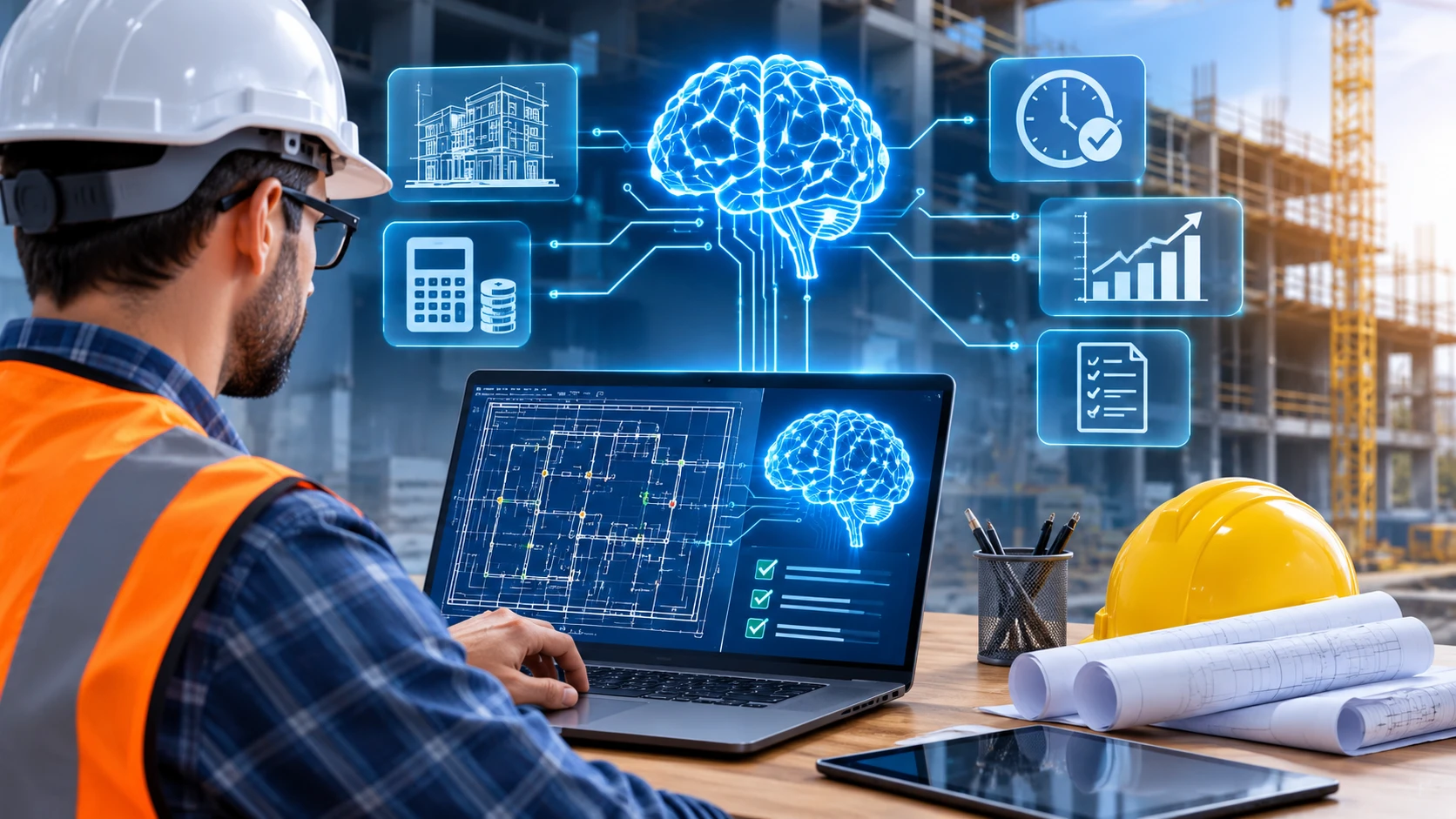
The estimating function in electrical contracting has operated on roughly the same principles for decades: a person reviews drawings, counts devices, traces routing paths, applies labor rates and material costs, and assembles a number under deadline pressure. That process works — when there's enough time, enough experienced staff, and drawing sets that don't change every three days. None of those conditions hold reliably on modern commercial projects. The shift toward AI-assisted estimating is a direct response to that reality, and Drawer AI electrical solution is one of the more documented examples of what that shift looks like in practice — named to the BuiltWorlds 2026 Preconstruction Top 50 and used by over 200 electrical contractors across the US and Canada.
Can AI Do My Electrical Estimating?
It's the question every contractor asks before evaluating a platform, and the honest answer requires separating what AI handles from what it doesn't.
AI automates the counting and routing layer of electrical estimating — the work that involves reading symbols from drawing sheets, tallying devices, linking them to panel and circuit assignments, and generating conduit paths with wire sizing and voltage drop calculations. That layer is genuinely automatable, and the time savings when it works are substantial.
What AI doesn't do is interpret scope, read project specifications for requirements not shown on drawings, assess contract risk, or make the pricing decisions that determine whether a bid is competitive. Those functions remain with the estimator — and on a well-configured AI workflow, the estimator's time shifts entirely toward those higher-judgment tasks rather than repetitive counting.
The practical boundary is worth stating clearly: AI handles volume work; estimators handle decisions. That division is why the technology produces real results without replacing the profession.
What the Best AI Electrical Estimating Software Actually Does
Evaluating the best AI electrical estimating software requires understanding what distinguishes platforms built specifically for electrical work from general construction tools that handle the electrical trade as one of several.
The distinction matters because electrical drawings have specific requirements — symbol libraries, panel schedule formats, circuit logic, NEC-based routing constraints — that general platforms weren't designed around. A tool trained on broad construction document data performs differently on dense commercial electrical plans than one trained specifically on electrical drawing sets.
The capabilities that define a purpose-built electrical AI platform:
|
Capability |
What It Involves |
Why It Matters |
|
Symbol recognition |
Identifying electrical device symbols from the drawing's own legend |
Accuracy varies with non-standard symbol sets |
|
Panel schedule extraction |
Reading panel data and linking each device to its circuit assignment |
Eliminates manual cross-referencing between documents |
|
Branch routing |
Generating conduit paths from panel to devices with homerun optimization |
Determines wire length accuracy in the quantity report |
|
Wire sizing and voltage drop |
NEC-compliant conductor sizing based on circuit load and run length |
Catches undersizing errors before bid submission |
|
Multi-sheet stitching |
Merging multiple PDF plan sheets into a unified floor layout |
Enables routing across sheet boundaries without manual join |
|
QA workflow |
Surfacing uncertain detections for targeted estimator review |
Makes the output auditable before it feeds into pricing |
|
Structured export |
Excel report with quantities and marked-up PDF with routing shown |
Feeds downstream estimating and project management tools |
Drawer AI addresses each of these capabilities as part of a single workflow — from PDF upload through QA review to export — rather than treating them as separate tools the estimator has to manually connect.
Best AI for Electrical Estimating: What the Published Results Show
For contractors evaluating the best AI for electrical estimating based on documented outcomes rather than vendor claims, Drawer AI's published case studies are the most detailed set of verified results in this category.
Starr Electric processed a 300,000 sq ft cancer center project — over 2,600 lighting fixtures and 3,400 power devices — in a fraction of the time their manual workflow would have required, with a 70% reduction in takeoff time. WTC Electric reported the same 70% reduction in takeoff time alongside device-detection accuracy above 95% on large commercial projects, and handled increased bid volume without additional hiring. Intermountain Electric cut high-volume takeoffs from multiple 15-hour days to a few hours — roughly a 90% reduction. Illuminico reduced manual rework and maintained pricing consistency as bid volume grew across multiple territories.
More recently, Gaylor Electric — a firm handling projects ranging from smaller service work to major enterprise-level construction — began piloting Drawer AI's estimating and BIM modeling capabilities, citing the opportunity to save time, improve accuracy, and give more team members access to tools that support more efficient work.
These outcomes reflect different operational constraints: throughput, accuracy under volume, scale on a single complex project, multi-territory consistency, and organizational access to preconstruction tools. The breadth of use cases matters for any firm trying to determine whether the technology fits their specific situation.
How the Workflow Actually Runs
For teams evaluating Drawer AI specifically, the workflow follows a consistent sequence:
1. Upload PDF drawings – the web-based platform accepts drag-and-drop PDF uploads with no local installation required.
2. Automated drawing preparation – the platform identifies drawing types, extracts the symbol legend, and locates panel and lighting fixture schedules before any counting begins.
3. Device detection – AI identifies every power device and lighting fixture on every sheet and links each one to its panel name, circuit number, and mounting height.
4. Branch routing – the platform generates conduit paths, optimizes homerun placement, sizes conductors, and calculates voltage drop and derating.
5. QA review – estimators review AI-generated counts using built-in tools that surface flagged items for confirmation rather than requiring sheet-by-sheet re-verification.
6. Export – a structured Excel report with quantities, device properties, and wire lengths, plus a marked-up PDF showing all routing, exports for use in estimating software, ERP platforms, or project management tools.
The platform handles commercial and industrial projects of any scale — retail, office buildings, hospitals, schools, core-and-shell, and industrial facilities. It doesn't handle residential work, and it doesn't replace estimating databases, accounting software, or project management platforms. It replaces the manual counting and routing step and exports structured data that feeds whatever tools the firm already uses downstream.
Where the Technology Is and Isn't Ready
The category of AI in electrical construction is maturing at different rates in different functions. According to published analysis from Drawer AI, takeoff and BIM are the two areas where the technology is mature enough for production use on commercial-grade projects. Cost forecasting and field tracking are still developing, and contractors treating those as bid-critical tools are working with capabilities that aren't yet reliable enough for that use.
For most commercial electrical firms, the right entry point is takeoff — where the documented results are clearest, the workflow change is most contained, and a demo plus a 30-day money-back guarantee lets a firm evaluate it on real projects before committing.
Author Bio:

Patricia Alfonso
Customer Success Manager
Patricia Alfonso, Customer Success Manager at Drawer AI, partners with over 300 electrical contractors to streamline estimating workflows and improve operational efficiency. She helps customers maximize the value of AI-powered estimating solutions, simplify complex processes, enhance accuracy, and drive business growth through personalized support, industry expertise, and customer-focused guidance.
 Our Services
 Media Pack Download
 Newsletters
 Industrial Events