Steel Casting Components: Critical Elements for Durable Industrial Machinery
When someone not in the manufacturing sphere is asked about why a machine is reliable they will tend to refer to either the brand or the technology it is powered by. But within the confines of a vegetation the solution is frequently far more insignificant--and a little less glitzy.
It comes down to parts. The kind that don’t get noticed unless they stop working.
That’s exactly where steel casting components for industrial machinery sit. Quiet, heavy-duty, and expected to perform without constant attention.
In fact, most teams don’t actively think about industrial steel castings until something goes wrong. And when it does, it’s rarely a small issue. A cracked housing, a worn-out bracket, or a misaligned casting can bring an entire line to a pause. Not ideal when timelines are tight (which they usually are).
Why Casting Still Gets Chosen (Even Today)
There’s been a lot of talk over the years about fabrication, CNC machining, and newer processes replacing casting. And yes, in some applications they have.
But when it comes to steel casting components, especially for large or load-bearing applications, casting hasn’t really gone anywhere.
The reason is not complicated. It works. And more importantly, it keeps working.
With steel castings for heavy machinery, you’re not just dealing with static loads. There’s vibration, uneven force distribution, occasional shock loads—basically, conditions that aren’t very forgiving.
Fabricated parts can handle some of that. But over time, especially in rough environments, cast components tend to hold up better. Not always perfect, but generally more dependable.
Strength—But in a Practical Sense
We often talk about strength in technical terms. Yield strength, tensile strength—all important, no doubt.
But on the ground, strength usually gets judged differently. It’s about how long before something becomes a maintenance issue.
High-strength steel castings for heavy-duty equipment are designed with that in mind. They’re not just meant to survive loads—they’re meant to survive repetition.
Take a typical mining setup. Equipment runs continuously, sometimes with minimal downtime. Components don’t get time to “rest.” So even small weaknesses show up quickly.
That’s why many companies prefer slightly over-engineered industrial steel casting parts. It’s not overkill—it’s insurance.
Precision—Underrated, but Important
This is one area where people don’t always connect the dots immediately.
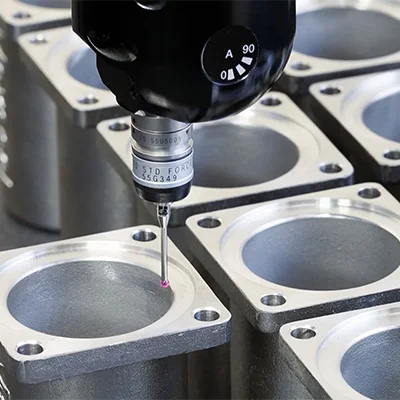
When we say precision steel casting components, it’s easy to assume it’s about tight tolerances for the sake of it. But the real impact shows up later.
If a component is even slightly off, it can cause uneven load distribution. That leads to wear. Wear leads to misalignment. And eventually, something fails.
It does not come up overnight that is why it is not given a second thought.
However, when accuracy is obtained in the very beginning, everything starts to flow easier.
Less adjustment, fewer complaints from maintenance teams. It’s one of those silent advantages.
Design Flexibility—More Useful Than It Sounds
Engineers like flexibility. Procurement teams sometimes don’t think about it much—but they probably should.
With steel foundry castings, it’s possible to combine shapes and features into a single part that would otherwise require multiple fabricated pieces.
Now, on paper, that’s just a design benefit. But in practice:
- Fewer joints = fewer failure points
- Less welding = better structural consistency
- Simpler assembly = fewer delays
It doesn’t solve everything, but it definitely reduces complexity.
Alloy Steel: Because Conditions Aren’t Always Friendly
Not all environments are equal. Some are straightforward. Others… not so much.
This is where alloy steel casting solutions become relevant.
In power plants, temperatures can be high enough to affect material properties. In oil and gas, corrosion is a constant concern. Standard materials don’t always perform well in these conditions.
So instead of forcing a generic solution, manufacturers adjust composition. The result is industrial steel casting parts that are actually suited to where they’ll be used.
It sounds obvious, but in practice, it’s not always done properly.
Where These Components Actually Show Their Value
You’ll find steel casting components for industrial machinery across almost every heavy industry, but their importance becomes clearer in tougher applications.
Construction equipment relies on them for load-bearing structures.
Mining operations use them in high-impact areas.
Power plants depend on them for consistent operation under stress.
Oil and gas applications push them to handle corrosion and pressure.
Across all these sectors, expectations are similar—components should last, and ideally, they shouldn’t become a frequent maintenance topic.
That’s one reason why steel castings for heavy machinery are still widely preferred.
The Foundry Side—Where Differences Begin
From the outside, a casting might look fine. Smooth surface, correct dimensions, everything in place.
But people who’ve dealt with steel foundry castings know that what matters is not just what’s visible.
Internal quality—grain structure, porosity, stress points—these things don’t always show up immediately. But they affect performance over time.
This is also where supplier differences start to matter more than expected.
Two suppliers can deliver parts that look identical on day one. Six months later, performance tells a different story.
Cost Discussions—Usually a Bit Misleading
Cost is always part of the conversation. No surprise there.
But when evaluating industrial steel casting parts, focusing only on initial price can be short-sighted.
A cheaper component might work initially. But if it wears faster or needs replacement sooner, the overall cost goes up.
On the other hand, well-made steel casting components tend to last longer. Fewer replacements, fewer interruptions—it adds up.
Most experienced buyers eventually shift their thinking here. It just takes a few bad experiences sometimes.
Choosing the Right Supplier (Not as Simple as It Sounds)
Procurement teams often have to balance cost, timelines, and availability. But with steel casting components for industrial machinery, supplier selection has a longer-term impact.
A good supplier doesn’t just deliver parts—they understand usage.
They can suggest better alloy steel casting solutions, maintain consistency in precision steel casting components, and handle scale without quality dropping.
It is not always simple to seek that balance. However, when the companies do, they tend to remain loyal to the same supplier over years.
A Few Changes in the Industry
The casting industry isn’t changing overnight, but there are gradual shifts.
It is reducing defects even prior to the production by the use of simulation tools. Automation is also being invested in by some foundries as a means of enhancing consistency in high-strength steel castings of equipment of heavy duty.
There is also increased emphasis on efficiency less wastage, improved energy efficiency in steel foundry castings.
Nothing dramatic, but definitely moving in the right direction.
Final Thought
In most industrial operations, reliability is built piece by piece. Not all at once.
Steel casting components for industrial machinery might not be the most visible part of a system, but they’re often the ones carrying the most responsibility.
From industrial steel castings used in large equipment to smaller precision steel casting components, their role is pretty straightforward—keep things running.
And when they do that well, no one really notices.
Which, honestly, is exactly the point.
 Our Services
 Media Pack Download
 Newsletters
 Industrial Events