Types of Material Handling Equipment in Manufacturing

Introduction:
The Role of Material Handling Equipment in Manufacturing
The rapid manufacturing operations rely heavily on material handling equipment for maintaining smooth workflow. The system operates across the production process to carry out material moving and storage with processing work. The advancement of operating efficiency depends on material handling technologies which today, are powered by industrial lifting devices and automated conveyor systems and pallet storage solutions.
Advancements in Forklift Truck Technology
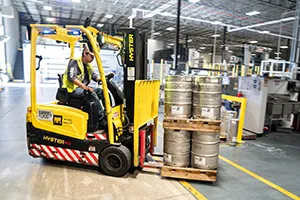
Material handling professionals recognize forklift truck technology as a leading advancement within their field. Forks stands as the primary equipment for handling material movements between storage and distribution in domestic and commercial settings. The development of forklift truck technology includes the rise of electric versions because they provide quiet operation and energy conservation. Incorporating enhanced features for improved lifting capacities and better maneuverability into these electric warehouse trolleys provides better performance along with lower environmental effect.
The rising requirement for warehouse transport tools makes forklift trucks vital equipment in material handling operations. These machines provide critical support for productivity enhancement through distance transportation while also minimizing labor expenses because of their ability to handle narrow spaces.
Bulk Material Movement: The Need for Heavy-Duty Hoisting Equipment
Industrial production facilities maintain an ongoing requirement to shift bulk materials at scale. Heavy-duty hoisting equipment functions to lift large and bulky material types which exceed the capacity of typical lifting tools. Such equipment serves construction sites and mining operations and heavy manufacturing plants that store and relocate materials including steel beams together with large machinery and raw materials.
The usage of heavy-duty hoisting equipment enables efficient heavy load transport so manufacturers can address bigger projects more conveniently. Logistics transfer machines operate in synergy with hoists to enhance material mobility throughout manufacturing premises.
The Rise of Smart Warehouse Automation and Robotics
Smart warehouse automation has brought an industrial revolution to material handling through its introduction across all sectors. Modern automation systems that include robotics with artificial intelligence functions provide faster and accurate movement of materials. The automation of material movement through robotics serves as an example of this automation because robots now shift materials between points while humans need minimal involvement.
Smart warehouse automation adopts mechanical sorting solutions capable of automatic material organization through authorized specifications such as weight standards and material classification. The integration of these systems supports precision-based operations along with reducing mistakes that result in less disruption in the production workflow. Smart inventory movers work as a part of warehouse management systems to offer real-time stock monitoring which keeps materials accessible at all times.
Improving Worker Safety with Ergonomic Lifting Aids
Modern materials handling operations have become safer because ergonomic lifting aids were introduced. This equipment functions to protect workers from body strain during the performance of heavy or challenging load activities. Different styles of ergonomic lifting aids offer manipulability through both lifting arm and powered hoist systems which simplify work tasks while safeguarding employees from injuries related to repeated lifting and insufficient body positioning.
Organizations that implement ergonomic lifting devices in their production operations establish safer work areas and lower worker exhaustion while reaching better output achievements. The workers benefit through better performance along with shorter sick time periods and decreased work-related injuries.
Pallet Storage Solutions for Space Efficiency
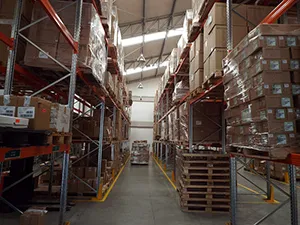
Warehouses can improve their performance through effective storage methods achieved by utilizing pallet storage solutions which maximize available space. The storage systems support manual along with automated storage methods which decreases search time and improves material accessibility.
The storage of materials in high areas by overhead crane mechanisms enables large facilities to increase their floor space efficiency and boost their storage capabilities.
Hydraulic lifting platforms enhance storage systems through material transportation to high shelves thus decreasing risks of injuries for items located at challenging heights. Such system implementations enhance warehouse process efficiency while simultaneously reducing collection times while enabling safer operational areas.
The Power of Industrial Lifting Devices in Manufacturing
All manufacturing facilities operate with different industrial lifting devices that oversee the transportation needs of raw materials and work-in-progress items and finished products. Manufacturing facilities deploy several lifting devices which range across the spectrum from small pallet jacks to large cranes because each device suits a particular load and task.
New industrial lifting technologies emerged because of rising demands for efficient lifting arms combined with strong lifting devices that prioritize safety together with speed and energy efficiency. The newest material handling devices optimize every movement using connected sensors which enable businesses to perform remote diagnostics and monitoring through system connections.
Factory Material Processing and Efficient Transport
Manufacturing involves more than transporting materials because it simultaneously requires processing them. Factory material processors exist as automated machinery which processes raw materials into completed final products or intermediate stages of production. The production line requires these pieces of equipment to maintain smooth operation at high speeds.
Toyotas industrial goods carriers establish a crucial link between factory material processors by facilitating their movement to various production stages. The carriers maintain the material movement with reduced manual intervention which protects items from damage and optimizes operations.
Conclusion: The Future of Material Handling Equipment
The progress made by industries drives change in material handling equipment technology.
By incorporating these technologies into their operations, manufacturers can reduce costs, improve productivity, and create a safer and more efficient working environment. Whether it’s through the use of heavy-duty hoisting equipment, electric warehouse trolleys, or overhead crane mechanisms, the material handling sector is poised for even greater innovations in the years to come.
The implementation of modern technologies within manufacturing facilities permits businesses to attain lower expenses together with increased efficiency and workforce protection as well as enhanced operational efficiency. Heavy-duty hoisting equipment combined with electric warehouse trolleys and overhead crane mechanisms propel the material handling sector toward increased advancements in the approaching years.
 Our Services
 Media Pack Download
 Newsletters
 Industrial Events