How Modern Cooling Systems Are Reducing Operational Costs across Key Industrial Sectors
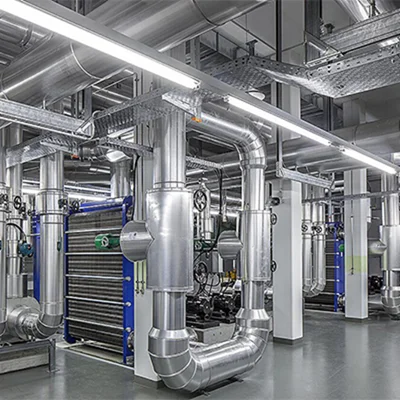
Every business needs some form of industrial process cooling, but the type varies by sector. A cafe’s needs are distinct from those of a pharmaceutical manufacturer, so these businesses should collaborate with providers that specialize in equipment optimal for their niche. Regardless of industry, the right cooling system can lower costs in several ways. Understand the various types of cooling systems and their most appropriate use case to inform purchasing and implementation decisions.
Waste Heat Recovery
Some cooling devices are equipped with heat exchangers and other capture technologies to promote circularity. Thermal runaway is a significant untapped resource, and it could reduce utility costs by reusing energy instead of letting it escape into the air.
Connection to Smart Technology
Sensor-based peripherals make modern cooling devices more environmentally conscious and adaptable. For example, it could determine when outside temperatures are cooling to adjust its controls, exerting less energy and using fewer resources when ambient conditions shift. This also puts less pressure on the machinery, ensuring it lasts as long as possible without excessive maintenance.
Lower Energy Consumption
Modern and hybrid cooling systems have been shown to be more efficient in comparative analyses. One case study in the data center industry demonstrated a 14.1% boost with a hybrid system compared to a traditional setup. The financial savings could be astronomical, especially for intensive sectors.
How to Choose the Best Provider
The methodology for determining the most competitive options for each sector requires each company to embrace these characteristics:
- Technical excellence and knowledge among the staff
- Customization options for personalization for specific industries
- Consideration for scalability
- Focus on efficiency to support sustainability objectives
- Dedication to high-quality materials to support equipment longevity
1. Smart Family of Cooling Products — Best in All Industries
Smart Family offers 10- to 150-ton industrial chillers for various industrial process cooling applications, including glycol, medical, heavy plastics and chemical processing. However, it also serves other sectors, including offices and entertainment, demonstrating the organization’s versatility. Its custom solutions are made possible by Smart Family’s dedicated, advanced engineering staff, which specializes in low-temperature, explosion-proof models.
This enterprise operates uniquely from competitors by constructing custom solutions built for portability, reuse and travel instead of retrofitting other HVAC products for rental. The equipment is also more energy-efficient because it omits the pain point of desiccant freezing by using it alongside cooling for constant regeneration. Smart Family offers more adaptable products in its diverse catalog than most, which include:
- Spot coolers
- Desiccant dehumidifiers
- Ancillary equipment and accessories
- High-static and industrial air handlers and cooling
- Event-based, industrial HVAC equipment
- Air-cooled screw chillers
- Air- and water-cooled scroll chillers
- Heaters
- Smart monitoring peripherals
- Commercial cooling products
2. CoolIT Systems — Best for Data Centers
The artificial intelligence and data center industry will rely on entities like CoolIT Systems because it specializes in the trending cooling system for the sector — liquid cooling. It focuses on direct liquid cooling (DLC), enabling even the most intense computing environments and clusters to operate without disruption.
Its technologies are already present in over 300 data centers worldwide, representing over 25 years of continuous innovation and research. This is evident in the company’s commitment to modular installation, which makes data centers future-proof. If infrastructure needs to scale, increasing its energy consumption with higher computer power, CoolIT industrial cooling products handle it. In addition to DLC, its other services and products include:
- Cold plate technologies and loops
- Rack manifolds
- Coolant distribution units
- Technology cooling systems
- Integration services
- End-to-end coverage
3. SPX Cooling Technologies — Best for Manufacturing and Production
SPX Cooling is a leader in closed-circuit industrial cooling systems, with a focus on data center and manufacturing environments. The Marley brand of evaporative cooling hardware can handle high-production environments. Cooling systems in facilities need to be made of durable components to endure the stress of harsh industry, which SPX can provide.
The company is known for its global reach and implementation of everything from air-cooled heat exchangers to cooling towers. It has been in the business since 1922, making it one of the most experienced providers on the market for manufacturers. Its most significant products and offerings include:
- Process-specific cooling solutions, like equipment for compressors or hydraulics
- Cooling towers for large-scale industrial applications
- Modular systems
- Closed-circuit fluid coolers
- Maintenance services
4. Alfa Laval — Best for the Food Industry
Similar to many other industrial cooling experts, Alfa Laval has served data centers, manufacturers and hospitals. However, its technologies shine the most when applied in the food and beverage sector. Its equipment is designed to keep food safety compliance at the forefront, whether for heating, cooling, processing or storage.
It achieves precision in this sector because its key selling point is its focus on fluid handling and heat transfer. This is essential to product quality and food and beverage hygiene, as it prevents foodborne illness. As a result, the machinery could improve productivity and reduce waste. Alfa Laval even has dehumidification devices specifically for breweries. Its cooling devices and services include:
- Plate heat exchanger
- Air-cooled heat exchangers
- District cooling systems
- Separators and filtration systems
- Fluid handling
- Process modules
- Closed-water cooling
5. Daikin Applied — Best for Health Care
While Daikin Applied serves many industries, its offerings for health care are one of its most notable. The cooling products directly support patient-focused medical attention by making environments like hospitals safe, clean and comfortable for everyone. Its devices are known for their best-in-class turndown and quiet operation supported by variable-volume-ratio compressors and intuitive controls.
These qualities allow health care professionals to establish consistent humidity and temperature to promote a hygienic and functional space for patients to recover. Daikin’s technologies also support environments with stringent requirements, such as medical laboratories. Its key features and services for the sector include but are not limited to:
- Zoned temperature and humidity control
- Advanced air filtration and purification
- Heat recovery systems
- Air handlers
- Modular solutions
- Rooftop systems
- Water-cooled chillers
- Air-cooled screw chillers
FAQ on Heavy Industrial Cooling
Uncover more details about cross-industrial cooling applications before contacting a potential provider.
What is the most effective cooling system?
The most productive machinery type depends on the sector, but most opt for evaporative cooling because it is energy efficient. However, the most effective technology may still be in development, which is why it is important for buyers to stay informed about up-and-coming disruptions in the cooling world.
How do you choose a cooling system?
The most critical factors when determining what equipment to invest in include energy efficiency, lifespan and durability. Buyers should establish the minimum expectations for each of these metrics before purchasing. It will help companies determine whether their investment delivered the anticipated financial and productivity returns in a timely manner.
Which type of water is often used for industrial processes and cooling systems?
While most buyers consider energy consumption for their cooling equipment, water usage is another key consideration. Cooling water for these systems is treated with great attention to prevent machinery degradation and the buildup of biofilms or mineral deposits.
High-Temperature Cooling Systems and Other Essential Equipment
Many options for cooling equipment are available from diverse suppliers and makers. However, finding one within an industrial niche is ideal for long-term support and customization. Eventually, organizations should establish partnerships with modern cooling companies, as needs within niches change as new technologies disrupt operations and operations scale. Investing in a high-efficiency, innovation-forward cooling system is vital for staying ahead of the competition.
Author Bio:

Megan Vitanza
Marketing strategist
Megan Vitanza is a marketing strategist, loving mother, wife, bookworm and gamer. As Senior Digital Media Consultant at WebFX, she spends her days researching and producing content for her manufacturing clients. In her off hours she enjoys baby snuggles and cozying up with a good book.
 Our Services
 Media Pack Download
 Newsletters
 Industrial Events